

10 Essential Items to Pack for Your Next Travel Photography Journey

Female backpacker holding photo camera before embarking on a trip
Isn’t there something magical about capturing the world through a lens? Those golden sunsets, vibrant street scenes, and candid moments that tell the best stories? Capturing something truly unique takes more than luck; it’s about your vision and using your gear efficiently. Before you head out on your next (or first) photography adventure, what you pack can make or break your experience. Whether hiking through mountain trails or strolling colorful city streets, having the right equipment will keep you focused on shooting, not stressing.
What should actually go in your travel bag? This guide breaks it down—from the best cameras to must-have gear for travel photography—so you’re ready to shoot confidently wherever the road takes you.
3 best cameras for travel photography enthusiasts
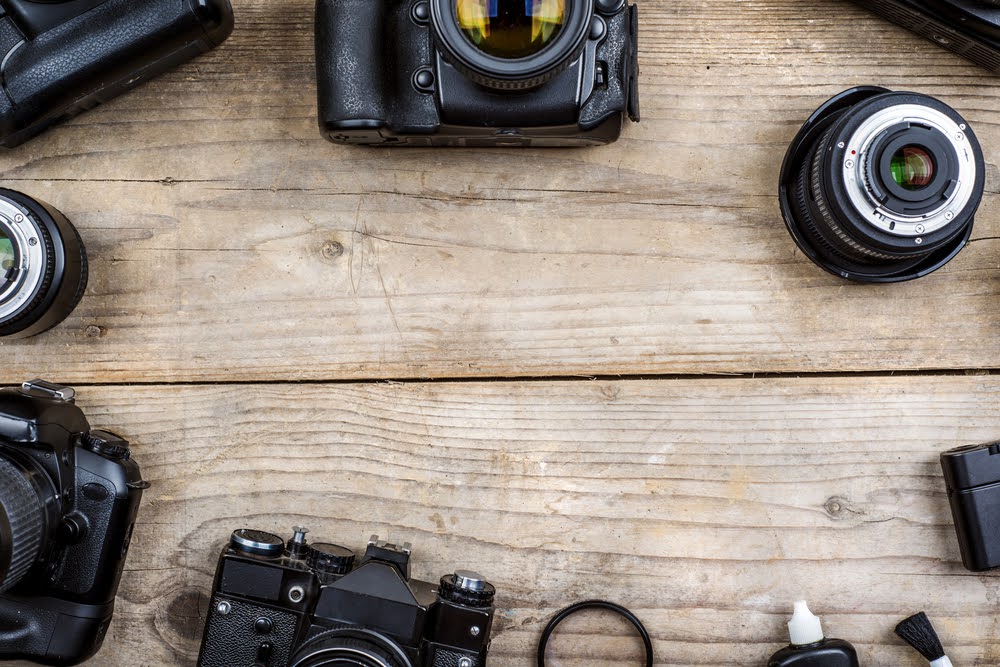

Photo cameras on a wooden desk — sourced from curated collection on Depositphotos
#1. Fujifilm X-T5
The Fujifilm X-T5 is perfect for seasoned travelers who love high-quality imagery and a touch of retro design. The device strikes with its compact size and powerful features, perfect for exploring vibrant cities, remote villages, or coastal escapes. It’s also quite resistant to harsh traveling.
Overall, the Fujifilm X-T5 suits intermediate to advanced users who seek DSLR-level power in a travel-friendly body.
- Pros:
-
-
- Lightweight and weather-sealed body;
- Outstanding image quality that also simulates film effects;
- Fast autofocus with subject tracking;
- 40MP resolution for impressive detail.
-
- Cons:
-
- Slight learning curve for beginners;
- Pricey for hobbyists.
#2. Sony Alpha a7C II
Sony Alpha a7C II is a full-frame mirrorless camera that arguably packs a punch in a surprisingly compact form. This device is great for those after professional-level quality but don’t want to lug around a huge DSLR. Indeed, size and portability tip the scale in favor of this camera. It’s ideal for individuals with travel photography experience looking for power and cinematic video.
The main downside of the Sony Alpha a7C II is that it’s on the pricier side.
- Pros:
-
-
- Full-frame sensor in a small, lightweight body;
- Excellent low-light performance;
- Fantastic autofocus and subject tracking;
- In-body image stabilization.
-
- Cons:
-
- Limited physical controls;
- More expensive than crop sensor options.
#3. Canon EOS R7
Finally, there’s the Canon EOS R7. If you’re a traveler looking for speed, crisp detail, and solid video capabilities without the full-frame price tag, this camera should definitely be on your shortlist. The Canon EOS R7 is versatile enough for street photography, landscapes, and even wildlife. It’s also quite durable and more resistant to harsh conditions compared to its rivals.
Canon EOS R7 suits advanced amateurs who want fast shooting and flexibility without compromising image quality.
- Pros:
-
-
- 32.5MP APS-C sensor with great detail;
- Superb image stabilization;
- Fast burst mode (great for action shots);
- Dual card slots for backup.
-
- Cons:
-
- Not full-frame;
- Fewer native lenses available.
3 best cameras for travel photography beginners
#1. Nikon Z30
If you feel the passion to dive into photography on a professional level, you need a solid yet affordable camera. Nikon Z30 is among the best contenders for this role. It’s simple, affordable, and packed with beginner-friendly features, making it a great starting point for creators just getting into photography or vlogging.
Nikon cameras are known for their user-friendly intros to photography, and the Z30 model is no exception.
- Pros:
-
-
- Very beginner-friendly interface;
- Compact and lightweight;
- Great autofocus for both photo and video;
- Flip-out screen for vlogging.
-
- Cons:
-
- No viewfinder;
- Not weather-sealed.
#2. Canon EOS R50
Small, stylish, and smart—Canon’s EOS R50 offers fantastic value and performance for travel photography rookies. It handles well in different lighting conditions and is super intuitive to use.
This model is best for new photographers who want vibrant shots and easy learning tools.
- Pros:
-
-
- Smart auto modes for beginners;
- Excellent image quality for its class;
- Fast, reliable autofocus;
- Lightweight and compact.
-
- Cons:
-
- No headphone jack;
- Basic body build.
#3. Sony ZV-E10
The Sony ZV-E10 is a mirrorless camera originally aimed at vloggers, but it’s also a brilliant entry-level stills shooter. Paired with a solid lens, it is a creative powerhouse for beginner travel photographers.
Its low price is another point to consider when selecting cameras for beginners. The Sony ZV-E10 might be your go-to if you have a limited budget.
- Pros:
-
-
- Solid 24MP image quality;
- Great for video and stills;
- Articulating screen;
- Interchangeable lens system.
-
- Cons:
-
- No built-in viewfinder;
- Limited battery life.
The 4 best extra photography gear for successful travel photography
#1. Extra memory cards
Before you learn how to optimize photography, your in-camera memory will fill up quite fast. Ideally, you need at least three high-speed SD cards with 64GB or more. You don’t want to run out of space in the middle of a scenic hike or street festival.
Also, don’t forget a card case to keep your memory safe and organized. It is one of those cheap but clutch investments every traveler should make. You should know a few other things about memory cards, like how to touch them, transfer files safely, and more.
#2. Portable external battery/charger
Outlets can be scarce when you’re constantly on the move. Using your laptop to charge a camera is a solid travel photography tip, but a reliable power bank to recharge your camera or phone on the go is a real lifesaver.
Look for one that supports USB-C. If you need to charge two devices at once, choose a power bank with a higher capacity (over 10,000mAh).
#3. Weather-resistant camera bag
A weather-resistant camera bag does more than just carry your gear. It protects it from the elements and prying eyes. Yes, it may not look fancy or align with your outfit. The net gain, however, is that you have a safe and secure camera ready to take a shot at the end of the day. Therefore, look for a weather-sealed backpack or sling with padded compartments and anti-theft zippers. Comfort is key—especially when you’re hiking or city-hopping.
#4. Compact lens
Chances are, you’re traveling light. Fast, lightweight prime lenses like 17mm and 50mm—a perfect combo among travel photographers for their versatility and low-light performance—or a reliable zoom (like 18–105mm) is all you need. These lenses cover most of what travel photography throws at you—from street scenes to landscapes. They are less bulky than large telephoto options, more affordable, and give you the creative freedom to move and try various angles and positions instead of relying on zooming in or out.
Conclusion
Packing smart for your travel photography trip means you’ll spend less time worrying and more time capturing beauty. With the right camera, key accessories, and the best photography gear for travel that fits your shooting style, you’ll be ready for anything, whether a misty mountain sunrise or a bustling street market. The best photos happen when you’re prepared, comfortable, and focused on the moment, not on your missing charger or full memory card.

