

16 years of neglect: Kiamokama Market’s dream turns into a rusting nightmare

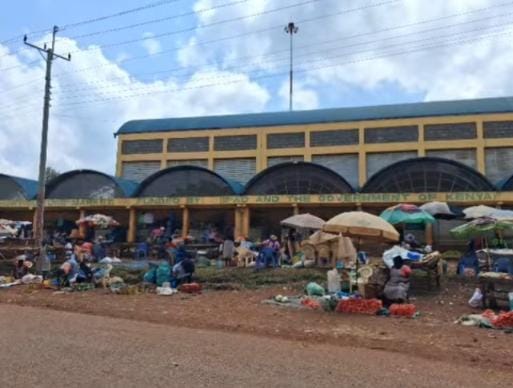
For more than 16 years, Kiamokama’s multimillion-shilling fresh produce market in Masaba South, Kisii County, has stood as a painful reminder of an ambitious public investment that never fulfilled its promise.
The market was conceived as a modern agricultural trading centre that would connect farmers with traders, improve storage of perishable produce and give growers a better chance of securing fair prices for their harvest.
Instead, the facility is deteriorating before the eyes of the very farmers it was intended to serve.
Inside the market, expensive refrigerators are rusting away while sections of the roofing structure have decayed, allowing rainwater to seep onto the floor.
What was once envisioned as a modern hub for agricultural commerce increasingly resembles an abandoned shell.
For farmers in Nyaribari Masaba, the failure is more than an issue of neglected infrastructure. It has a direct economic cost.
“We were told this market would change how we sell our produce. More than 16 years later, we are still selling vegetables and bananas from farms, by the roadside and at very low prices,” says trader Jane Moraa.
Charles Magati, a farmer from Gesusu, says the absence of reliable markets has left many producers at the mercy of brokers who travel to villages in trucks looking for produce.
“When you harvest bananas or vegetables and there is no buyer, you have no choice but to accept whatever price is offered to you by these people,” he says.
The irony is difficult to miss.
A facility built to address precisely these challenges sits within the community, yet farmers continue to grapple with the same problems it was designed to solve.
Samuel Matonda, who played a key role in pushing for the project, says the market can still be revived but insists that rehabilitation must be accompanied by a deliberate effort to educate and mobilise farmers and traders.
“Farmers and traders need to understand what the facility can do for them. You cannot expect people to automatically start using it without educating and mobilizing them,” he says.
But sensitization alone cannot explain the market’s deterioration.
The condition of the infrastructure raises uncomfortable questions about maintenance, management and accountability.
A public facility does not remain useful simply because it was once commissioned. It requires regular maintenance, proper equipment, effective management and a clear business model to ensure it continues serving the public.
For women traders, the consequences of the market’s failure are immediate.
“If I buy vegetables in the morning and fail to sell them, by evening some have already started losing their freshness. Sometimes we are forced to sell cheaply just to avoid a total loss,” says one vegetable trader.
The situation has also forced some farmers to look beyond Kiamokama and travel to neighbouring markets to sell their produce.
That comes with additional transport costs and lost time for producers already operating on thin margins.
There was renewed hope among residents that Governor Simba Arati’s administration would revive the facility and transform Kiamokama into a major agricultural trading centre.
But residents say the promised transformation has yet to materialise.
“What we need now is action. Repair the facility, bring traders here and connect us to markets,” says farmer John Mochama.
Residents say rehabilitation should go beyond repairing the leaking roof and replacing rusting equipment.
They want improved sanitation, lighting, security, storage facilities and, crucially, a management system capable of keeping the market functional once it is restored.
“A market is not just a collection of stalls. It is an economic engine,” says trader Thomas Ombuna.
That may be the most important lesson from Kiamokama.
The facility does not need another ribbon-cutting ceremony or another promise of revival. It needs a serious assessment of what went wrong, a transparent rehabilitation plan and a management structure capable of protecting the investment in the long term.
Its deterioration also exposes a broader weakness in public investment: governments often celebrate projects at commissioning but pay far less attention to what happens afterwards.
The result is an expensive cycle of construction, neglect and eventual calls for rehabilitation — forcing taxpayers to potentially pay again for infrastructure that should have been maintained in the first place.
For Kiamokama farmers, the consequences are painfully simple.
Their vegetables continue to lose value. Their bananas are sold cheaply. Traders travel elsewhere. Women lose income.
And all the while, a facility designed to transform their fortunes slowly rusts away.
The real question is no longer why Kiamokama Market was built.
It is why, after 16 years, it still has not been made to work.

