


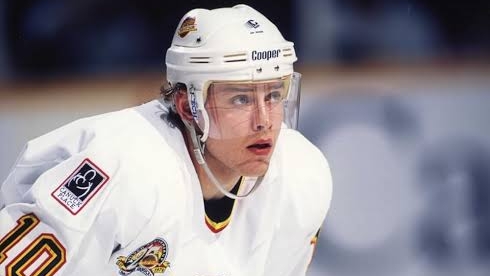
Pavel Vladimirovich Bure, born on March 31, 1971, in Moscow, Russia, is a former professional ice hockey player widely regarded as one of the most electrifying talents in NHL history.
Nicknamed “The Russian Rocket” for his explosive speed and goal-scoring prowess, Bure played as a right winger in the National Hockey League (NHL) for 12 seasons with the Vancouver Canucks, Florida Panthers, and New York Rangers.
Trained in the Soviet Union, Bure began his professional career with CSKA Moscow before transitioning to the NHL, where he left an indelible mark on the game.
Beyond his on-ice achievements, Bure’s family background, including his siblings, played a significant role in shaping his journey.
Siblings
Pavel was raised in Moscow alongside his younger brother, Valeri Bure, born on June 13, 1974.
Valeri, like Pavel, pursued a career in professional ice hockey, becoming a right winger in the NHL.
He played for several teams, including the Montreal Canadiens, Calgary Flames, Florida Panthers, St. Louis Blues, and Dallas Stars over a 10-season career.
The Bure brothers briefly played together with the Florida Panthers and represented Russia in international competitions, including the 1998 and 2002 Winter Olympics, where they won silver and bronze medals, respectively.
Together, they set an NHL record for the most goals scored by a pair of siblings in a single season (93 goals in 1999–2000).
Career
Bure’s hockey journey began in the Soviet Union, where he joined the CSKA Moscow hockey school at age six, despite initially limited skating ability.
His father’s strict training regimen helped him develop into a standout player, and by age 14, he was named to CSKA’s junior team.
Also Read: Luke Mitchell Siblings: Meet the Siblings Squad Behind the Australian Actor
Bure made his professional debut with CSKA Moscow in 1987 at age 16, scoring his first goal in his debut game.
In the 1988–89 season, he set a Soviet League rookie record with 17 goals, helping CSKA win their 13th consecutive Soviet championship.
Selected 113th overall by the Vancouver Canucks in the 1989 NHL Entry Draft, Bure’s transition to the NHL was delayed by negotiations with Soviet authorities, costing the Canucks $250,000 to secure his release.
He debuted with the Canucks in the 1991–92 season, earning the Calder Memorial Trophy as the NHL’s top rookie with 34 goals.
Bure’s peak came in the 1993–94 season, when he led the NHL with 60 goals and guided the Canucks to the Stanley Cup Finals.
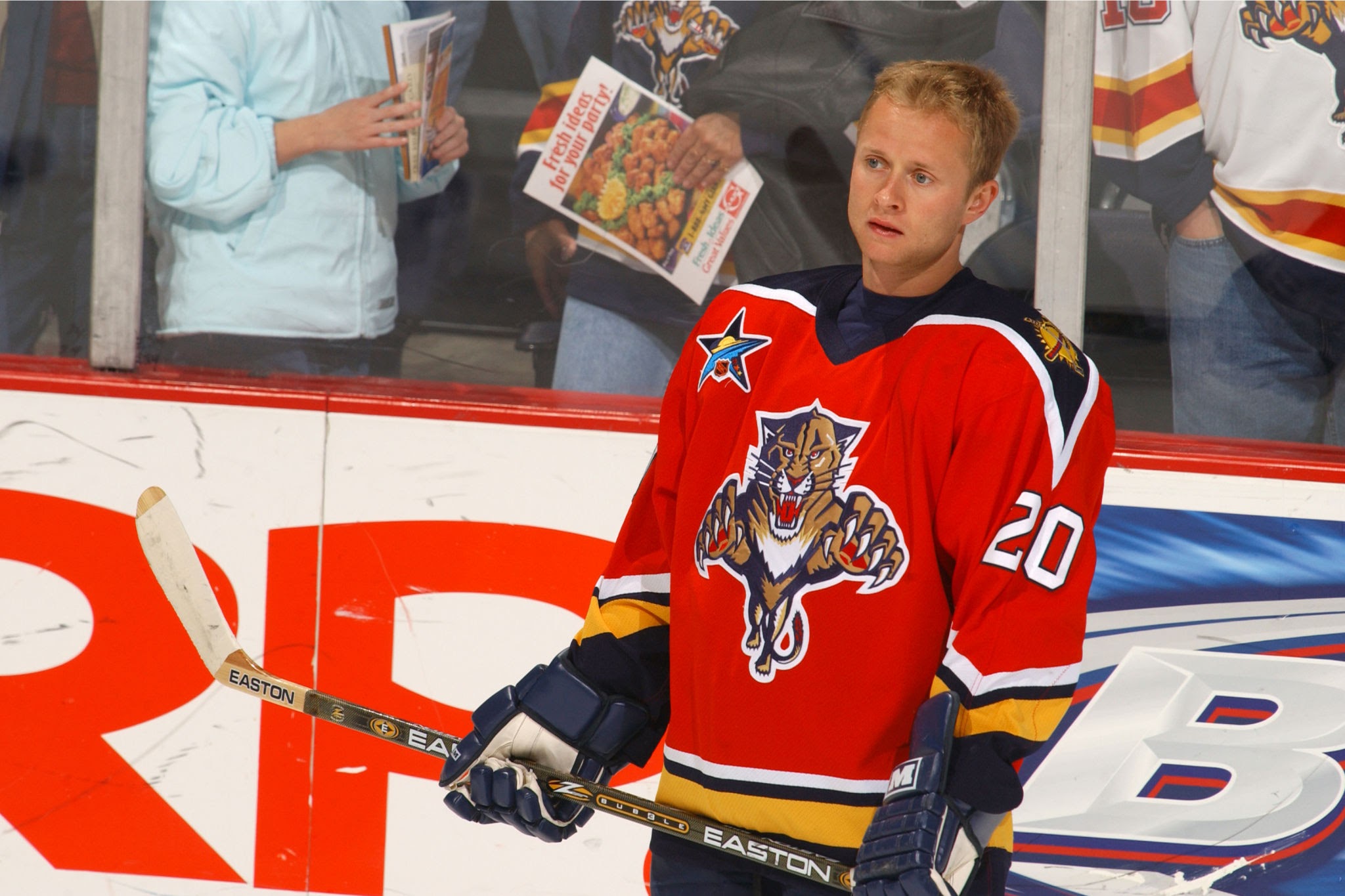
After seven seasons with Vancouver, marked by injuries and a trade dispute, he was traded to the Florida Panthers in 1999.
There, he won back-to-back Rocket Richard Trophies as the NHL’s leading goal-scorer (58 goals in 1999–2000 and 59 in 2000–01).
Traded to the New York Rangers in 2002, Bure’s career was cut short by persistent knee injuries, leading to his retirement in 2005.
Over 702 NHL games, he scored 437 goals and amassed 779 points, averaging better than a point per game.
Accolades
In the NHL, Bure won the Calder Memorial Trophy in 1992 as the league’s top rookie and the Rocket Richard Trophy in 2000 and 2001 as the leading goal-scorer.
He was named to the NHL First All-Star Team in 1994 and the Second All-Star Team in 2000 and 2001, and he played in six NHL All-Star Games.
Bure’s contributions to the Vancouver Canucks were honored with the retirement of his jersey number 10 in 2013.
Internationally, representing the Soviet Union and later Russia, he won gold at the 1990 World Championships, silver in 1991, and two silver medals and a gold at the World Junior Championships (1989–1991).
At the Winter Olympics, he captained Russia to a silver medal in 1998 and won bronze in 2002.
Bure was inducted into the Hockey Hall of Fame in 2012, and in 2017, he was named one of the 100 Greatest NHL Players by an NHL panel.
The International Ice Hockey Federation (IIHF) also recognized his contributions with induction into the IIHF Hall of Fame in 2012.
Email your news TIPS to Editor@Kahawatungu.com — this is our only official communication channel
