


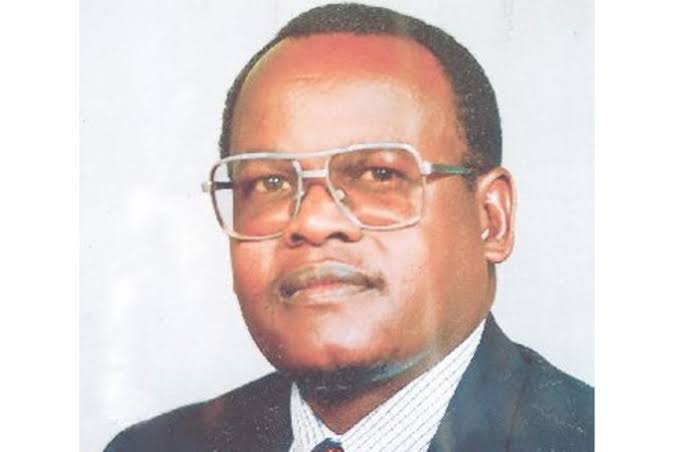
In 2003, on a Sunday afternoon like today, 14th of September, Dr Odhiambo Mbai was shot at his home in Nairobi.
It was a day that shook the University of Nairobi and the nation. For those of us in the university hostels, the news spread with shock and disbelief—Dr Mbai was fighting for his life at Nairobi Hospital. At the time I was serving as the Vice Chairman of SONU. To me the events of 14th September 2003 remain vivid in my mind, for they were not just about the loss of a lecturer but the assassination of a man at the centre of Kenya’s constitutional struggle. The shock, anger, and grief that followed were immense not only within the university fraternity but across the entire country because his death struck at the very heart of Kenya’s fight for a new order.
The year 2003 had begun with great hope. Kenya had just voted Mwai Kibaki into power after the dramatic 2002 elections that ended KANU’s four decade rule. For the first time in many years Kenyans were said to be the most optimistic people in the world. Kibaki had promised to end tribalism, curb extra judicial killings, and launch a zero tolerance war against corruption. The greatest promise of all was the delivery of a new Constitution within one hundred days of taking office. This was the pledge that had united Kenyans behind the National Rainbow Coalition (NARC). Yet soon after victory those lofty promises began to fade.
What emerged instead was a clique that came to be known as the Mt Kenya Mafia. They quickly entrenched themselves in government and began to frustrate the reform agenda. What had been a national project of unity and renewal started turning into an ethnic project aimed at consolidating dominance for one region. The Memorandum of Understanding that had brought together diverse political players in the fight against KANU was tossed aside and power became increasingly personalized around Kibaki. To many observers the intent was to turn him into a new version of Moi wielding absolute authority and exercising centralized control.
The constitutional review process soon became the central battlefield. While Kenyans demanded a new order Kibaki’s inner circle opposed it. Some dismissed the entire project outright. John Michuki never shied from blunt statements. He declared there was no need to change the Constitution since “one of their own” now held power. He likened power to juggling the liver continuing his reputation for memorable analogies just as he had once spoken of rattling a snake and facing the consequences.
Despite resistance the constitutional review had already gained unstoppable momentum. The Bomas of Kenya process was underway with multiple subcommittees drafting proposals. Among these the Subcommittee on Devolution was chaired by Dr Odhiambo Mbai. Known for his sharp intellect and dedication Mbai was considered not only an ally of Raila Odinga but also one of the few who could articulate and deliver a practical framework for devolution. Raila had been a vocal champion of this cause advocating for a three tier government that would devolve power and resources ensuring equity for all regions.
This position however was bitterly contested by those who wanted Kenya to remain a tightly controlled unitary state. To them devolution was a threat to their grip on centralized power and the opportunities for corruption it provided. The idea of a Prime Minister too was fiercely opposed as it was seen as undermining the presidency. The result was an escalating confrontation between Raila and the Mt Kenya Mafia each side hardened by mistrust.
Vice President Michael Wamalwa Kijana spoke of people playing “dangerous cards under the table” at the Fairmont Mount Kenya Safari Club in Nanyuki. He warned openly about the growing divide between Raila Mania and Raila Phobia and indicated that Kibaki’s inner circle was engaging in subtle but high risk activities. Before travelling to Geneva for an ILO conference he voiced his concerns and on that trip he fell ill and was admitted to a London hospital. He died on 23rd August 2003 only weeks before Dr Mbai’s assassination leaving the political balance in NARC more fragile.
The memory of how NARC came to power was still fresh. During the 2002 campaign Raila Odinga had emerged as the de facto head of the movement after his famous “Kibaki Tosha” declaration on 14th October 2002. Kibaki still recovering from a near fatal road accident could not campaign vigorously while Wamalwa’s involvement was also constrained. Victory over KANU was therefore largely attributed to the collective effort of the coalition spearheaded by Raila’s energy and reach. Many Kenyans believed this would translate into a government of national inclusivity. Yet by late 2003 the cracks were visible and the dream was slipping away.
Against this tense backdrop the events of 14th September 2003 unfolded. As university students we first heard in the hostels that Dr Mbai had been shot at his home and was fighting for his life at Nairobi Hospital. The news stunned us. Later in the evening word came that he had died. Outraged and grief stricken we the SONU leadership mobilized and rushed to the hospital to join other students and sympathisers.
At Nairobi Hospital we saw his body brought into the casualty area. Prof George Magoha then Deputy Vice Chancellor in charge of administration and finance addressed us solemnly. He explained how he had joined other doctors in a desperate attempt to save Mbai’s life. Being a trained professor of surgery Magoha had taken part in the operation but the injuries were simply too severe. The country had lost one of its brightest minds and the university community was plunged into mourning.
The following day SONU organised demonstrations that virtually shut down Nairobi. Our intention was to march to the Bomas of Kenya to register our anger where the constitutional process was unfolding. Before we could reach Langata police intercepted us brutally. Students were beaten some sustained serious injuries yet the resolve of the youth to stand against impunity remained firm.
Dr Mbai’s assassination was not just the killing of a scholar. It was an attack on the constitutional review process itself. It struck at the hope of millions of Kenyans who had believed that the NARC government would finally end decades of oppression corruption and tribal domination. Instead it laid bare the contradictions within the ruling coalition and the lengths to which some were willing to go to preserve their hold on power.
Twenty two years later the killers of Dr Mbai have never faced justice. His death remains one of the darkest stains on Kenya’s political history a moment when the promise of a new dawn was violently snatched away. For those of us who lived through it the memory marks the cost paid in the long and painful journey toward constitutional reform.
By Fwamba Nc Fwamba
Political commentator
Email your news TIPS to Editor@Kahawatungu.com — this is our only official communication channel
