


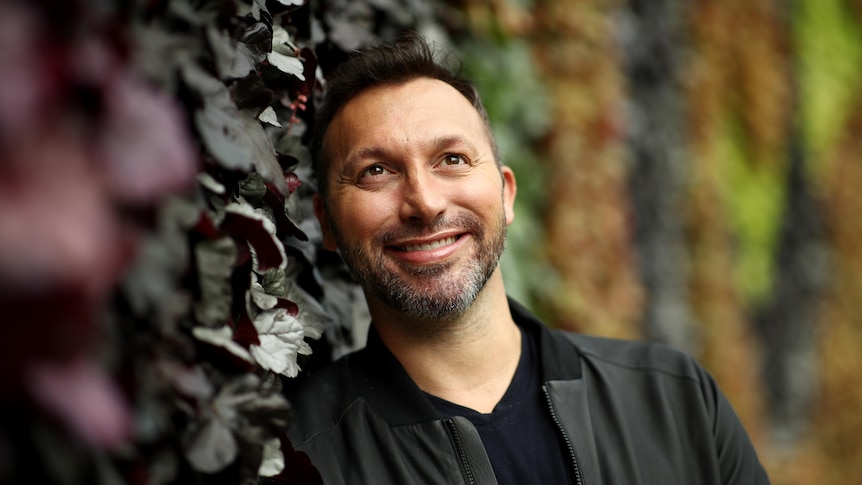
Ian James Thorpe, born on October 13, 1982, in the Sydney suburb of Milperra, Australia, is one of the most celebrated swimmers in history.
Standing at an imposing 6 feet 5 inches with size 17 feet that propelled him through the water like a torpedo, he specialized in freestyle events but also excelled in backstroke and individual medley.
Thorpe’s journey began as a way to combat boredom while watching his older sister at swim meets, but it quickly evolved into a career marked by dominance, resilience, and inspiration.
Beyond the pool, he has been an advocate for mental health, youth initiatives, and LGBTQ+ rights, using his platform to foster positive change.
Retiring in 2006 after a storied career, Thorpe briefly attempted a comeback for the 2012 London Olympics but ultimately stepped away due to injury, leaving behind a legacy that continues to influence the sport.
Siblings
Ian has one sibling, an older sister named Christina Thorpe.
Born three years before Ian in 1979, Christina introduced the Thorpe household to competitive aquatics, often dragging her younger brother to the poolside during her own training sessions.
By 1995, the siblings were training under the same coach, Doug Frost, at East Hills Boys Technology High School, where Christina’s selection for the Australian team at the Pan Pacific Swimming Championships that year heightened the family’s immersion in the sport.
Christina, though not achieving the same international acclaim as her brother, remained a supportive figure throughout his career.
Career
At just 14, Thorpe became the youngest male to represent Australia internationally, debuting at the 1997 Pan Pacific Championships and earning a silver medal in the 4x200m freestyle relay as the youngest q there.
Also Read: Kathleen Baker Siblings: All About Rachel Baker
His breakthrough came in 1998 at the World Championships in Perth, where, at 15, he shattered the 400m freestyle world record to claim gold, marking him as the youngest world swimming champion ever.
Thorpe’s ascent continued with a dominant performance at the 1998 Commonwealth Games, securing multiple golds and solidifying his status as a prodigy.
The pinnacle arrived at the 2000 Sydney Olympics, held in his home country, where the 17-year-old delivered under immense pressure, anchoring world-record wins in the 4x100m and 4x200m freestyle relays while claiming individual golds in the 400m freestyle and a silver in the 200m.
Between Olympics, he amassed titles at the 2001 and 2003 World Championships, including a historic six golds in 2001 alone.
At the 2004 Athens Games, Thorpe added two more individual golds in the 200m and 400m freestyle, a silver in the 4x200m relay, and a bronze in the 100m, though he retired shortly after amid waning motivation and personal challenges.
A 2011 comeback bid for London 2012 fell short at trials, and a 2013 shoulder injury ended further pursuits, but his nine-year elite tenure left an indelible mark, elevating swimming’s popularity in Australia and beyond.
Accolades
Thorpe’s haul includes 11 World Championship golds, making him one of the most decorated swimmers in history, and 10 Commonwealth Games golds, complemented by nine Pan Pacific titles.
He shattered 23 world records, including iconic marks in the 200m, 400m, and 800m freestyle, and became the first athlete to win six golds at a single World Championships in 2001.
Off the blocks, Thorpe was named Swimming World Swimmer of the Year a record four times (1998, 1999, 2001, 2002) and Australian Swimmer of the Year for five consecutive years from 1999 to 2003.
In 2000, at just 17, he received the Young Australian of the Year award, recognizing his contributions to sport and youth.
Further honors include induction into the Sport Australia Hall of Fame in 2008, the Australian Sports Medal, and appointment as a Member of the Order of Australia (AM) in 2014 for service to youth, Indigenous education, and swimming.
Email your news TIPS to Editor@Kahawatungu.com — this is our only official communication channel
