


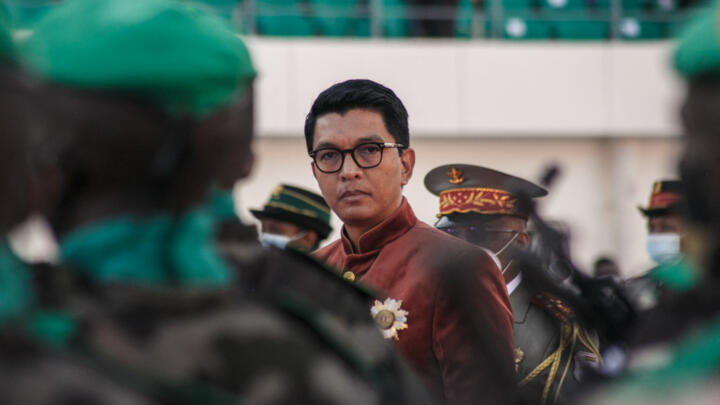
Madagascar’s President Andry Rajoelina is no longer believed to be in the country after being flown out of the African nation on a French military aircraft, following a deal with President Emmanuel Macron, French radio REI reported on Monday.
Rajoelina was increasingly isolated after losing the support of a key army unit that joined thousands of youths protesting against corruption and poverty and demanding his resignation.
A Madagascar presidency spokesperson did not immediately respond to requests for comment on the RFI report.
Demonstrations in the former French colony erupted on September 25 over water and power shortages but have quickly escalated into an uprising over broader grievances, including bad governance and lack of basic services.
In a further challenge to Rajoelina, opposition members of Madagascar’s National Assembly will begin impeachment proceedings against him, opposition leader Siteny Randrianasoloniaiko told Reuters on Monday.
Rajoelina warned on Sunday of an attempt to seize power in the island nation off the coast of southern Africa after losing the support of CAPSAT, an elite unit which had helped him seize power in a 2009 coup, following more than two weeks of Gen Z protests.
CAPSAT said over the weekend it was taking charge of the military and appointed a new army chief. On Monday, a faction of the paramilitary gendarmerie supporting the protests also took control of the gendarmerie at a formal ceremony in the presence of senior government officials, a Reuters witness said.
The president of the Senate – a focus of public anger during the protests – was relieved of his functions, the Senate said in a statement, and Jean André Ndremanjary.
In the absence of a president, the leader of the Senate takes the post until elections are held.
Gen Z protests mirror those in Nepal and Kenya
On Monday, thousands of people gathered in a square in the capital, shouting “the president must quit now”
Hotel worker Adrianarivony Fanomegantsoa, 22, told Reuters his 300,000-ariary ($67) monthly salary was barely enough to cover food, explaining his reasons for joining the protests.
“In 16 years the president and his government have done nothing except enrich themselves while the people stay poor. And the youth, the Gen Z, suffer the most,” he said.
Madagascar’s military leadership underwent a major shake-up over the weekend, signalling a shift in power away from President Rajoelina.
After a high-level meeting involving senior figures from the Defence Ministry and top military commanders, Gen Demosthene Pikulas was appointed as the new Chief of Staff.
The leadership change came just hours after a deadly confrontation between soldiers from a powerful military unit, CAPSAT, and members of the paramilitary police force, the gendarmes – a clash that highlighted simmering tensions within the armed forces.
Gen Pikulas attended a ceremony on Sunday in honour of a CAPSAT soldier who was allegedly shot dead by the gendarmes, AFP news agency reported.
Alongside Gen Pikulas’s appointment, Gen Nonos Mbina Mamelison was named the new Commander of the Gendarme Forces, marking another significant change at the top of the military hierarchy.
The coming days will be critical in determining whether the shake-up brings about unity or deepens divisions within Madagascar’s armed forces.
The reshuffle has also raised questions about whether President Rajoelina is still in control, especially as he has not been seen in public since last Wednesday.
The anger mirrors recent demonstrations in countries including Morocco, Nepal and Kenya against ruling elites, with protesters sporting T-shirts and flags with the same symbol – a skull with a straw hat from the Japanese manga series “One Piece” – used by their counterparts in Asia and Latin America.
Madagascar, where the median age is less than 20, has a population of about 30 million – three-quarters of whom live in poverty, with GDP per capita plunging 45 percent between independence in 1960 and 2020, according to the World Bank.
While the country is best known for producing most of the world’s vanilla, other exports including nickel, cobalt, textiles and shrimps are also vital to foreign earnings and employment.
By Agencies
Email your news TIPS to Editor@Kahawatungu.com — this is our only official communication channel
