


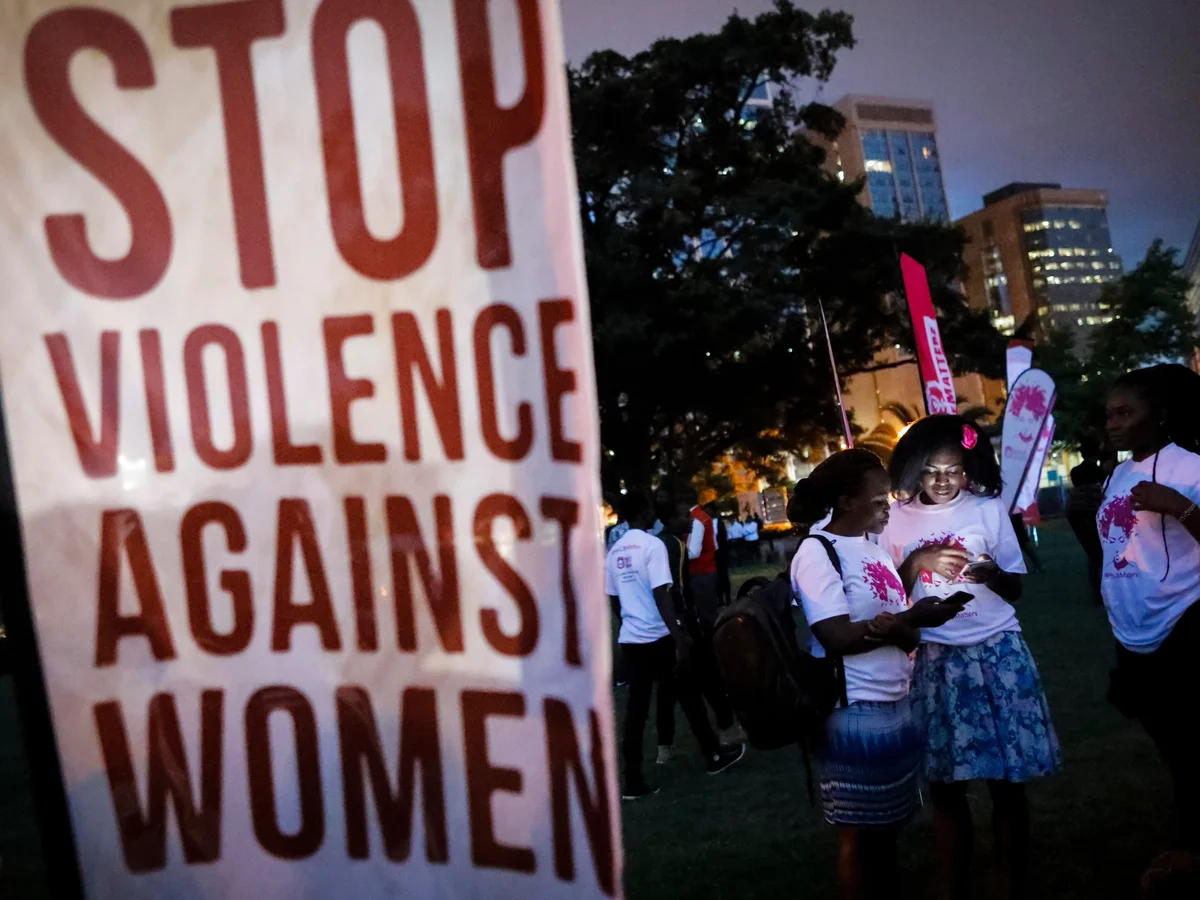
Men accounted for the majority of homicide victims in 2024, underscoring a deeply rooted violence crisis.
A study conducted by the National Crime Research Centre (NCRC) found that men were the primary victims, especially in cases related to cattle rustling, communal conflicts, drunken altercations, land-related conflicts and many mob violence cases resulting from suspicions of theft.
Women were predominantly killed in incidents of domestic violence, land/property succession disputes, love triangles and other crime-of-passion related incidents.
“In some places, the perpetrators targeted people in employment and the business persons/community. In other places, elderly women, especially those living alone in rural areas and whose husbands were far away working in towns, were often victims of rape and killings.”
“Women returning home from funeral vigils and disco matanga in places such as Busia were also targets,” the report dubbed ‘Study on Homicides in Kenya’ found.
From the findings, males were found to be the overwhelming majority of victims as well as the perpetrators of homicides, while women were largely victims, with few cases of female perpetrators.
NCRC was directed to undertake the research following a surge in homicides including the killing of women and girls which raised concerns on what may have led to this apparent surge) in the year 2024 that raised considerable public and official concern that necessitated immediate action.
The agency also sought to assess the nature and details of the apparent surge, what accounted for it, what the data means in terms of victims and perpetrators and whether there were particular areas/localities and circumstances associated with the increase as well as make recommendations on what would stem the tide of the killings and assist relevant agencies in their prevention and response interventions.
It found that there was no single driver of the various killings across the country, rather, there was a host of drivers that intersect at the individual, family and society levels.
According to the findings, land conflicts were at the heart of many of the disputes that led to killings within families, among neighbours and business partners and also fuelled animosity between communities.
Many of those interviewed pointed out that land disputes linked to succession within families were a common reason for the killings.
Others were linked to disputes over land between buyers and sellers.
Border areas where different ethnic communities have long-running land and resource conflicts were also hotspots for the killings.
Tensions and conflicts over grazing and farming, sometimes led to deaths and revenge killings.
In the Narok-Kisii, Bomet-Kisii and Isiolo border areas, some of the killings were attributed to these conflicts while, a significant number of homicides, and, in particular, those of women and girls occurred in private settings such as homes in both the rural and urban areas, rental apartments, hotels, as well as Airbnb mainly in the urban areas.
The killings were often perpetrated by intimate partners, family members, or business and other acquaintances, and were linked to domestic disputes, business wrangles and gender-based violence.
The study drew insights from the National Police Service (NPS) annual statistics on homicides, the 2024 data on homicides as recorded by the Directorate of Criminal Investigations (DCI) and data from 20 to 30 interviews with key informants and focus group discussions in each of the 15 counties of Vihiga, Busia, Kakamega, Embu, Isiolo, Homa Bay, Kisii, Kisumu, Nakuru, Narok, Kilifi, Mombasa, Kiambu, Nyeri, and Nairobi.
It also checked on police records of the cases and established that in 2024, the DCI recorded 1,011 cases of homicides, 70 percent of whom the victims were male, with females accounting for 30 percent.
Of the perpetrators, 630 were male and 88 females with several cases where the perpetrators were not known.
There were 149 such incidents.
“In summary, the 2024 DCI data of reported/recorded incidents shows that males were the highest number of victims. This might sound surprising, given the many cases of killings of women reported in Kenyan media.”
“Police data is, however, quite reliable and the higher percentage of male victimization is consistent with the records over time and like those from other countries across the world. Male perpetrators were the overwhelming majority in all cases,” the findings show.
The study also assessed the NPS annual statistics that were found to have recorded a total of 3,015 cases of homicides classified as murder, manslaughter, infanticide, procuring abortion, concealing birth, suicide, and causing death by dangerous driving.
NCRC noted the NPS data differed from that of the DCI due to the inclusion of dangerous driving cases which are handled by the traffic department and not the DCI.
At the same time, there are also many cases at the recording stage that are categorised by the recording officer as either murder, or manslaughter but on further investigation may not actually qualify as such.
“The determination of whether an incident qualifies as manslaughter rather than murder is conclusively made at the prosecution stage,” NCRC says adding that therefore, from the annual police statistics, there was no indication of a surge in the killings in 2024,” the report adds.
It however noted that the current system of official data recording, reporting and case management makes it difficult to establish the actual facts and trends.
“For one, the summary annual statistics the NPS provides have no details of the incidents. Comprehensive data is the starting point for effective interventions to address the problem of homicides in Kenya. Currently, police and policy actors do not have the accurate picture for strategic interventions beyond specific incidents. There is also a challenge with the classification. It is not possible, for example, to establish whether an incident is manslaughter or not until it reaches the prosecution stage, and yet that category is included in the annual statistics.”
The study relied on data from the DCI for its analysis since it was made available as a detailed record of incidents with information on the circumstances, motives and context, detailed accounts that NCRC said made it possible to undertake various kinds of analyses that would not be possible with the annual summary statistics.
From the DCI data therefore, the study established that homicides were largely concentrated in the poorer neighbourhoods and, in particular, informal settlements and slums and adjacent areas.
In Nairobi City County, 70 per cent of the homicides were found to have concentrated in the Eastlands of Nairobi particularly Starehe/Kamukunji, Kariobangi, Kayole, Mathare, Embakasi, Njiru and Kasarani, a pattern that repeated itself in other urban areas.
Homicides were also prevalent in areas where land conflicts were widespread, areas with inter-ethnic/inter-communal conflicts, in private settings such as homes/rental apartments/hotels and air bnbs in urban areas and in poorly lit streets, dark alleys, and around entertainment places, especially at night.
Victims were sometimes attacked during robberies, gang violence, or after disputes in bars and nightclubs.
Regarding the killers’ profiles, the study found that the majority of the perpetrators were young males aged between 20 and 40 years, with Nairobi and Mombasa killers being in their 20s and 3os.
The study confirmed that most homicides were committed by people who had a form of relationship with the victims either as neighbours, intimate partners, family members, acquaintances or business relations.
The perpetrators were not strangers to the victims
On what was driving these homicides, the study established that generally most killings were linked to unresolved conflicts at the family and societal levels, psychosocial and mental health problems, drugs and substance abuse, economic stressors and limited youth opportunities, cultural beliefs and societal norms, growing culture of mob violence and vigilantism, entrenched and normalization of GBV and institutional and leadership failures such as systemic weaknesses in the entire criminal justice chain.
“Across the country there was a widespread public perception that security agencies are unable and ineffective in preventing the killings,” the study shows.
Children were also found to have often been killed within the family context and often by someone close to them such as (step) parent or other member of the family, in other cases, children were incidental victims of conflicts between their parents and yet in others, mothers were manipulated or provoked by the stepfathers to commit the killings.
It also found that a culture of violence and patriarchy underpinned the killings of women and girls in situations where women were killed when they rejected arranged or forced marriages, and when they decided to end relationships with men
According to the study, many times, men expressed a belief in the “ownership” of women in their lives and justified the violence on that basis.
Other elderly women were subjected to stigma and killed by mob violence, as in other cases, women were killed to conceal evidence of sexual assault, rape and defilement.
Commercial sex workers were particularly vulnerable since they operate in the shadows, afraid that the authorities and their clients are not required to present their details at lodgings and rental places.
“Women’s vulnerability to violence and killings is exacerbated by the lack of a social support system for those at risk. There was very limited assistance for women subjected to violence by their spouses, partners or family. Those seeking to leave violent relationships had very few support services available to them,” the report adds.
Regarding investigations and prosecutions of homicide cases, the study established that the Directorate is faced with capacity and resource challenges that make it difficult to deliver on its mandate including inadequate investigations caused by inadequate skills and limited resources that resulted in failure to identify and arrest the perpetrators, premature termination of investigations and failure to secure community support by giving evidence.
Those samples further claimed corruption as responsible for compromising the entire justice process which explains the police’s assertion that the public has been reluctant to provide support in investigations.
The respondents further blamed the courts for delays and backlog of cases that the study found to be linked with understaffing, gaps in police investigations and securing of witnesses and in some cases, judges’ frequent transfers.

Email your news TIPS to Editor@Kahawatungu.com — this is our only official communication channel
