


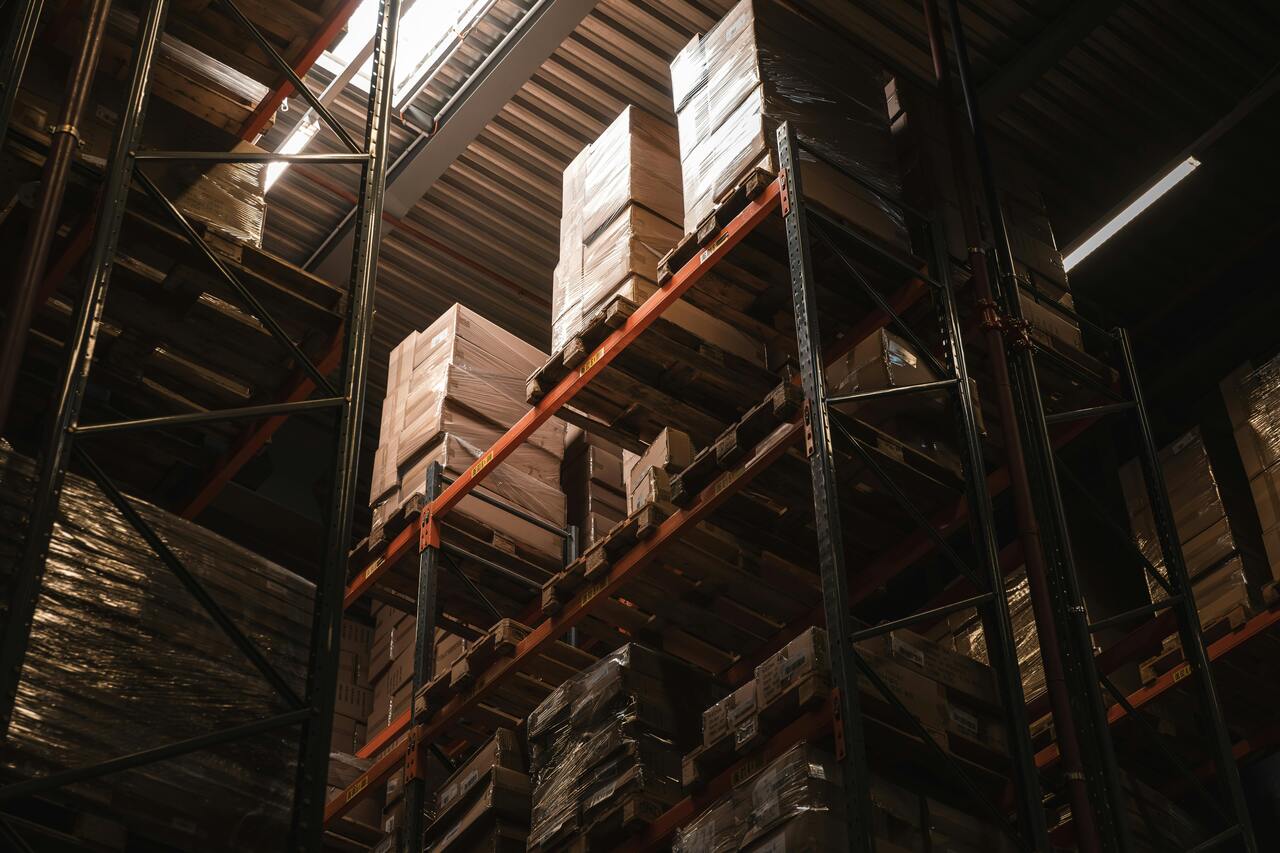
If you run a sports shop, a fashion label, or a delivery service – or any business for that matter – your warehouse is going to be very important for your business (it’s where you store all your goods before being shipped out). In other words, this is where your stock gets stored before heading out to be delivered to your customers.
In any warehouse, efficiency and organisation are very important. Without a clear structure in place, it can be hard to manage your stock. This can lead to your orders taking longer to go out, and important space being taken up. This is why we want to introduce you to racking and shelving – they both play a vital role. They aren’t just storage options – they’re a way to help make your business run more smoothly.
The right racking and shelving can help you make the most out of your warehouse space. It helps you keep an eye on your stock and make the daily running of your warehouse a lot smoother. When you buy the right racking and shelving, your staff will find picking and packing a lot easier, helping them do it faster. Having a good storage solution in place won’t just tidy things up – it will help your business or company grow.
Below, we take a closer look at racking and shelving, exploring why they matter and the key benefits they offer to warehouse operations. Keep on reading to learn more and discover some useful reasons why they may benefit you.
Why racking and shelving matter
Warehouse space isn’t cheap. Every square metre costs you month after month, so you want to use every bit of it wisely. That’s where racking and shelving really earn their keep – they help you stretch your space further and get the most out of your money.
Maximise vertical space
Instead of relying solely on floor space, racking and shelving systems allow you to utilise the full height of your warehouse. By storing goods vertically, businesses can significantly increase storage capacity without having to purchase a new premise to store goods. A lot of warehouses have tall ceilings, which is exceptionally useful for racking and shelving, as you can take full advantage of this vertical space, transforming unused height into valuable storage capacity.
Improve stock organisation and visibility
Effective racking and shelving systems make it easier to organise stock in a logical and structured way. When your storage is clearly defined, it helps improve visibility, allowing staff to quickly identify where products are stored and how much of each item is available. Better organisation reduces the time spent searching for items, improves picking accuracy, and supports more efficient stock control. This is particularly important in fast-paced environments where accuracy and speed are essential to meeting customer expectations.
Enhance safety for staff and goods
Safety is a key consideration in any warehouse environment. Properly installed racking and shelving help ensure goods are stored securely, reducing the risk of items falling, becoming damaged, or causing injury.
Clear aisles, stable storage systems, and defined load limits all contribute to a safer working environment for staff. In addition, well-organised storage reduces clutter and improves visibility, helping to minimise accidents and protect both employees and inventory.
Adapt storage as the business grows
One extremely useful factor of racking and shelving is that it can evolve as your business develops. It’s inevitable that as your business does better, your stock volumes will increase as well as your product range expanding – the more this happens, the more pressure it will put on your current setup.
You can use flexible racking and shelving systems to make it easier to adapt your storage solution as your business grows. This helps reduce the need for you to have a costly relocation due to your current set-up not being big enough. When using a modular storage solution, you can reconfigure the layout or add additional levels. You can also add new zones if required. This adaptability helps you keep your warehouses running efficiently.
The difference between racking and shelving
You have probably seen racking and shelving used a lot together. This happens a lot, so to help you, we have listed some of the differences.
Racking systems
Racking systems are typically designed for heavier, palletised goods and are commonly used in larger warehouses and distribution centres. You may have seen them being used on TV. They are usually accessed using forklifts or pallet trucks, and companies use them for larger items that they need to store.
There are a few racking systems that you may come across, these include pallet racking, drive-in racking, cantilever racking, and push-back racking. These solutions are best suited for high-volume storage and environments where you need to maximise space.
Shelving systems
Shelving systems are generally used for lighter items, smaller products, and manual picking operations. They are ideal for warehouses that handle individual items, cartons, or a wide variety of SKUs.
Shelving is often found in smaller warehouses, stockrooms, and picking areas, where flexibility and easy access are key. Options such as longspan shelving, boltless shelving, and mobile shelving allow businesses to tailor storage to their specific needs.
What to consider when installing racking and shelving
Installing racking and shelving is an investment that can have a long-term impact on the efficiency, safety, and scalability of your warehouse.
The capacity you require
Understanding product weight, pallet loads, and safe working limits is essential when installing racking and shelving systems. Every storage system is designed to support a specific load, and exceeding these limits can compromise structural integrity, leading to damaged goods, system failure, or serious safety risks for warehouse staff.
Before installation, businesses should carefully assess the weight of the items being stored, including the combined weight of pallets, packaging, and goods. It’s also important to consider how weight is distributed across each level, as uneven loading can place additional strain on racking or shelving.
Accessing your stock
Your staff members will be accessing your stock on a daily basis. With this in mind, it’s important you consider how easy it is for your staff to gain access to the different items. The choice between manual picking and mechanical handling, such as forklifts or pallet trucks, has a direct impact on layout, aisle widths, and overall workflow efficiency.
A lot of the time, manual picking will take place in your warehouse. If this is the case, you may want to install narrower aisles and shelving systems that allow easy access to each item. In contrast, forklift-operated racking systems need wider aisles to accommodate vehicle movement, turning circles, and safe lifting at height.
The items you are storing
The type of goods you store will influence the racking or shelving system you choose. Different products have different weights, sizes, handling, and access requirements, and selecting a system that aligns with these needs is key to maintaining efficiency and reducing the risk of damage.
Palletised goods are typically best suited to racking systems designed for bulk storage and mechanical handling. Long or awkward items, such as timber, pipes, or metal lengths, often require specialist storage solutions, whilst smaller items, individual SKUs, or fast-moving stock, shelving systems are often more effective.
Your budget for racking and shelving
Budget is an important factor when choosing racking and shelving systems, but it’s essential to balance upfront investment with long-term efficiency and cost savings. While lower-cost options may seem appealing initially, they may not always provide the durability, flexibility, or capacity required as your business grows.
Investing in high-quality, well-designed storage systems can reduce ongoing costs by improving space utilisation, increasing productivity, and minimising the risk of damage or safety incidents. Efficient layouts can also help lower labour costs by reducing picking times and improving workflow. Looking after your business finances is extremely important for your long-term success.
Health and safety when it comes to racking and shelving
On a final note, it’s important to touch on the health and safety aspects of racking and shelving. Health and safety should always be a top priority for you and your business, and this is very important in warehouse environments. In a warehouse, you will have a lot of heavy loads, moving of equipment, and your staff will be working from a height as part of their daily routines.
As a whole, racking and shelving systems are safe for your business, as they are used widely across a lot of industries. They have been designed to withstand different types of loads and provide stable, secure storage for a wide range of goods that businesses (like yours) may use. However, like with most equipment that you buy, they must be used in line with the manufacturer’s guidelines.
Regular inspections, clear load signage, and proper staff training all play a key role in maintaining safety. By ensuring racking and shelving are fitted correctly and used as intended, businesses can create a safe working environment that protects employees.
Racking and shelving are far more than simple storage solutions – they are essential components of an efficient, safe, and scalable warehouse operation. From maximising vertical space and improving stock visibility to enhancing safety and supporting long-term growth, the right storage systems can have a significant impact on how smoothly a warehouse functions.
Do you use racking or shelving solutions in your business, and what are your thoughts on each option? When did you first introduce racking and shelving, and did you notice an immediate improvement in efficiency and organisation within your warehouse? Is there anything missing in our guide that you think we should be adding? Let us know in the comment box below. We look forward to hearing from you.
Email your news TIPS to Editor@Kahawatungu.com — this is our only official communication channel
