


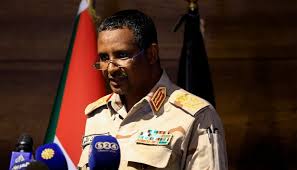
Algoney Hamdan Dagalo Musa, the youngest brother of the Sudanese paramilitary Rapid Support Forces (RSF) commander Mohamed Hamdan “Hemedti” Dagalo, is now using a Kenyan passport and Emirati ID, according to an updated US sanctions memo.
The Dubai-based businessman leads the procurement of weapons for the RSF. In October 2024, the Department of the Treasury’s Office of Foreign Assets Control (Ofac) sanctioned Dagalo for “leading efforts to supply weapons to continue the war in Sudan”.
In the memo issued by the US Department of the Treasury on Thursday, Dagalo’s information included the addition of a Kenyan passport and an Emirati identification number.
Kenyan officials said they are investigating the claims. Other sources said he was given the passport through fraud.
The previous description of the RSF senior commander only included an additional passport from Sudan.
Kenya’s government is known to be close to the United Arab Emirates, the principal sponsor of the RSF.
Last April, Kenyan President William Ruto faced calls for international sanctioning due to his ties to the RSF.
Ruto hosted RSF leadership last February to announce a parallel government in Sudan, and has also been accused of involvement in Hemedti’s gold trade, which funds the RSF’s activities.
According to Ofac, Algoney Dagalo has managed RSF-affiliated front companies that help facilitate the import of vehicles and military equipment into Sudan.
US citizens, businesses and financial institutions are prohibited from providing funds, goods or services to sanctioned individuals.
Last October, Sudanese-American organisations decried the commander’s visit to Washington, in spite of the sanctions placed on him.
US senators Jeanne Shaheen and Cory Booker echoed these concerns in a letter sent last month to top US officials, calling for an investigation into Algoney Dagalo’s trip.
“Unless authoried, Ofac’s regulations generally prohibit a designated person from engaging with the US economy,” the letter stipulated.
Human rights organisations and journalists have documented mass rapes and ethnically motivated killings by the RSF, which receives funding and military support from the UAE.
Thursday’s updated memo was issued alongside another Ofac announcement to sanction three RSF commanders for their role in the 18-month siege of el-Fasher, where the RSF was found to have committed a campaign of massacres, sexual violence and mass executions.
The announcement comes after a UN investigation this week concluded that the RSF’s siege bears “hallmarks of genocide”.
More than 13 million people have been displaced and tens of thousands killed since the start of the Sudanese civil war in April 2023, which the UN has described as the world’s largest humanitarian crisis.
The disclosure came as the US announced fresh sanctions against three RSF commanders, Elfateh Abdullah Idris Adam, Gedo Hamdan Ahmed Mohamed and Tijani Ibrahim Moussa Mohamed, following an assault on El Fasher, an attack that United Nations experts said bore the “hallmarks of genocide”.
On January 29, 2026, the European Union (EU) followed suit, adding him to its own sanctions list.
According to the Treasury, Algoney is a senior RSF figure deeply involved in logistics and procurement.
In modern war, such roles matter as much as battlefield command. Conflicts are no longer sustained only by territory but by access.
Passports enable sanctioned actors to move money, secure residence, open accounts and build rear bases far from the front line.
Mobility, not trenches, is the new high ground.
This is where Nairobi’s protestations of neutrality wobble.
Sudan’s military authorities have long accused Kenya of being overly accommodating to RSF leaders, charges Nairobi denies.
Kenya styles itself as a regional mediator, a bridge between warring camps. But mediators trade in trust, and trust is allergic to ambiguity.
By Middle East Eye
Email your news TIPS to Editor@Kahawatungu.com — this is our only official communication channel
