


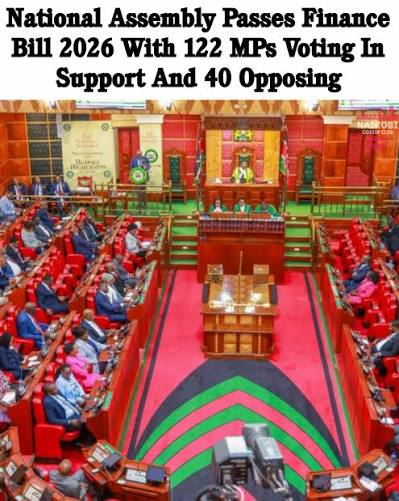
The National Assembly passed the Finance Bill 2026 with amendments, paving the way for its transmission to President William Ruto for assent before it becomes law.
The legislation was approved on Thursday night through an electronic vote after lawmakers adopted all amendments proposed by the Finance and National Planning Committee.
A total of 122 Members of Parliament voted in favour of the Bill, while 40 opposed it. No member abstained from the vote.
The MPs had initially approved the Bill by acclamation.
However, after several legislators demanded a division and the required threshold was met, the Speaker directed that a formal electronic vote be conducted in accordance with parliamentary procedures.
The Bill’s passage follows weeks of intense debate in the National Assembly, with lawmakers scrutinising a raft of tax and revenue measures proposed by the government.
The Finance Bill 2026 seeks to amend several key tax laws, including the Income Tax Act, Value Added Tax Act, Excise Duty Act, Tax Procedures Act, Miscellaneous Fees and Levies Act, and the Stamp Duty Act.
The proposed changes are aimed at broadening the tax base, strengthening compliance, and enhancing revenue mobilisation to support government spending priorities in the 2026/2027 financial year.
During the committee stage, legislators adopted a number of amendments in response to public concerns. These included the removal or revision of some contentious tax proposals, as well as measures aimed at preserving tax reliefs on selected essential goods.
Some MPs had tried to oppose the Bill. It comes a week before the third anniversary of the June 25, 2024 Gen Z protests when protesters overran Parliament over the then Finance Bill 2024.
More than 200 people died in the period.
Email your news TIPS to Editor@Kahawatungu.com — this is our only official communication channel
