


With Sir Keir Starmer resigning, Andy Burnham, the newly elected Makerfield MP, is almost certain to be the next UK prime minister.
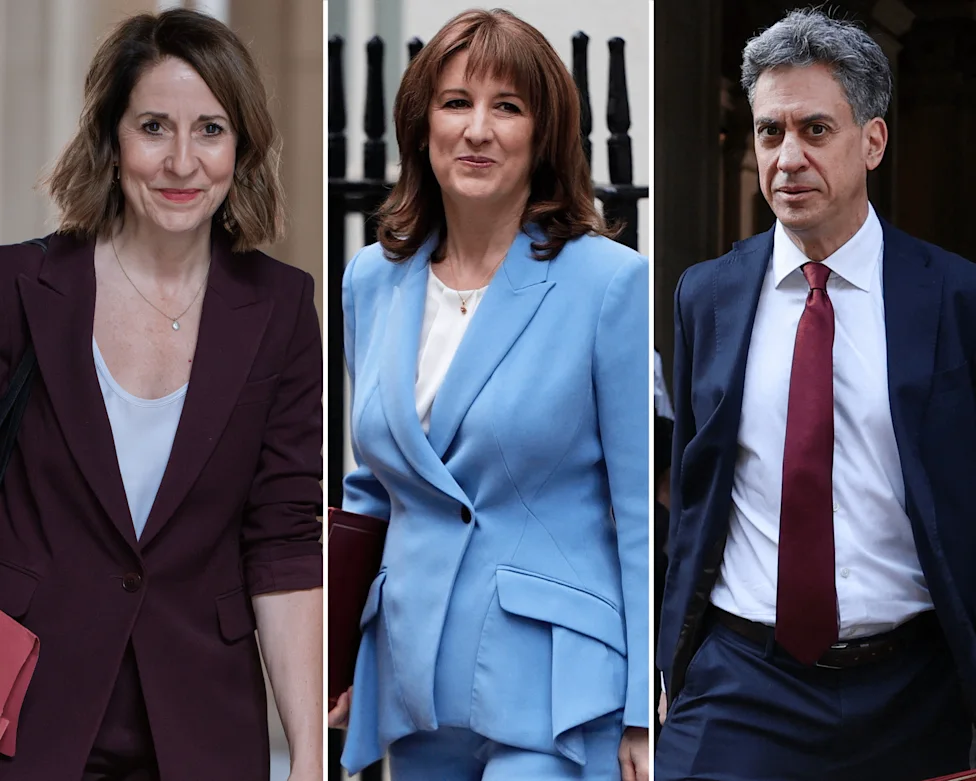
And it is expected he will want a new chancellor to replace the current occupant of Number 11 Downing Street, Rachel Reeves.
That person will face quite the in-tray – high debt, low growth, welfare reform, defence spending, and the economic fallout from the US-Israel war with Iran to name a few issues.
Here are the names of those believed to be in the running for the job and what they could mean for your finances.
Ed Miliband
Miliband is now the bookmakers’ strong favourite for the number two job in British politics, with the former Labour party leader politically closer to Burnham than other rivals.
Paul Johnson, former director of think-tank the Institute for Fiscal Studies, sees this closeness as a positive.
“You really don’t want people in Number 10 and Number 11 having very different views,” he says.
However, opinions differ on whether former Treasury adviser Miliband would receive the backing of the financial markets, which the government depends on to lend money.
Nick Macpherson, the former permanent secretary at the Treasury, told the Financial Times: “The key to gaining the confidence of the markets is to articulate, implement and deliver a coherent strategy.
“Miliband is one of the few cabinet members with the intellect, experience, and authority to do that.”
Yet, others see Miliband as an inflation risk, believing his drive for net zero as energy secretary as partly responsible for the UK’s high energy prices compared to other countries.
Analysts say that reputation, whether accurate or not, could affect how bond markets react to his time as chancellor.
Lord Richard Walker, the boss of Iceland and the government’s cost-of-living tsar, has warned Miliband would be “a disaster” in the role.
He said Miliband had been “far too ideological” about tackling climate change, and that his policies were “putting unfair pressure on households… in a very regressive way”.
The head of the Unite union, Sharon Graham says Miliband as chancellor would be a “noose around the neck” of job creation because of his opposition to new oil and gas drilling in the North Sea.
However, the TSSA union backs Miliband, with the Labour-affiliated rail union saying he would be willing to take a “different approach” to “delivering an economy that works for everyone”.
Wes Streeting
Wes Streeting, a former contender for the Labour leadership, was the early favourite for chancellor, with suggestions that he could be awarded the job for coming out and backing Burnham and withdrawing his own ambitions.
However, economist and cross-bench peer Lord Jim O’Neill, who has been providing advice to Burnham, has warned against this approach.
While not naming any specific person, he told the BBC: “There are clearly some people pushing to be chancellor who feel they are owed it for their support.”
Lord O’Neill says the advice he has given Burnham is to “figure out what his priorities are as prime minister before he picks a chancellor”.
Though Burnham may appreciate Streeting’s backing, the pair’s politics differ – with Burnham seen to be inclined to spend more than Streeting.
Simon French, chief economist at consultancy Panmure Liberum, says Streeting is a “relatively market-friendly option” because of his pro-growth comments, but also a political risk because he might someday want to be prime minister.
As for the idea that Streeting could get the job because of his support rather than his abilities, French said: “Politics is what politics is. It’s a popularity contest.”
Pat McFadden
Though seen as a less likely option than Streeting or Miliband, some view Pat McFadden as the most qualified pick, having held shadow Treasury jobs, been a business minister in a previous Labour government, and also being the current work and pensions secretary.
It is his experience in the latter role that could help him to tackle what many say will be any future chancellor’s biggest task: welfare reform.
Panmure Liberum’s French believes the markets may view McFadden as “the safest pair of hands” out of those in the running and will either react positively or neutrally if he were picked.
But if Burnham is looking for a clean break from the previous government, he will likely overlook the Sir Keir-loyalist.
Yvette Cooper
Foreign Secretary Yvette Cooper could be a surprise compromise pick.
She has years of experience in government, serving as chief secretary to the Treasury under Gordon Brown, and sits somewhere in between Miliband and McFadden or Streeting politically.
Danni Hewson, head of financial analysis at financial services firm AJ Bell, calls her a “middle of the road” option but also “a bit more of an unknown”.
Rachel Reeves
It’s looking increasingly unlikely that the current Chancellor, Rachel Reeves, will keep her job.
A spokesperson for Burnham said no decisions had been made about who he would appoint, but reports suggest Reeves would be replaced and offered a junior or mid-level cabinet position.
Reeves has urged a Burnham-led government to stick to what she is doing because it is “beginning to bear fruit”. Burnham has said previously he would stick to Reeves’ fiscal rules.
She defended her handling of the UK economy in an interview with the BBC, in which she backed the former Manchester mayor, despite the reports of her potential demotion. She opted to welcome him to parliament in a photoshoot with other MPs and was notably absent from Sir Keir’s resignation speech.
Reeves told the British Chambers of Commerce conference she was proud of her record so far but there was “more to do”.
And the rest
Then there are the longlist of wildcards.
One of those is current Home Secretary Shabana Mahmood, who is reported to be financially conservative but has limited economic experience.
Former defence secretary John Healey, who very publicly quit because he did not believe the government was spending enough on defence, is another option.
However, Paul Johnson says Burnham would essentially be committing to meeting that spending demand if he chose him.
“If I was Andy Burnham, I would not want to tie myself to that particular pillar that quickly,” he said.
Bookmakers and reports also mention chief secretary to the prime minister Darren Jones, who ruled himself out of the running for the leadership, and former chief executive of the Resolution Foundation Torsten Bell as outsiders.
While some politicians are more likely to be hired than others, each one will want the job.
As Lord O’Neil puts it: “The ones whose names are in the papers are the ones who are putting themselves forward.”
By BBC News
Email your news TIPS to Editor@Kahawatungu.com — this is our only official communication channel
