


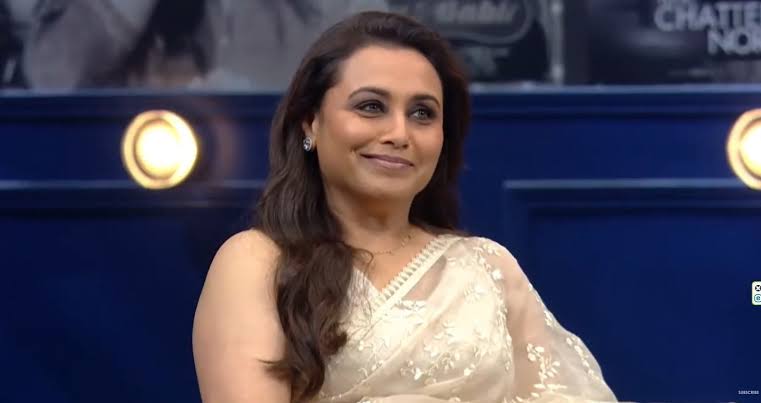
Rani Mukerji was born on March 21, 1978, in Mumbai, into a family steeped in cinematic history.
Her father, Ram Mukherjee, was a pioneering director and producer, while her mother, Krishna, was a playback singer.
Her paternal grandfather, Sashadhar Mukherjee, was a co-founder of the iconic Filmalaya Studios, and her uncles, Joy and Subhash Mukherjee, were also prominent figures in the film industry.
This environment meant that cinema was not just a profession for Rani but a birthright.
Despite her illustrious background, Rani initially harbored no intentions of becoming an actress. She was a shy, introverted child who wanted to pursue a career in fashion or interior design.
However, destiny had other plans.
She made her acting debut in 1996 with the Bengali film Biyer Phool, followed by her Bollywood debut in Raja Ki Aayegi Baraat (1997).
Siblings
Rani has three siblings, each of whom has led lives distinct from the relentless glare of the paparazzi.
Her elder brother, Raja Mukherjee, is a film producer and director who has worked behind the scenes in the industry.
Raja has been a pillar of support for Rani, often managing her early career logistics and guiding her through the tumultuous initial years of Bollywood.
Unlike his sister, Raja prefers a low-key existence, focusing on production and family affairs rather than seeking the limelight.
The bond between Rani and Raja is one of mutual respect and quiet solidarity, grounded in their shared childhood memories of the Mukerji household.
Rani also has an elder sister, Mita Mukherjee, who is the most private of the siblings.
Mita has stayed completely away from the film industry, choosing to lead a life far removed from the glitz and glamour of Mumbai.
She is married and settled, and Rani has often spoken about how Mita’s grounded nature keeps the family anchored.
The eldest of the Mukerji children is Deb Mukherjee, who is actually Rani’s half-brother from her father’s first marriage.
Also Read: Amitabh Bachchan Siblings: All About Ajitabh Bachchan
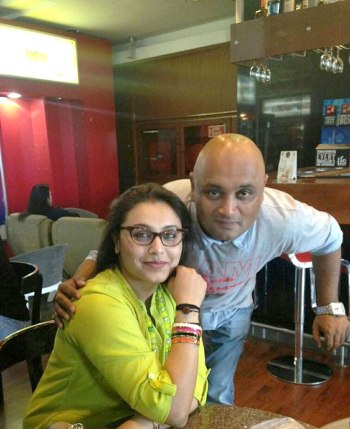
Deb is a noted actor and producer in his own right, having appeared in films like Abhimaan and Piya Ka Ghar.
Interestingly, Deb is also the father of actress Ayesha Mukherjee, making him the link between Rani and the next generation of the family.
Career
After a string of forgettable films in the late 1990s, Mukerji’s portrayal of a troubled girlfriend in Ghulam showcased her raw talent.
However, it was the 2002 film Saathiya that truly established her as a leading lady.
Her performance as Suhani, a young bride navigating the complexities of marriage, earned her widespread critical acclaim and her first Filmfare Critics Award for Best Actress.
The early 2000s became her golden era, with a series of blockbusters that included Chalte Chalte, Hum Tum, Veer-Zaara, and Bunty Aur Babli.
Each role was distinctly different, proving that Rani could do it all. She was equally convincing as the feisty, small-town con artist as she was as the dignified, heartbroken lover.
What set Rani apart from her contemporaries was her willingness to experiment.
In 2005, she delivered what many consider the finest performance of her career in Sanjay Leela Bhansali’s Black.
Playing the role of Michelle McNally, a deaf-blind woman who triumphs over her disabilities, Rani underwent a physical and emotional transformation that left audiences and critics stunned.
The film was a watershed moment, elevating her from a mainstream star to an actor of international calibre.
She followed this with a series of women-centric films like Kabhi Alvida Naa Kehna and Laaga Chunari Mein Daag, where she played complex, flawed, and deeply human characters.
After a brief hiatus post her marriage to filmmaker Aditya Chopra, Rani made a resounding comeback with the crime thriller Mardaani (2014), portraying a fierce police officer battling child trafficking.
The film was not just a commercial success but also a statement of intent – Rani was not here to play the love interest; she was here to lead.
She reprised this role in Mardaani 2 (2019), once again proving that her intensity and conviction remained undiminished.
Most recently, her performance in the 2023 film Mrs. Chatterjee vs Norway further cemented her reputation as an actress who can shoulder a film with sheer emotional gravitas.
Accolades
Over a career spanning more than two decades, Rani Mukerji has amassed a treasure trove of awards and honors, a testament to her enduring talent.
She has won seven Filmfare Awards across various categories, which is a remarkable feat for any actor.
Among these, her Best Actress wins for Hum Tum and Black are particularly memorable, as they showcased two entirely different spectrums of her craft.
For Black, she also received the prestigious National Film Award for Best Actress, a recognition that solidified her status as one of the finest actors of her generation.
Beyond Filmfare, she has been honored with several Screen Awards, IIFA Awards, and Zee Cine Awards, often dominating the Best Actress categories during her peak years.
In 2014, the Government of India honored her with the Padma Shri, the fourth-highest civilian award in the country, acknowledging her contribution to the arts.
Additionally, she has been felicitated at various international film festivals, including the Melbourne Indian Film Festival, where she was awarded for her outstanding contribution to Indian cinema.

Email your news TIPS to Editor@Kahawatungu.com — this is our only official communication channel
