

African Chiefs of Correctional Services Convene in Nairobi to Advance Human Rights-Based Prison Reforms

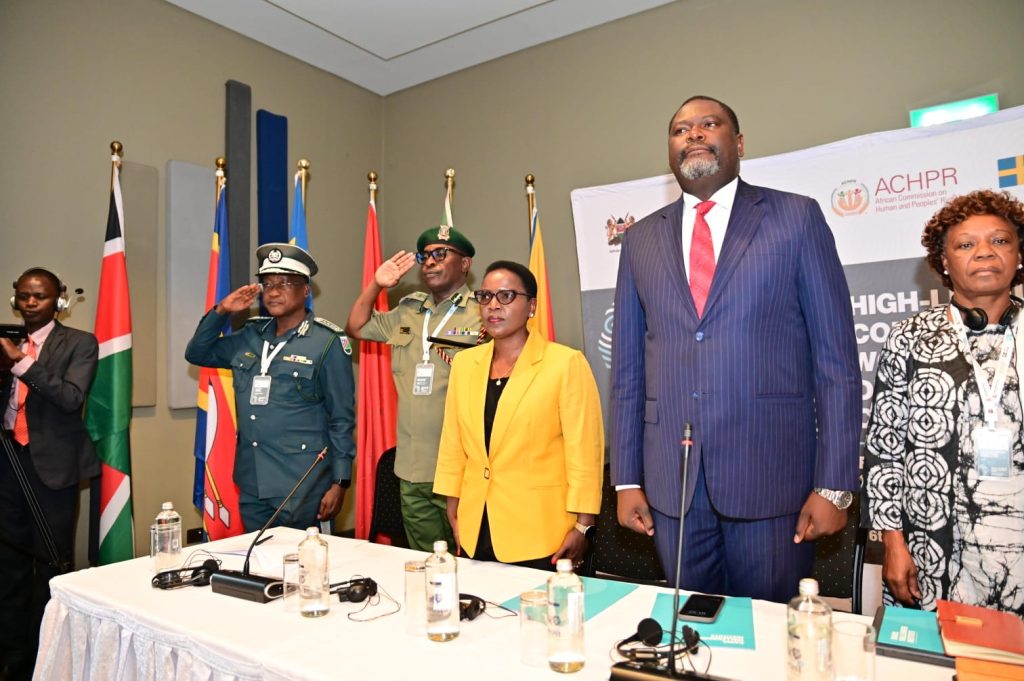
Chiefs and Commissioners General of Correctional Services from over 30 countries are gathering in Nairobi for a High-Level Consultative Workshop focused on implementing the African Commission on Human and Peoples’ Rights (ACHPR) resolutions on prisons and conditions of detention.
This is part of efforts to reform prison systems across Africa.
The three-day workshop, hosted by the Government of Kenya in collaboration with the ACHPR’s Special Rapporteur on Prisons and the Raoul Wallenberg Institute of Human Rights and Humanitarian Law (RWI), aims to tackle persistent challenges within African correctional systems, including overcrowding, inadequate infrastructure, and weak rehabilitation frameworks.
Presiding over the official opening, Cabinet Secretary for the Ministry of Public Service, Human Capital Development, and Special Programmes, Geoffrey Ruku, emphasized the urgency of reforming prisons not merely as detention centers, but as institutions of rehabilitation, human dignity, and social reintegration.
“The ACHPR resolutions provide a critical framework that challenges us to reflect deeply on the state of our correctional facilities and to act decisively,” said Ruku. “This workshop is a clarion call to transform our systems into models of humane treatment, respect, and rehabilitation.”
Ruku further underscored the importance of aligning National laws with the African Charter on Human and Peoples’ Rights, noting that “if all countries can be able to domesticate the African Human and Peoples’ Rights, then it can go a long way in ensuring that we abide by the law and respect the rights of every person.”
He highlighted provisions of the Charter that recognize the right of children to care for their aging parents, describing them as a reflection of Africa’s deeply rooted cultural values and commitment to dignity across generations.
Participants are expected to share national experiences, develop action plans for reform, and explore strategies for operationalizing parole systems, reducing pre-trial detention, and enhancing compliance with international standards such as the Nelson Mandela and Bangkok Rules.
Key sessions will include presentations on collaborative monitoring with the ACHPR, proposals for a continental online training programme, and peer learning on best practices in correctional management.
In his wide-ranging remarks, Ruku also paid tribute to former Kenyan Vice President Moody Awori for his leadership in prison reform.
“He made some very good strides with very comfortable buses carrying inmates from one place to the another, from prison to hospital, from their holding and correctional facilities to the High Court, and they seemed to enjoy themselves,” Ruku recalled.
“At the moment, we must also strive to improve from some of these legacies.”
He emphasized that prison reform must go beyond infrastructural upgrades.
“We must importantly address legal safeguards, protection from all sorts of ill-treatment, access to justice, and the mental and physical well-being of all inmates.”
Having visited several correctional facilities, Ruku acknowledged that space is one of the greatest challenges facing most African countries, including Kenya.
He urged the forum to come up with strategies on how governments and prison leadership can prioritize expansion and modernization of facilities, with particular attention to vulnerable populations such as the sick and the elderly.
Ruku also addressed the financial constraints many African governments face.
“In most African governments, the demands exceed the revenue collected. We want to run away from loans, and so we need to continue with collaborations and partners, even as we ponder how to reduce borrowing,” he noted.
He lauded the Swedish International Development Cooperation Agency (SIDA) for its financial support in making the workshop possible, calling it a model for effective international partnership.
The event is being coordinated by the State Department for Correctional Services and the RWI, and aims to strengthen regional collaboration, policy reform, and leadership in correctional management.
As delegates begin deliberations, the spirit of regional solidarity and commitment to human dignity remains high.
“The implementation of ACHPR resolutions is not merely a bureaucratic obligation,” Ruku concluded. “It is a profound affirmation of our values as Africans values that honour humanity, compassion, and justice.”