

AG says hosting UDA meetings at State House is not unconstitutional

AG says hosting UDA meetings at State House is not unconstitutional
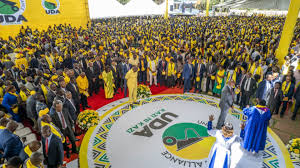
The Attorney General asked the High Court to dismiss a petition challenging President William Ruto’s decision to host members of a political party at State House.
She called the case “frivolous, vexatious and an abuse of the court process.”
The case was filed by lawyer Lempaa Suyianka, who claims that inviting members of the United Democratic Alliance (UDA) to State House amounted to a misuse of public office and violated constitutional provisions. The petitioner argued that the meetings blurred the line between government functions and partisan politics, raising questions about fairness and the proper use of state resources.
However, respondents, including the Attorney General, the Comptroller of State House, and the party itself, argue that the petition is legally weak and does not meet the threshold for a constitutional claim.
They contended that the petition fails to clearly explain how any constitutional rights were violated and does not link specific provisions of the Constitution to the complaint.
The government cited previous cases, including Anarita Karimi Njeru v R (No 1) and Mumo Matemu v Trusted Society of Human Rights Alliance, which make it clear that constitutional petitions must state with precision what the complaint is, which provisions of the Constitution were allegedly breached, and how the violation occurred.
The respondents also argue that President Ruto acted within his constitutional powers. Articles 131 and 132, they say, give the President the duty to coordinate government functions, promote national unity, and respect the diversity of Kenya’s communities.
Hosting political leaders and citizens at State House, they argued, is part of facilitating government operations and fostering unity.
The court papers further noted that Kenya is a multi-party democracy and that citizens are free to associate and participate in political activities.
The respondents also cited Article 143, which grants the President immunity from civil proceedings for actions undertaken in the exercise of official duties.
The government urged the court to dismiss the petition with costs, arguing that it fails to demonstrate harm, lacks clarity, and does not meet the legal requirements for a constitutional case.
Suyianka filed the case seeking court to declare that the use of State House for partisan political activities is unconstitutional.
In the petition filed at the Constitutional and Human Rights Division of the High Court in Nairobi, lawyer Suyianka argues that public resources have been unlawfully deployed to advance the interests of the ruling United Democratic Alliance (UDA) party.
The petitioner wants the court to issue orders compelling UDA to reimburse the State for all costs incurred during political activities held at State House and State Lodges.
Suyianka, in the case is also seeking a permanent injunction barring all political parties from holding meetings, forums, or political activities at the State House.
The petitioner argued that the State House and State Lodges are national institutions reserved strictly for official State functions and are maintained using public funds approved by Parliament.
The petition listed several political meetings held at the State House between April 2025 and February 2026, including engagements with regional political leaders, party meetings, and a UDA aspirants’ forum that reportedly hosted thousands of party members and officials.
Suyianka contends that these gatherings were not State functions, but political party activities involving party officials, aspirants, and elected leaders acting in their political capacities.
He argued that State House facilities, security, staff, logistics, catering, and communication infrastructure were used during the meetings, yet no public disclosure has been made on the costs incurred or whether UDA reimbursed the State.
Meanwhile, the Kahawa Law Courts in Nairobi will, on April 7, 2026, hear a pre-bail report in the case against one Joseph Mokua Amenya, who faces multiple charges in connection with an alleged online scam that defrauded Josephat Matundura Bwochora of Sh16 million.
Court documents said between March 19 and December 14, 2024, Mokua, together with others not yet before court, lured the complainant into investing in a fictitious business venture involving the leasing of motor vehicles to the United Nations.
The scheme, carried out through emails, phone communications, and mobile money transactions, induced the complainant to transfer large sums of money electronically.
The accused faces charges of obtaining money by false pretences under Section 313 of the Penal Code, acquisition of proceeds of crime under Section 4(a) read with Section 16(1) of the Proceeds of Crime and Anti-Money Laundering Act, 2009, and conspiracy to defraud under Section 317 of the Penal Code.
The complaint was filed by Danstan Omari and Associates Advocates on behalf of Bwochora, who reported the alleged fraud to the Directorate of Criminal Investigations December 24, 2024.
The lawyers detailed how the accused induced the complainant to part with the money under the false pretext of a legitimate UN-related business venture, and they have since been actively following up with investigators to ensure the case progresses.
Investigators from DCI’s Serious Crime Unit, stated in an affidavit that the accused used multiple online channels, including M-Pesa and bank transfers, to receive the funds. Part of the money has been traced to accounts linked to the accused, with further financial trails under investigation.
In the affidavit, Chief Inspector Stephen Oduor opposed bail, citing the risk of absconding, the serious nature of the offences, and the possibility of tampering with electronic evidence.
“The amount involved is substantial and carries serious penal consequences upon conviction, thereby creating a strong incentive for the accused to abscond court proceedings if released,” the court was told.
He also highlighted those ongoing investigations aim to identify other accomplices and fully trace the flow of the fraudulent funds.
“The accused, having knowledge of the financial channels and accounts used, is in a position to interfere with documentary and electronic evidence if released,” reads court documents.
Oduor suggested that if the court were to consider bail, strict conditions should be imposed, including a substantial bond commensurate with the Sh16 million involved, surrender of passports and travel documents, and close monitoring to prevent interference with the investigation.
The court is expected to revisit the case on April 7 to consider the pre-bail report and determine whether Mokua can be released on bond while the investigation continues.

