

Appeals court cuts more than Sh704 million health ministry chemicals

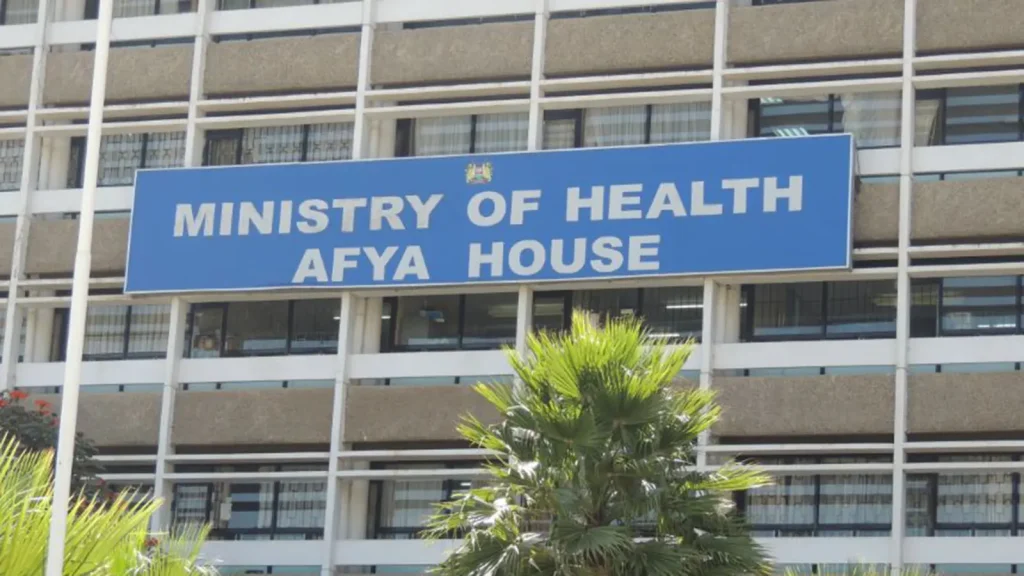
The Court of Appeal has cut more than Sh704 million from an award against the government in a nearly three-decade-old dispute over the supply of anti-malaria chemicals and equipment to the Ministry of Health.
The appellate court upheld a Sh1.157 billion award to Equip Agencies Limited for goods supplied to the government in the 1990s, but overturned an order requiring the government to pay compound interest at 18 per cent a year.
A three-judge bench comprising Justices Patrick Mativo, Paul Lilan and Dr John Okello found that the company had not pleaded or proved its entitlement to compound interest, removing the substantial interest component that had accumulated over the years.
The judges, however, dismissed the Attorney General’s attempt to have the entire claim thrown out on grounds that it had been filed out of time.
The dispute arose from two contracts entered into between Equip Agencies and the government in 1993 and 1995 for the supply of insecticides, anti-malarial chemicals and related equipment on an “as and when required” basis.
The company supplied the goods between June 1995 and October 1996 and raised invoices totalling Sh1.001 billion.
Trouble arose after the Permanent Secretary in the Ministry of Health cancelled several Local Purchase Orders through letters dated July 19 and August 23, 1996, even though Equip Agencies said the goods had already been delivered, accepted and distributed.
The company subsequently sued the government in 1999, claiming Sh1.862 billion in special damages, comprising the outstanding principal and interest calculated at 18 per cent.
The High Court ruled in favour of Equip Agencies in December 2011.
The judgment was later amended in September 2012 to provide for compound interest at 18 per cent from March 1, 1999 until the amount was paid in full.
The Attorney General challenged the decision before the Court of Appeal, arguing that the claim was time-barred under the Public Authorities Limitation Act.
Under Section 3(2) of the Act, contractual claims against the government are generally required to be filed within three years.
The Attorney General argued that the company’s suit, filed on July 22, 1999, was out of time because the relevant claims had arisen before July 23, 1996.
The judges held that the cause of action arose on August 23, 1996, when the Ministry cancelled the LPOs despite the goods having already been supplied and accepted.
The court said that contracts based on an “as and when requested” arrangement create individual obligations within the broader contractual framework, meaning that a cause of action arises when an individual supply obligation is breached.
The judges also rejected the government’s argument that some of the LPOs were invalid because they had not been signed by the officer authorised to incur expenditure.
The court held that the government could not use internal administrative procedures to escape obligations arising from contracts entered into by its officials.
“The contracts in issue including the LPOs are therefore valid and claim based on the same are not statute barred,” the judges said.
The court, however, found fault with the High Court’s decision to award compound interest.
Equip Agencies had called an expert witness who testified that the company had borrowed money from commercial banks, but the appellate judges found that the evidence did not establish that the borrowing was a direct consequence of the government’s failure to pay.
The court said a claimant seeking compound interest must demonstrate actual loss and causation, show that the loss was foreseeable, specifically plead the claim as special damages and provide details of the periods and borrowing rates involved.
It must also demonstrate that it actually obtained financing at commercially reasonable rates.
In the Equip Agencies case, the judges found that compound interest had not been specifically pleaded and that the company had failed to establish a causal connection between its borrowing and the government’s breach.
There was also no evidence that the government knew the company was relying on third-party financing to fulfil its obligations.
The appellate court relied on its 2025 decision in Pickwell Properties Limited v Kenya Commercial Bank Limited, in which it reaffirmed that compound interest must be specifically pleaded and proved.
The court therefore partially allowed the Attorney General’s appeal and varied the High Court judgment.
The government was ordered to pay Equip Agencies Sh1,157,846,150, representing the principal amount for the invoiced goods, together with interest at the court rate from June 26, 1995 until payment in full.
Each party was ordered to bear its own costs.

