

Bettino Craxi Siblings: All About Rosilde and Antonio Craxi

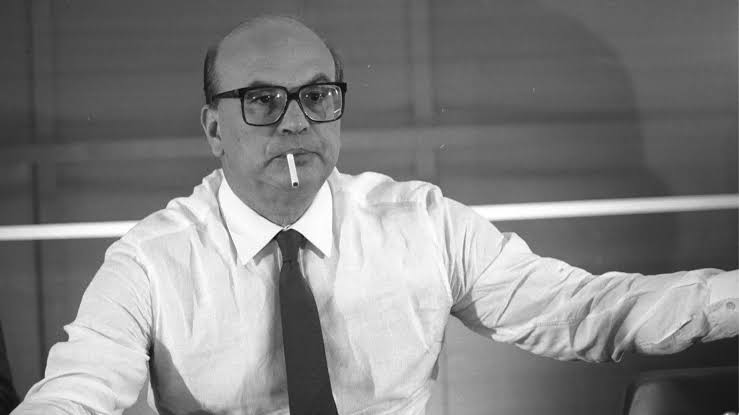
Bettino Craxi PHOTO/The Guardian
Bettino Craxi, born Benedetto Craxi on February 24, 1934, in Milan, Italy, was a prominent Italian politician and statesman.
The son of Sicilian lawyer and anti-fascist Vittorio Craxi and Maria Ferrari, he grew up in a politically engaged family environment.
He joined the Italian Socialist Party (PSI) as a teenager and rose to become one of the defining figures of Italy’s First Republic.
Craxi served as leader of the PSI from 1976 to 1993 and as Prime Minister of Italy from 1983 to 1987, becoming the first Socialist to hold that office in the postwar Italian Republic.
He died on January 19, 2000, in Hammamet, Tunisia, where he had lived in exile.
Siblings
Bettino was the eldest of three children.
His younger brother, Antonio Craxi, was born in 1936 and died in January 2017 at the age of about 80 or 81 in Magenta, near Milan.
Antonio, a graduate of Bocconi University, worked as an economist and businessman.
He became a devoted follower of the Indian spiritual leader Sathya Sai Baba, moving with his second wife to Puttaparthi, India, for a period after the death of one of his children, before later returning to Italy.
His younger sister, Rosilde Craxi, was born in 1940 and died in September 2017 in Milan at the age of 77 after a period of illness.
She was the last surviving sibling.
Rosilde graduated in law and collaborated in her father Vittorio’s legal studio in via Podgora in Milan, a place that had hosted socialist and anti-fascist gatherings even during the Fascist period.
She married Paolo Pillitteri, who later became mayor of Milan, and they had children including Stefano Pillitteri.
Also Read: Matteo Renzi Siblings: Meet the Siblings Squad Behind the Italian Politician
Career
Craxi entered politics early, joining the Socialist Youth Movement and the PSI in his teens.
He became a member of the party’s central committee in 1957, won a seat on the Milan city council in 1960, and was elected to the Chamber of Deputies in 1968.
He advanced to deputy secretary of the PSI in 1970.
After the party’s poor showing in the 1976 elections, he was chosen as general secretary, a position he held until 1993.
Under his leadership the PSI shifted toward a more reformist, social-democratic orientation and played a central role in several coalition governments.
In 1983 Craxi became Prime Minister, heading coalition governments (often called the pentapartito) with the Christian Democrats and smaller parties until 1987.
His governments pursued anti-inflationary policies, revised the Concordat with the Catholic Church, and took a firm stance on foreign-policy matters, including the Sigonella crisis involving the United States.
The PSI increased its electoral strength during this period.
In the early 1990s the Mani Pulite (“Clean Hands”) investigations into systemic political corruption engulfed Craxi and the PSI.
He resigned as party leader in 1993, faced multiple convictions for corruption and illicit party financing (which he contested, arguing the practices were widespread), and left Italy for Tunisia in 1994, remaining there until his death.
Accolades
Craxi is noted as the first Socialist prime minister of the Italian Republic and as the leader of one of the longer-lasting postwar Italian governments.
Contemporaries and later observers have described him as one of the most influential and powerful politicians of the First Italian Republic, credited with modernizing the PSI and asserting a more independent socialist identity within the Italian party system.
His governments are associated with efforts to stabilize the economy and manage complex coalition dynamics during the 1980s.

