

Blow To Farmers As Fertilizer Subsidy Program Faces Budget Cuts

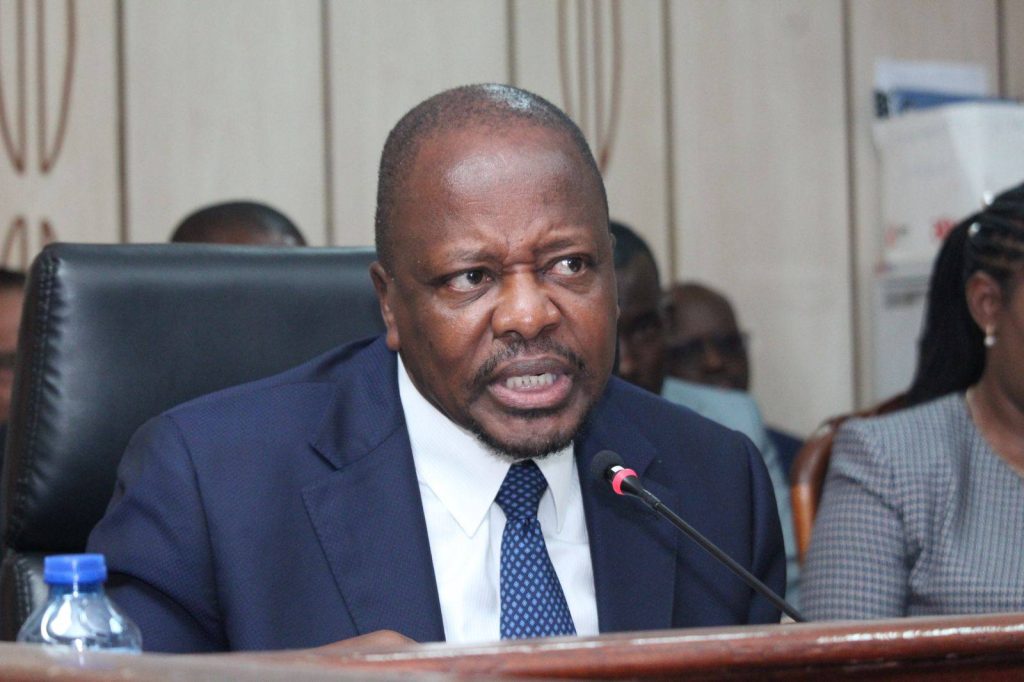
Farmers face uncertainty as the government’s fertilizer subsidy program is likely to be affected by budget cuts in the Ministry of Agriculture and Livestock Development.
Appearing before the National Assembly’s Agriculture and Livestock Development Committee on Friday, Principal Secretary for the State Department of Agriculture Paul Rono confirmed that the subsidy program, among other key initiatives, is at risk due to funding reductions.
The committee, chaired by Igembe West MP John Mutunga, pressed the PS to explain how the ministry had implemented its 2023/24 budget and justify its request for additional funds, given that a significant portion of the previous allocation remained unused.
“When the ministry is unable to transfer Sh2 billion for recurrent expenditure to state corporations, what happens to these institutions? Do they stop functioning? And with over Ksh3 billion unutilized for development, while agriculture remains underfunded, what explanation do you have for Treasury to justify additional funding?” Mutunga questioned.
In response, Rono stated that despite financial constraints, the ministry had managed to achieve over 80 percent of its targets, though he acknowledged struggling due to delays in exchequer releases.
Members of Parliament also raised concerns about policy implementation and resource distribution in the agricultural sector. Soy MP David Kiplagat questioned why the Agricultural Finance Authority (AFA) remains non-operational despite having a full board and a substantive CEO.
PS Rono assured the committee that mechanisms were being put in place to ensure the agency starts functioning effectively.
Kwanza MP Ferdinand Wanyonyi criticized the ministry’s distribution of maize driers, arguing that they should be allocated to high maize-producing regions.
He further pointed out that the timing of the distribution often renders the equipment ineffective, as the driers tend to arrive at the end of the harvesting season.
Lawmakers also opposed the proposed merger of the Agricultural Finance Corporation (AFC) and the Commodities Fund, which provides loans to farmers. They expressed concerns over placing the institutions under the National Treasury, warning that such a move could hinder agricultural policy implementation and limit financial support for farmers.
Meanwhile, PS Kello Harsama of the State Department for Livestock warned that several projects, including those in the leather sector, could stall due to lack of funding. He highlighted the leather industry as a key strategic investment opportunity that risks being derailed by budget constraints.
Cabinet Secretary Mutahi Kagwe, however, defended the budget cuts, insisting that financial adjustments are necessary to sustain the country’s economy.
According to Kagwe, the Ministry of Agriculture and Livestock had requested Sh27.488 billion for recurrent expenditure in the State Department of Agriculture but was allocated Sh21.380 billion. Similarly, the department had sought Sh50.737 billion for development expenditure but received only Sh31.690 billion. The State Department for Livestock was allocated Sh4.623 billion for recurrent expenditure against a requirement of Sh6.784 billion, while development funding stood at Sh6.515 billion against a request of Sh22.754 billion.