

Blue gum menace: How Kisii is losing the fight

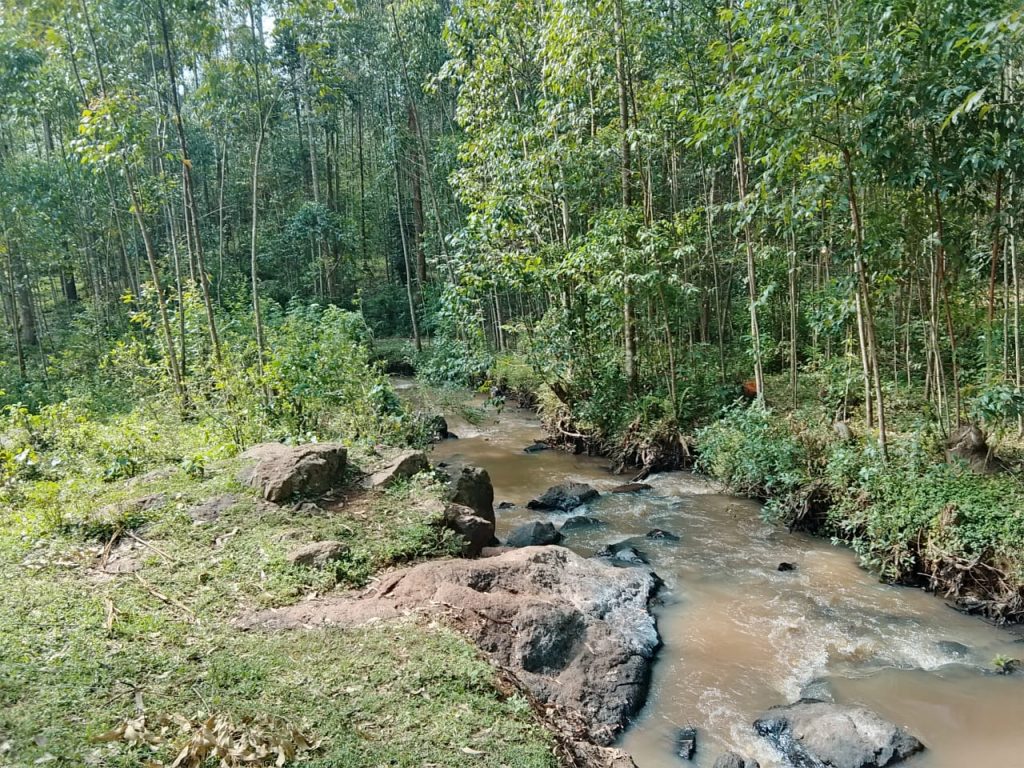
In the green, hilly landscapes of Kisii County, water has long been a reliable gift of nature.
Today, however, many rivers and springs are shrinking worrying residents and environmental experts.
At the centre of this growing concern is the widespread planting of blue gum trees along river banks and springs.
The ucalyptus species is popular with farmers and gives the farmers quick returns.
Along most riverbanks and near natural springs, blue gum trees stand tall with their presence quietly draining the land.
According to David Bokea, an environmental expert, the trees consume large amounts of water through their deep root systems, lowering underground water tables.
“These trees take in a lot of water, especially when planted near rivers and wetlands.”
“When they dominate riparian areas, nearby springs begin to dry up,” he added.
Bokea said the trees have become a menace and are threatening the ecosystem as most rivers were now drying up or greatly reducing their volumes.
He spoke of a region staring into uncertain future as more people plant the trees along river banks.
“They would actually affect even underground water system because they are already drastically reducing it,” added Bokea.
In Masaba South, some residents say they have seen the changes firsthand.
River Ramacha which traces its source at Ichuni, near Keroka, continues to register low flow volumes.
In some villages, springs that once flowed throughout the year are now drying up especially during the dry season.
In Motonyoni area for instance, Ritibonge dam has since dried up forcing locals to rely on one remaining spring.
“Our children used to fetch water just a few metres from our homes,” said Ann Nyaboke.“Now they walk long distances to the spring.”
Nyaboke reminisced how water levels at Ritibonge has receded over the years.
“It was so big, it drowned our children during swimming expeditions, those growing here now cannot believe there was a huge water mass here,” she said.
At Sansora for instance, the solitary spring faces imminent danger from blue gums planted metres from it.
During dry seasons it sparks a scramble.
On occasion, women fight.
Schools like Motonyoni, rely on the water especially when the tanks run out.
The situation is the same in places like Geteri which is faces acute water shortages.
Some residents however say dug up wells have eased off the shortage.
Not all though access the precious commodity as the wells are dug up by individuals in their lands and thus limiting accessibility.
“Not all people welcome us to fetch from their wells because of privacy concerns,” Thomas Kerongo, a resident says.
Despite all these environmental risks, blue gum trees remain attractive to farmers .
John Koroba says blue gums often mature quickly and provide income through timber and poles.
“I planted them to pay school fees,” he said.
“They grow fast, and buyers are always available. But now I see the water problem.”
Bokea who has served as a County Environmental officer in the past acknowledge this tension between livelihood and conservation.
He said the government has since outlawed the planting of the trees along water bodies and also promoting safer alternatives.
“The government is not against farmers earning a living,but eucalyptus should not be planted near rivers and springs. It is encouraging indigenous trees and bamboo instead.”
Past efforts to remove blue gum trees from sensitive areas and restore affected water sources stalled .
Kisii County has been actively trying to curb the widespread planting and presence of the speech especially near water sources with county government directives and court orders pushing for removal and replacement with water-friendly indigenous trees to restore water levels and conserve the environment.
This initiative however continue to face challenges from those who rely on it for income.
George Marube for instance said he had been relying on the sales to pay school fees.
“Indigenous trees are good but often take too long. Nobody buys them as electric poles anyway because they don’t elongate so much,” he said.