

Boniface Mwangi claims spent cartridge planted in traveling bag, says life in danger

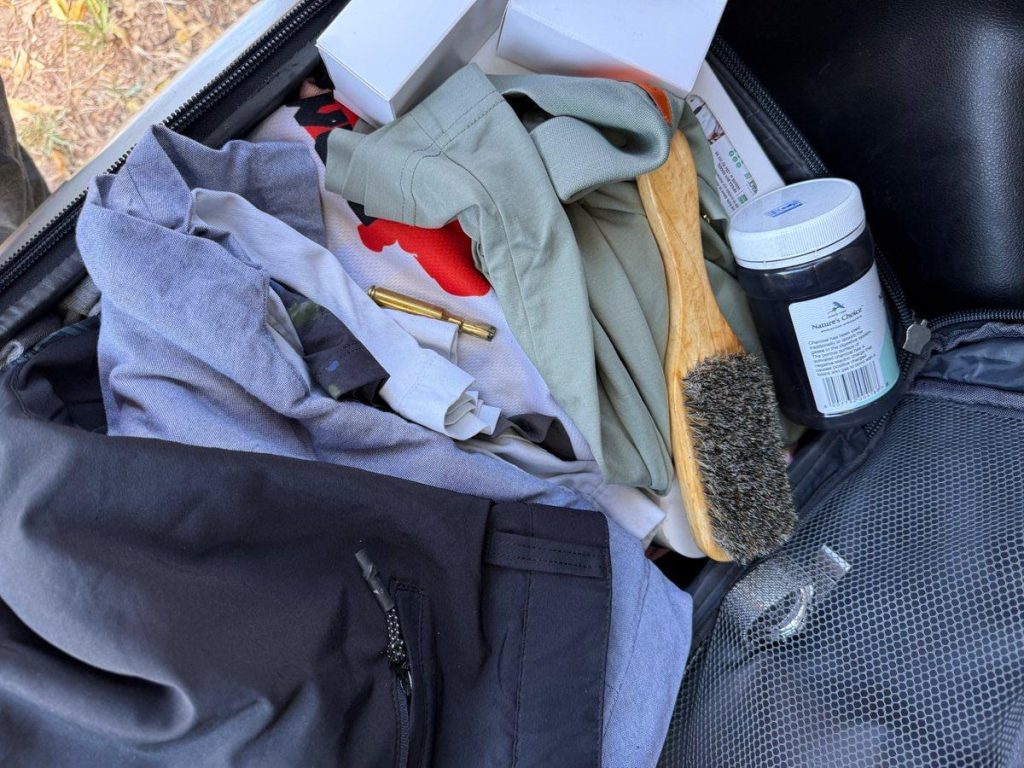
Renowned human rights activist Boniface Mwangi revealed unknown persons planted a spent cartridge in his traveling bag at the Jomo Kenyatta International Airport.
He also detailed a string of alarming threats and state-sanctioned harassment that he says place his life in immediate danger.
Mwangi, who has been a vocal critic of successive regimes, claims the current administration has escalated efforts to silence him through abductions, false arrests, online smear campaigns, and most recently—what he believes to be an attempted frame-up involving planted ammunition.
Mwangi recounted a disturbing incident on October 9, 2025, while traveling from Nairobi to Kilifi County, where he discovered a used bullet casing hidden inside his carry-on bag—an item that had planted on him when the bag been briefly taken from his possession during airport screening at Jomo Kenyatta International Airport (JKIA).
The activist believes the cartridge was deliberately planted to intimidate him or potentially incriminate him, given that he already faces charges related to alleged ammunition possession.
“I have no doubt this was a message—a direct threat to my life,” said Mwangi in a detailed statement shared with journalists and human rights groups.
“I’ve faced threats before, but the level of coordination, surveillance, and the brazenness of this regime is unlike anything I’ve seen before.”
Legal advisors reportedly warned him against reporting the incident to police, fearing he might be arrested or framed under the guise of an investigation.
Instead, Mwangi documented the discovery and notified a trusted human rights organization.
Police said they are yet to get the claims from Mwangi.
A Pattern of Intimidation
Mwangi’s statement outlines a disturbing pattern of state harassment stretching back more than a decade.
He highlighted a history of arrests, false accusations—including claims of attempting to overthrow the government—and physical assaults, including a 2017 incident where he was hit at close range by a teargas canister, and a 2021 bombing of his family’s home under construction.
But it is the events of the past 18 months that appear to mark a significant escalation.
Since June 2024, Mwangi says he has been arrested five times, narrowly escaped abduction, and faced physical surveillance and digital monitoring.
On April 2, 2025, he alleges that police officers beat him while in custody at Kilimani Police Station, resulting in hospitalization. No officers were charged.
The crackdown has not been limited to Mwangi alone.
Several of his close colleagues and fellow activists have also been arrested under what he calls “trumped-up charges” meant to paralyze grassroots organizing and suppress dissent.
Among them are individuals involved in last year’s protests against the controversial Finance Bill, which triggered widespread demonstrations and heavy-handed police response.
According to Kenya Human Rights Commission (KHRC), 159 people were victims of extrajudicial killings or enforced disappearances in 2024. During the 2025 protests, at least 65 were reportedly killed and hundreds injured.
Despite video evidence and widespread eyewitness accounts, no significant investigations have been carried out, and not a single perpetrator has been brought to justice.
Digital Warfare and Smear Campaigns
Mwangi also alleged that a coordinated digital disinformation campaign is underway to discredit him. Troll accounts flood his social media pages with death threats and accusations linking him to extrajudicial killings and unrest—narratives he says are state-sponsored.
On July 19, 2025, ahead of an expected presidential bid announcement, Mwangi was arrested without a warrant, and his home and office were searched.
Devices, documents, and personal effects were confiscated. While no charges were formally filed, a defamatory social media post by the Directorate of Criminal Investigations (DCI) linked him to terrorism and money laundering.
He said the accusations were later quietly dropped, but the damage to his reputation lingers.
“They cloned my devices, planted spyware, and now have access to private photos and sensitive family information,” he said.
“This isn’t about law enforcement. It’s about fear and control.”
Mounting Fears of Assassination
Citing parallels with political figures such as Tanzania’s Tundu Lissu and Uganda’s Kizza Besigye—both of whom have survived assassination attempts—Mwangi says the threat to his life is real and imminent.
“If anything happens to me, look no further than the State,” he said.
He accuses Kenya’s National Intelligence Service (NIS) of directing online and offline attacks and claims there is a plot to undermine his 2027 presidential eligibility through legal and financial sabotage.
Calls for Accountability and Protection
Human rights organizations, both local and international, have raised concerns over the increasing threats against civil society leaders in Kenya. KHRC, Amnesty Kenya, and Article 19 have previously called for urgent reforms in policing and greater protection for human rights defenders.
Despite the threats, Mwangi remains defiant. “They have billions and bullets. But we have truth, people power, and God. This regime is afraid—afraid of the youth, afraid of change, and afraid of accountability.”
His final words in the statement ring with a blend of hope and urgency: “We are ready to secure our freedoms, our country, and our future. They cannot stop an idea whose time has come.”

