

Bret Hart Siblings: Meet the Siblings Squad Behind the Wrestling Icon

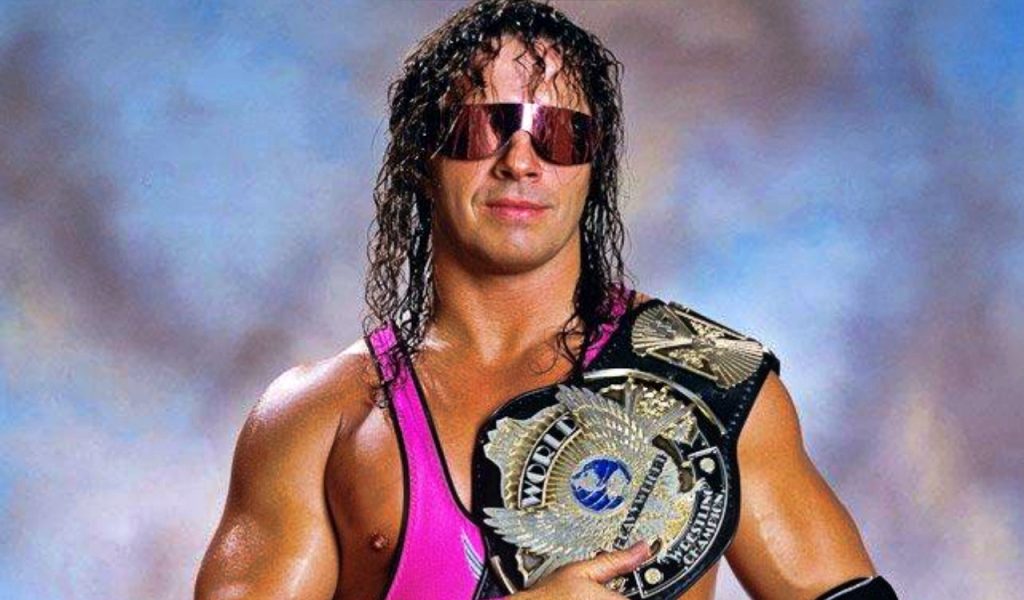
Bret Hart PHOTO/Pinterest
Bret Sergeant Hart, born on July 2, 1957, in Calgary, Alberta, Canada, stands as one of the most revered figures in professional wrestling history.
Known by his ring name “The Hitman” and famously dubbing himself “the best there is, the best there was, and the best there ever will be,” Hart emerged from the legendary Hart wrestling family.
As a second-generation wrestler with a background in amateur wrestling at Ernest Manning High School and Mount Royal College, Bret honed his craft in the infamous Hart Family Dungeon, a basement training facility that emphasized technical precision and endurance.
His career spanned decades, marked by unparalleled storytelling in the ring, international stardom, and a legacy that transcends promotions like the World Wrestling Federation (now WWE) and World Championship Wrestling (WCW).
Beyond wrestling, Hart has authored books, appeared in films and documentaries, and remains an influential voice in the industry.
Siblings
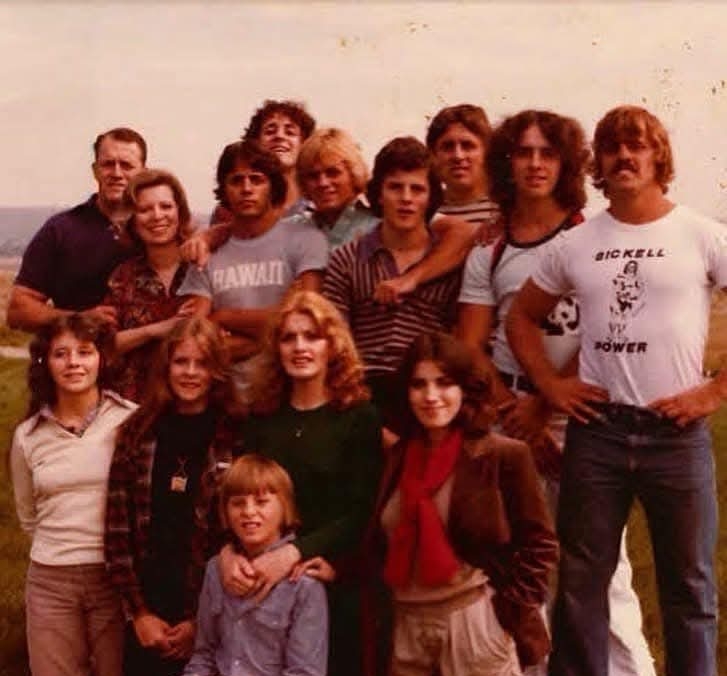
Bret grew up as the eighth of twelve children in a sprawling, wrestling-centric household led by Stu and Helen Hart, where the family’s Canadian heritage intertwined with rigorous training and familial rivalries that often spilled into the ring.
His seven brothers, Smith, the eldest who laid early groundwork in the family business before his untimely death in 2016; Bruce, a promoter and occasional wrestler who managed Stampede Wrestling; Keith, a firefighter-turned-teacher who teamed with Bret in tag matches; Wayne, who battled personal demons including addiction and passed away in 2020; Dean, Bret’s closest childhood companion three years his senior, whose early death from renal cancer in 1990 deeply affected the family; Ross, another Stampede stalwart who contributed to storylines and production; and Owen, the youngest brother whose high-flying prowess made him a WWF standout until his tragic accident in 1999, each pursued wrestling to varying degrees.
Complementing them were four sisters, namely Ellie, the second-born who married wrestler Jim Neidhart and managed The Hart Foundation; Georgia, known for her brief on-screen roles and marriage to wrestler B.J. Annis; Alison, Bret’s immediate younger sibling who appeared sporadically in WWF angles and contributed to family memoirs; and Diana, the youngest, whose marriage to Davey Boy Smith fueled iconic inter-family feuds like those with The British Bulldogs.
Career
Hart’s professional odyssey began in 1976 at age 19 in his father’s Stampede Wrestling, where he quickly amassed regional accolades before debuting in the WWF on August 29, 1984, teaming with Dynamite Kid in a tag match that showcased his emerging technical finesse against the era’s powerhouses.
Also Read: Sam Heughan Siblings: Getting to Know Cirdan Heughan

Partnered with brother-in-law Jim “The Anvil” Neidhart as The Hart Foundation, Bret captured WWF Tag Team gold twice, first in 1987 against The British Bulldogs and again in 1990 against Demolition, establishing a foundation of pink-and-black clad precision that contrasted Neidhart’s brute force.
Transitioning to singles competition in 1991, Hart defeated Mr. Perfect for his first Intercontinental Championship in a ladder match precursor, defending it against icons like Curt Hennig and holding it twice more, including a WrestleMania VIII classic against Roddy Piper in 1992.
His ascent to main-event status peaked with a WrestleMania IX loss to Yokozuna in 1993, only to rebound by dethroning Ric Flair for his inaugural WWF Championship that October, igniting a five-reign legacy defined by defenses against Shawn Michaels, Diesel, and The Undertaker.
Feuds with his brother Owen, culminating in a WrestleMania X upset, and Jerry Lawler highlighted his narrative depth, earning “Feud of the Year” honors in 1993.
The infamous Montreal Screwjob at Survivor Series 1997, where Vince McMahon orchestrated a title loss to Michaels amid Bret’s impending WCW defection, propelled him to WCW, where he twice claimed the World Heavyweight Championship, feuded with Goldberg, and formed the New Hart Foundation stable.
A brief 1999 hiatus for injury gave way to sporadic WWE returns, including a poignant 2006 Hall of Fame induction, a 2010 WrestleMania XXVI no-holds-barred “fight” with McMahon for closure, and a final United States Championship win in 2010 at age 52.
Accolades
Hart’s trophy case boasts 32 championships across promotions, including seven world titles that affirm his Triple Crown status in both WWF and WCW.
In Stampede Wrestling, he secured six North American Heavyweight Championships, five International Tag Team titles (four with brother Keith Hart), and two British Commonwealth Mid-Heavyweight reigns, establishing regional dominance from 1978 to 1984.
Transitioning to WWF, Hart claimed the Intercontinental Championship twice, first in 1991 via a grueling tournament win over Mr. Perfect, defended in the inaugural pay-per-view ladder match against Shawn Michaels, and recaptured at WrestleMania VIII against Piper, and the WWF Tag Team Championship twice as part of The Hart Foundation.
His pinnacle arrived with five WWF World Heavyweight Championship reigns, spanning 1992 to 1997, including victories over Yokozuna at WrestleMania X for his second, Diesel at Survivor Series 1995 in a No Disqualification epic, and Sycho Sid at WrestleMania 13.
In WCW, he added two World Heavyweight Championship wins (against Sting in 1998 and Goldberg in 1999), four United States Championships, his first via battle royal in 1998 and a fifth overall in WWE against The Miz in 2010, and one World Tag Team Championship with Goldberg.
Beyond belts, Hart triumphed in the 1991 and 1993 King of the Ring tournaments, co-won the 1994 Royal Rumble with Lex Luger, and earned inductions into the WWE Hall of Fame in 2006 individually, 2019 as The Hart Foundation, and 2025 for his Immortal Moment against Steve Austin at WrestleMania 13.
Observers like Pro Wrestling Illustrated named him Wrestler of the Year in 1993, while peers including Hennig and Michaels hailed bouts like SummerSlam 1991 and WrestleMania XII as career-best.

