

Brian Jones Siblings: All About Pamela and Barbara Jones

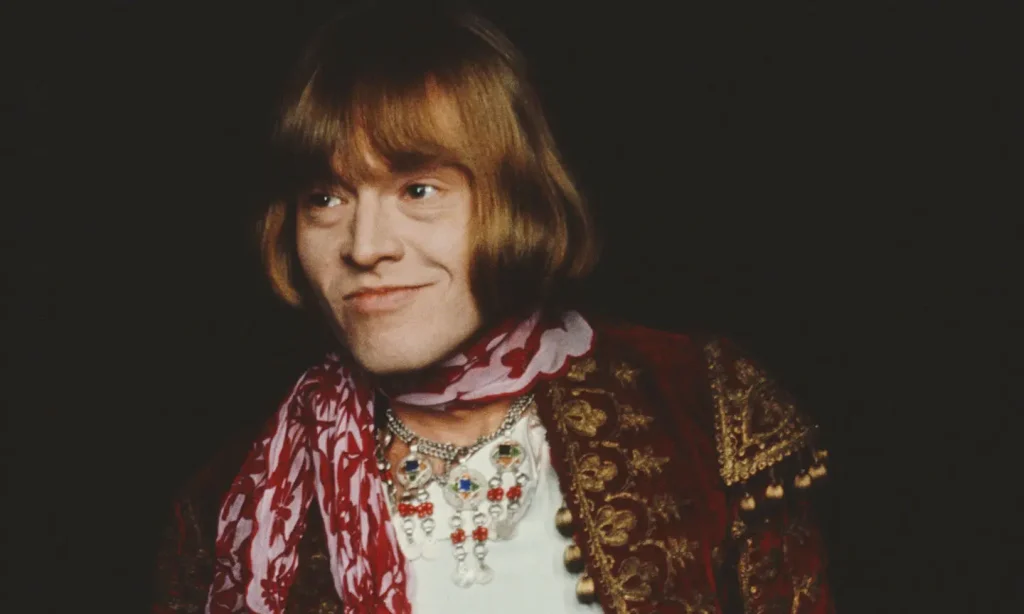
Brian Jones PHOTO/Getty Images
Lewis Brian Hopkin Jones, known professionally as Brian Jones, was an English multi-instrumentalist, singer, and songwriter who founded the Rolling Stones.
Born on February 28, 1942, in Cheltenham, Gloucestershire, England, he passed away on July 3, 1969, at the age of 27 at his home, Cotchford Farm in Hartfield, East Sussex.
Often called the original leader and visionary of the band, Jones served as its rhythm and slide guitarist in the early years.
A charismatic yet troubled figure with a rebellious spirit and distinctive blonde hair, he helped shape the Rolling Stones’ sound by drawing heavily from American blues and R&B.
Siblings
Brian was born into a middle-class musical family in Cheltenham to parents Lewis Blount Jones, an aeronautical engineer who played piano and organ, and Louisa Beatrice Jones, a piano teacher.
He had two sisters, an older sister named Pamela, born on October 3, 1943, who tragically died of leukemia just after her second birthday when Brian was only three years old, and a younger sister named Barbara, born around 1946.
Barbara maintained a lower public profile but remained connected to her brother’s legacy, with family photographs from the 1960s showing the close-knit Jones household.
Career
Jones displayed musical talent from a young age, mastering the clarinet and saxophone before developing a deep passion for blues music.
Also Read: George Harrison Siblings: Meet Louise, Harold and Peter
After being expelled from school and facing various youthful rebellions, he moved to London in the early 1960s, where he immersed himself in the burgeoning blues scene.
In 1962, he placed an advertisement seeking musicians and soon assembled what became the Rolling Stones, recruiting Mick Jagger, Keith Richards, and others.
Initially the band’s leader and primary creative force, Jones introduced the group to key blues influences, played innovative slide guitar on early hits, and experimented with world instruments that added exotic textures to albums like Aftermath and Their Satanic Majesties Request.
As the band’s popularity exploded with hits such as “Not Fade Away,” “(I Can’t Get No) Satisfaction,” and “Paint It Black,” Jones’ role shifted as Jagger and Richards took over songwriting duties.
His heavy drug use, arrests, and health problems increasingly sidelined him, leading to reduced contributions in the studio and on stage.
In June 1969, the band officially parted ways with him, announcing Mick Taylor as his replacement.
Jones retreated to his country estate, where he planned a return to music, but his life ended abruptly on July 3, 1969, when he was found drowned in his swimming pool under circumstances that remain debated—officially ruled as misadventure due to alcohol and drug intoxication, though conspiracy theories have persisted.
Accolades
Jones was inducted into the Rock and Roll Hall of Fame in 1989 as a founding member of the Rolling Stones.
The band’s early success under his guidance produced numerous chart-topping singles and albums that defined the British Invasion era, with Jones credited for bringing authentic blues authenticity to a wider audience.
Posthumously, documentaries such as Rolling Stone: Life and Death of Brian Jones have explored his contributions and tragic story, while tributes from bandmates and musicians highlight his role as the creative spark that ignited the Stones.

