

Bunny Wailer Siblings: Meet the Siblings Squad Behind the Jamaican Singer

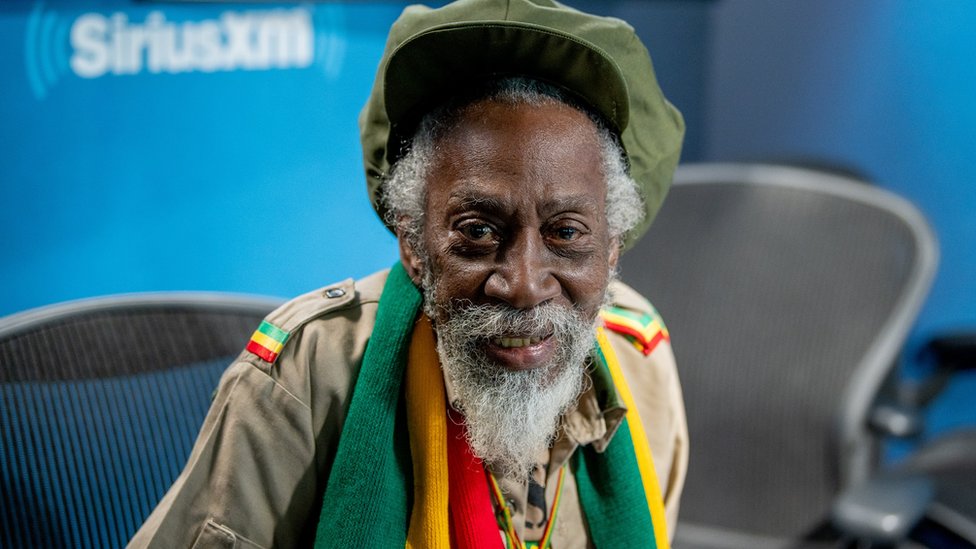
Bunny Wailer PHOTO/BBC
Neville O’Riley Livingston, better known as Bunny Wailer, was a legendary Jamaican singer, songwriter, and percussionist born on April 10, 1947, in Kingston, Jamaica.
He passed away on March 2, 2021, at the age of 73.
Often called Jah B or Bunny Livingston, he stood as one of the foundational figures in reggae music and a devoted Rastafarian whose spiritual depth infused his work.
Wailer earned recognition as a longtime standard-bearer of roots reggae, preserving its authentic sound and message even as the genre evolved.
Siblings
Bunny Wailer grew up in a single-parent home with his father, Thaddeus “Thaddy Shut” Livingston, in the rural village of Nine Mile in Saint Ann Parish before moving to Trench Town in Kingston.
There, his father entered a relationship with Cedella Booker, Bob Marley’s mother, which made Bunny and Bob Marley stepbrothers for a time.
This union produced a younger half-sister, Claudette “Pearl” Livingston, born on June 7, 1962, who later pursued her own music career and released her debut album Your Richness Is Life in 2025, featuring original songs alongside covers of tracks by her famous brothers.
Bunny also had other siblings from the Livingston family, including a brother named Carlton Livingston, who passed away in 2023 at age 77, and at least one sister named Shirley.
Shirley had a son, Andrew Tosh, with Peter Tosh, linking the Wailers trio even further through family ties and making Andrew Bunny’s nephew.
Career
Bunny Wailer’s musical journey began in childhood when he befriended Bob Marley in Nine Mile and later in Trench Town.
The two boys, both from single-parent backgrounds, bonded quickly over music.
Also Read: Macy Gray Siblings: All About Nathon and Nehlia McIntyre
In 1962, Bunny auditioned for producer Leslie Kong around the same time Marley recorded “Judge Not.”
Together with Peter Tosh, they formed The Wailers, initially as The Wailing Wailers, creating some of the earliest and most influential ska and rocksteady tracks that paved the way for reggae.
The group achieved breakthrough international success in the early 1970s with albums like Catch a Fire and Burnin’, produced with the help of Chris Blackwell’s Island Records.
Bunny contributed lead vocals on classics such as “Dreamland” and provided harmonic and percussive foundations that defined the trio’s sound.
Deeply committed to Rastafarian principles, he grew uncomfortable with the band’s direction toward broader, predominantly white audiences during tours in England and the United States.
In 1973, he left The Wailers to pursue a solo path that stayed truer to roots reggae and spiritual themes.
His solo debut, Blackheart Man (1976), released on Island Records despite past tensions, became a masterpiece widely hailed as one of the greatest reggae albums ever.
It showcased his songwriting prowess, percussion skills, and unwavering faith.
Subsequent releases like Rock ‘n’ Groove (1981) demonstrated his versatility with uptempo rhythms produced alongside Sly & Robbie.
Bunny continued recording and performing into later decades, including a month-long “Blackheart Man” tour in 2016 to mark the album’s 40th anniversary.
He mentored younger artists, maintained a low-key yet influential presence, and upheld reggae’s cultural and spiritual integrity throughout his seven-decade career.
Accolades
Bunny won the Grammy Award for Best Reggae Album three times: in 1991 for Time Will Tell: A Tribute to Bob Marley, in 1995 for Crucial! Roots Classics, and in 1997 for Hall of Fame: A Tribute to Bob Marley’s 50th Anniversary.
He also appeared on Toots and the Maytals’ True Love, which took the 2004 Grammy for Best Reggae Album.
In Jamaica, he received high national honors, including the Order of Jamaica in 2012 and the Order of Merit—the country’s fourth-highest honor—in 2017.
Tributes after his death highlighted his role as a cultural pioneer and guardian of reggae’s soul, with figures like Jamaica’s Prime Minister praising him as a legend whose influence transcended generations.

