

Cabinet approves the dualling of the 23.5km Muthaiga-Kiambu-Ndumberi road

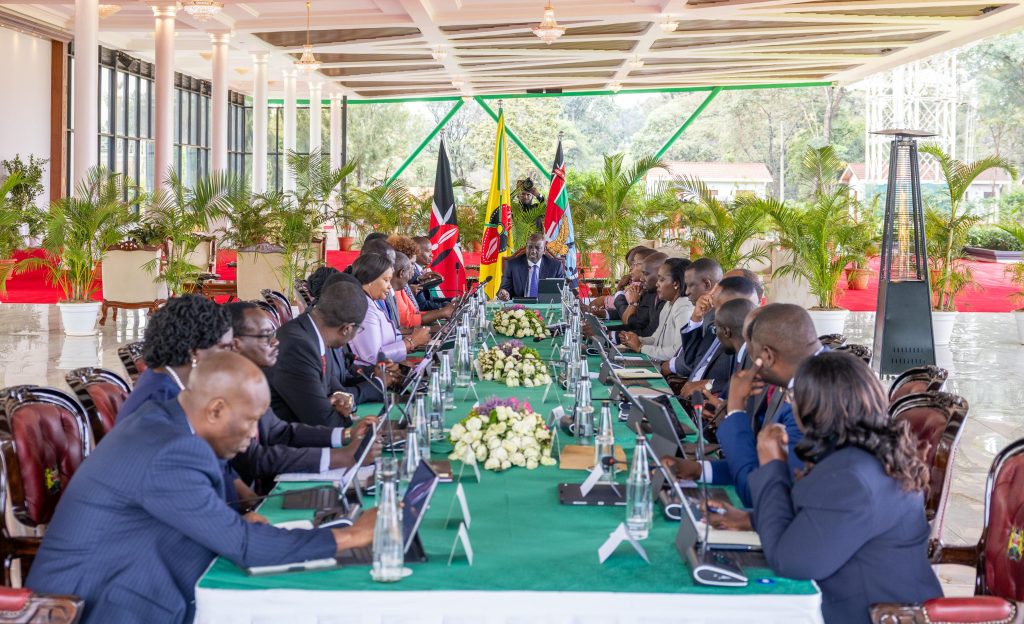
The Cabinet Tuesday approved the dualling of the 23.5 kilometers Muthaiga-Kiambu-Ndumberi road.
This will among others help to ease congestion and improve mobility between Nairobi and Kiambu counties.
The project will expand the existing two-lane highway into a dual carriageway, complete with bypasses, loops, and access roads to increase capacity and reduce travel times.
It will also incorporate non-motorised transport lanes and commuter facilities to enhance road safety and accessibility.
Cabinet noted that the corridor, serving Muthaiga, Runda, Ridgeways, and Kiambu Town, currently experiences chronic traffic congestion, particularly during peak hours.
The dualling is part of the government’s broader effort to modernise Nairobi’s metropolitan transport network in line with Kenya Vision 2030 and the UN Sustainable Development Goals on infrastructure and mobility.
The Cabinet which was chaired by president William Ruto affirmed that this initiative aligns with the Wildlife Corridors and Dispersal Areas Report (2016), Vision 2030, and Kenya’s commitment to sustainable biodiversity conservation.
To further strengthen devolution and improve service delivery, the Cabinet approved the Public Finance Management (Amendment) Bill, 2025, which proposes to split the County Governments Additional
Allocations Bill into two separate laws to speed up the disbursement of funds to county governments.
The amendment seeks to resolve delays in enacting the annual Additional Allocations Act, which has, in the past, disrupted service delivery and slowed development at the county level.
Under the proposed reform, Parliament will consider two separate Bills, one for allocations from the National Government’s share of revenue, and another for allocations financed through loans and grants from development partners.
This change is expected to enhance efficiency in public finance management, improve service delivery, and strengthen devolution by ensuring timely transfers to county governments.
A statement from State House said the meeting approved what it termed a Comprehensive Framework for Infrastructure Projects Pricing to curb inflated project costs, enhance transparency, and improve value for money in public investments.
“The framework seeks to eliminate the irregular, inconsistent, and costly practices that have characterised the pricing of government infrastructure projects.”
“It aims to establish a data-driven system for determining infrastructure costs, ensuring accountability and prudent use of public resources,” the statement said.
The reform will be overseen by the Chief of Staff and Head of the Public Service through a Multi-Agency Technical Working Team, which has already achieved key milestones, including the development of sectoral pricing models, cost derivation criteria, and proposals for establishing a National Infrastructure Pricing Database (NIPD).
The Cabinet according to the statement noted that despite significant infrastructure investments over the past two decades, the country continues to experience cost variability, overruns, and inconsistencies, challenges attributed to reliance on precedent-based estimates and limited market intelligence.
The pricing framework will adopt the First Principles Approach (FPA), successfully applied in countries such as the United Kingdom, Australia, and Singapore, to replace precedent-based costing with data-driven analysis, potentially reducing cost overruns by up to 25 per cent.