

Cabinet approves TVET expansion, Mwache Dam financing and devolution policy review

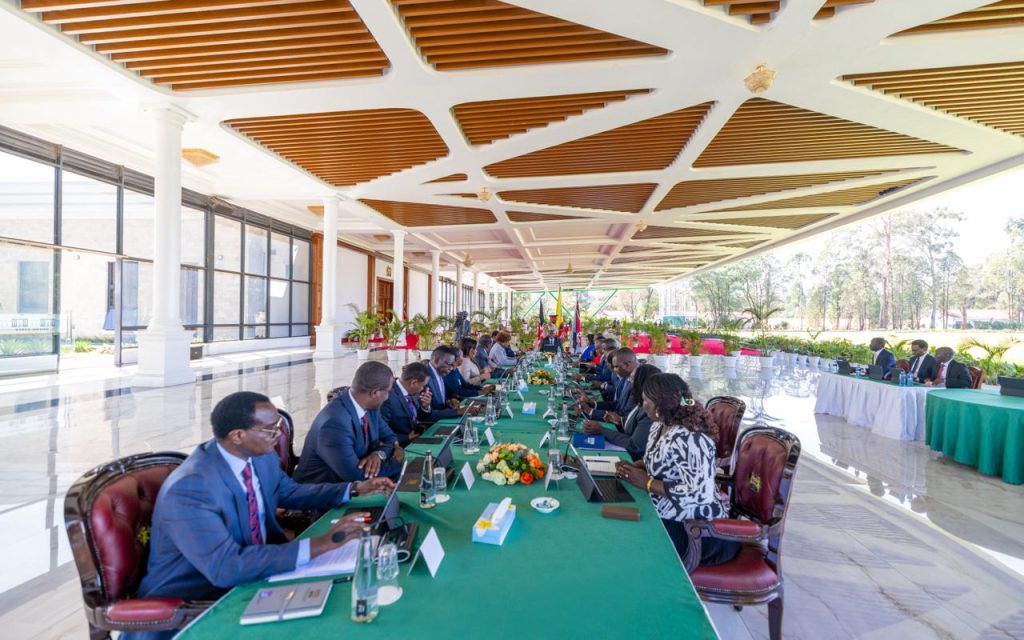
The Cabinet has approved Phase III of the Kenya–China Project to equip 70 Technical and Vocational Education and Training (TVET) colleges with modern training equipment, paving the way for full implementation of Competency-Based Education and Training (CBET).
The programme will cover eight priority technical disciplines and train 1,190 instructors, with the aim of strengthening industry-relevant skills, supporting micro, small and medium enterprises (MSMEs), and advancing human capital development in line with Vision 2030.
In infrastructure development, Cabinet authorised an additional $128 million (Sh16.6 billion) in financing to complete the Mwache Multipurpose Dam Project in Kwale County, following cost escalations that created a funding gap.
Once completed, the dam will supply 186,000 cubic metres of water per day to Kwale and Mombasa counties.
The additional financing will fund completion of civil works, land compensation, environmental safeguards and catchment restoration. The project is expected to significantly enhance water security, support irrigation and strengthen climate resilience.
Cabinet also endorsed a reviewed Policy on the Devolved System of Government, updating the 2016 framework to address persistent coordination, financing and governance challenges more than a decade after the introduction of devolution.
The revised policy clarifies the division of roles and powers between national and county governments, strengthens intergovernmental relations, improves county revenue frameworks, and reinforces public participation and county public service systems.
While devolution has expanded access to services and citizen participation, Cabinet noted that unresolved overlaps, fiscal pressures and capacity gaps have constrained performance.
The updated policy introduces clear implementation, monitoring and accountability mechanisms, with coordination led by the State Department for Devolution.
Further approvals included the reorganisation and operationalisation of the Kenya National Convention Bureau to position the country as a competitive Meetings, Incentives, Conferences and Exhibitions (MICE) hub, boost foreign exchange earnings and create jobs.
Cabinet also approved the Trade Descriptions (Amendment) Bill, 2024, to modernise consumer protection laws for digital and service-based trade, and a costed national acceleration plan to eliminate Female Genital Mutilation by the 2025/26 financial year, strengthening prevention, enforcement and survivor protection in high-prevalence counties.
On international engagement, Cabinet approved a series of hosting agreements and memoranda to reinforce Kenya’s standing as a regional hub for diplomacy, health, science and multilateral cooperation. These include operationalising offices in Nairobi for the International Vaccine Institute, Novo Nordisk Foundation Kenya A/S and The Ford Foundation, alongside a Memorandum of Understanding with the Africa Centres for Disease Control and the establishment of the Eastern Africa Regional Coordination Centre.
Cabinet further authorised Kenya to host the International Nuclear Conference 2026 in Mombasa from March 24 to 26, 2026, and approved the submission of a formal bid to host the Eastern and Southern Africa Anti-Money Laundering Group Regional Training Academy, aimed at strengthening regional capacity to combat money laundering, terrorism financing and proliferation financing.
Additionally, Cabinet reaffirmed approval for the ratification of the convention establishing the International Organisation for Mediation, positioning Kenya among the founding members of the global mediation body.

