

Canada’s Poilievre re-elected Conservative party leader

Canada's Poilievre re-elected Conservative party leader
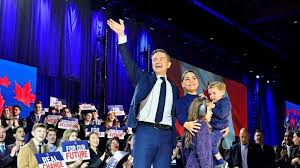
Pierre Poilievre was re-elected as Canada’s Conservative Party leader, having received a strong endorsement from members despite presiding over recent electoral defeats.
He secured 87.4% of votes in the leadership review, held on Friday in Calgary among delegates instead of the wider membership, after delivering a speech calling for Canadians to stay united in the face of an “uncertain world” and amid growing separatist sentiments in Alberta and Quebec.
“A house divided cannot stand,” Poilievre said.
A leadership review is automatically triggered after an election loss – in this case Poilievre’s defeat to Mark Carney’s Liberals last April, in which he also lost his own seat.
Despite the political setbacks, delegates who spoke to the BBC said that they still had confidence in Poilievre to lead them into the next election.
Ahead of the vote, Poilievre delivered a nearly hour-long speech that doubled as a pitch to Conservative voters at the party’s convention in Calgary, Alberta, where he outlined his vision for Canada’s future should his party form the next government.
He focused much of his messaging on affordability and crime – issues that have long resonated with his base – and promised a small government that would represent “people who have felt unseen for too long”.
Poilievre also touched on geopolitical tensions facing Canada, including its strained relationship with the US, arguing that the same domestic policies he was pitching will also help Canada “stand on its own two feet”.
His speech was made on a backdrop of a growing grassroots separatist movement in the Conservative stronghold of Alberta, where a process of collecting signatures to trigger an independence referendum is under way.
In Quebec, the sovereignist Parti Québécois is also polling ahead, promising its own independence referendum in the province should it be elected to the provincial government later this year.
Poilievre addressed these threats to Canadian unity in his speech, blaming the Liberal Party for people losing “hope in the confederation”.
Party members who spoke to the BBC said the speech was well received, praising it for sticking to traditional Conservative messaging while also confronting separatism – what one member called “the elephant in the room”.
Ballots in Friday’s vote were cast in person by delegates who were selected to represent Conservative voters in each constituency across Canada.
Poilievre has remained popular with his party despite the Conservative’s unexpected loss last year, as well as the loss of the seat he had held for more than 20 years.
He later won back a seat in parliament in an Alberta by-election, where he received more than 80% of the vote.
In recent months, two elected Conservative MPs have left the party to join the Liberals, who under Carney have adopted more centrist policies, raising questions about the party’s unity and Poilievre’s leadership.
But supporters of Poilievre credit him with delivering historic gains for the party, which received a record 41% of the popular vote last year.
In particular, the Conservative leader has been successful in courting young voters through his messaging on affordability issues like the cost of living and housing.
He has struggled, however, with defining his party’s stance on US President Donald Trump, whom many Canadians have come to view as an existential threat due to his tariffs on Canadian goods and his rhetoric around it becoming the 51st US state.
Poilievre has also struggled with his likeability, with surveys showing that more than half of Canadians hold a negative view of him. Many cite his tone, which they view as overly combative.
Polls indicate his party is still trailing, with a Léger poll released this week showing the Conservatives nine points behind the Liberals.
By BBC News

