

Carlinhos Brown Siblings: Getting to Know Gilson Freitas

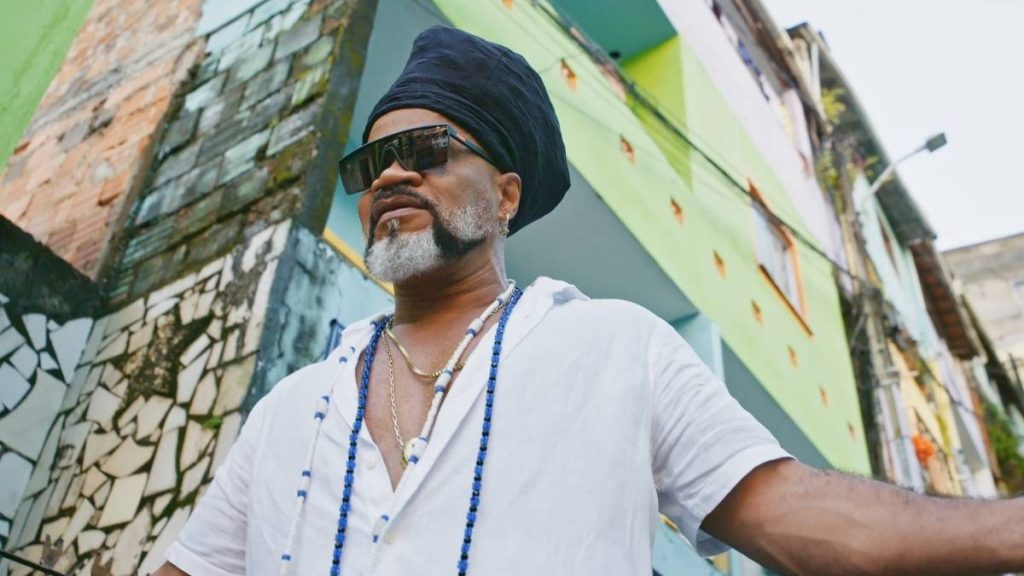
Carlinhos Brown PHOTO/MyGH
Carlinhos Brown, born Antônio Carlos Santos de Freitas on November 23, 1962, in the Candeal Pequeno neighborhood of Salvador, Bahia, Brazil, is a celebrated Brazilian singer, percussionist, composer, and record producer.
Growing up in a modest household amid financial hardship, he transformed everyday objects like empty water bottles into makeshift drums as a child while helping his family by selling water and assisting with laundry services in his community.
Inspired by James Brown during his teenage years, he adopted the stage name Carlinhos Brown as a tribute.
His vibrant, energetic style and commitment to cultural roots have made him a pivotal figure in modern Brazilian music.
Siblings
Carlinhos’ father, Renato, was a practitioner of Candomblé and instilled values of community and music, often singing rumbas to his children, while his mother, Madalena, worked as a washerwoman in a matriarchal neighborhood environment.
He has one sibling, Gilson Freitas.
However, details about his siblings remain largely private, as Brown has focused public attention on his artistic and social initiatives rather than extensive family disclosures.
He has built his own family over the years, with a daughter, Nina de Freitas, born in 1990 from a previous relationship, and four children with his current wife, Helena Buarque, including a son known as Chico.
Career
Brown’s career began in the early 1980s as a percussionist and composer in Salvador’s vibrant music scene.
He started professionally around age 17, working as a sideman and creating jingles before his first major hit composition, “Visão do Ciclope,” recorded by Luís Caldas in 1984.
Also Read: Craig Reid Siblings: All About Charlie Reid
That same year, he joined forces with emerging Bahian artists, and by 1985, he had written 26 chart-topping songs, earning the prestigious Caymmi Trophy.
He collaborated with icons like Caetano Veloso, Gilberto Gil, Gal Costa, Djavan, and João Bosco, touring internationally and contributing percussion and arrangements to numerous albums.
In the late 1980s and 1990s, Brown founded Timbalada, a large bloco-afro percussion ensemble with over 100 members that became a Carnival staple and a vehicle for social projects aimed at educating underprivileged youth.
His solo debut, Alfagamabetizado, arrived in 1996, followed by acclaimed releases like Omelete Man in 1998, which showcased his singing and multi-instrumental talents alongside string arrangements.
He co-founded the supergroup Tribalistas with Marisa Monte and Arnaldo Antunes, releasing a groundbreaking self-titled album in 2002.
Brown has also lent his skills to film soundtracks, including contributions to Rio (2011) with Sérgio Mendes on the Oscar-nominated song “Real in Rio,” and he has worked with global artists such as Herbie Hancock.
Beyond performing, he has served as a coach on The Voice Brasil and pursued production and cultural activism, establishing the Pracatum School in 1994 to provide music education and opportunities for children in his hometown.
His discography spans over a dozen solo albums, with recent works exploring beats, rituals, and social themes, while he continues to innovate through projects that fuse Brazilian percussion with contemporary sounds.
Accolades
Brown has won two Latin Grammy Awards, including Best Brazilian Contemporary Pop Album for Tribalistas in 2003 and for Carlinhos Brown é Carlito Marrón in 2004, along with multiple nominations.
Additional honors include a Goya Award, the UNESCO Youth Prize in 2002 for his work against social inequalities, and a trophy from the International Society for Music Education (ISME) acknowledging his contributions as an art educator.
He received a Lifetime Achievement Award at the Brazilian International Press Awards and has been appointed as Brazil’s Afrotourism Ambassador, highlighting his role in promoting cultural heritage.