

Chaos, dust and development: Homa Bay’s battle to shake off decades of marginalisation

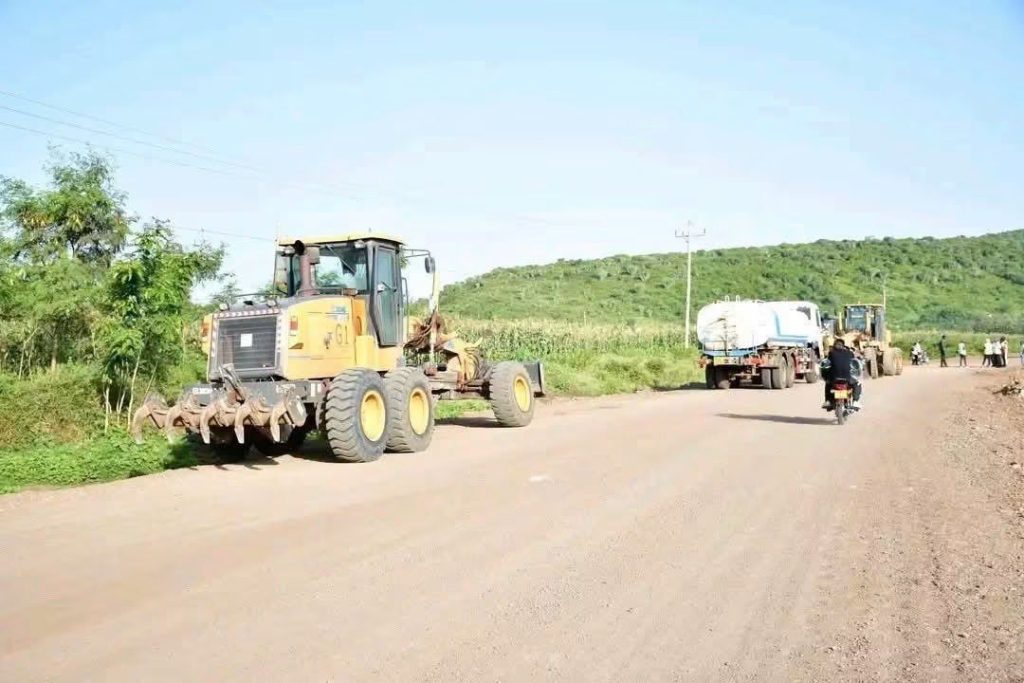
Homa Bay Governor Gladys Wanga says the dusty, potholed roads in parts of her county are not a mark of shame but a painful reminder of decades of marginalisation and a testament to the resilience of its people.
Ms Wanga said the poor condition of roads should not be reduced to political ridicule, arguing that the infrastructure deficit is a historical problem inherited by successive governments.
“The dust is real, the historical deficit is real, but so is the transformation now underway,” Ms Wanga said on Monday.
Her remarks came a day after the Linda Mwananchi movement toured Homa Bay, with images of rough roads along the Mbita–Sindo–Kiabuya–Sori corridor sparking debate and criticism over the county’s development record.
For residents living along the corridor, however, the dusty roads are not a political spectacle. They are part of everyday life, affecting access to markets, hospitals and schools while increasing the cost of transporting goods and doing business.
“What some people saw for a few hours is what our people have lived with for decades,” Ms Wanga said. “We should not be ashamed of the challenges created by historical neglect. Instead, we should be determined to overcome them.”
The governor said the state of the road network reflects a wider infrastructure deficit experienced by several historically underserved regions of Kenya.
According to the county administration, successive governments since independence have had opportunities to address the problem but made limited progress in some areas.
The 74-kilometre Mbita road illustrates the challenge.
The road was first awarded in 2016, during the administration of President Uhuru Kenyatta, to Put Sarajevo but stalled after only about seven kilometres had been completed because of funding constraints.
It was re-awarded in 2020, but progress again remained slow.
About 28 kilometres have since been tarmacked over the past two years, with construction still ongoing.
“This is a 74-kilometre trunk road. It cannot be built by a county government or through CDF,” Ms Wanga said. “It is a national responsibility, and we welcome the progress that is now being made.”
She said devolution had nevertheless changed the development equation by giving counties greater control over local priorities and providing resources that were previously concentrated at the national level.
“Devolution has given Homa Bay a voice and a constitutional share of resources,” she said. “It has allowed us to begin addressing challenges that had been ignored for generations.”
The county administration has pointed to a string of ongoing and completed projects as evidence of increased investment in Homa Bay.
They include the Mbita–Sindo–Kiabuya–Sori corridor and roads across Suba South, as well as Lala–Ruga, Nyalkinyi–Imbo, the Gor Mahia Ring Road, Rangwe–Oboke, Rangwe–Ndiru, Kadel–Kanyadhiang–Kilusi–Opanga–Ramba, Kadongo–Lida, Adiedo–No. Karabok, Agolo Muok–Seka–Otati, Lwanda–Osodo–Kanyakiamo, Nyabera–Corner Koguta, Njeri–Pala and the Sindo town road network.
Other major projects cited include the Homa Bay Pier, Modern Fish Market, Raila Odinga Stadium, Economic Stimulus Programme markets, Rusinga Road and Mfangano Ring Road.
“We have waited for these projects for a very long time,” Ms Wanga said. “What matters now is that we are moving from promises to implementation.”
The governor said Homa Bay residents should resist attempts to turn the county’s development challenges into a source of humiliation.
“If the dust has shocked those who have seen it for the first time, let them understand that our people have walked through that dust for generations,” she said. “We wear our resilience as a badge of honour.”
The region’s political history has also shaped perceptions of its development.
Leaders such as Tom Mboya and Jaramogi Oginga Odinga remain central to conversations about Nyanza’s political influence and development trajectory, with supporters arguing that their early exit from national leadership denied the region an opportunity to influence government at the highest level.
“We know where we have come from,” Ms Wanga said. “We know what historical marginalisation has cost our people. But we also know where we are going.”
For residents, the demand is simple: better roads, reliable public services and infrastructure capable of unlocking Homa Bay’s economic potential.
“The road may be dusty today, but that does not mean our future is dusty,” Ms Wanga said. “Beyond the dust is the Homa Bay we have always deserved.”