

CJ Koome calls on African judiciaries to broaden understanding of justice outcomes

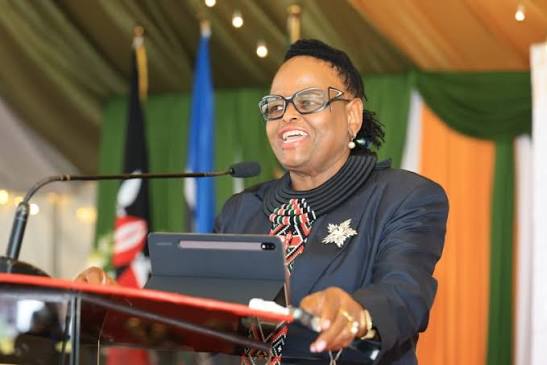
Leaders of African judiciaries were urged to broaden their understanding of justice outcomes by remaining firmly committed to African justice mechanisms and the principle of Ubuntu in order to transform the delivery of justice across the continent.
Speaking during the official opening of the 4th National Conference on Alternative Justice Systems (AJS) in Kenya at University of Embu, Chief Justice Martha Koome underscored the growing recognition that the future of justice in Africa must be rooted not only in strong institutions but also in justice systems that are accessible, responsive, and people-centred.
“Traditionally, justice systems have relied on indicators such as case filings, case clearance rates, backlog reduction, and the speed of case resolution. These measures remain important. They help our judiciaries monitor efficiency and accountability. However, they do not always capture the full experience of justice from the perspective of the people we serve,” said CJ Koome.
Further, the CJ emphasized the need for African judiciaries to build justice systems that integrate formal courts, Alternative Dispute Resolution (ADR), Alternative Justice Systems, restorative justice, and community dialogue into one coherent ecosystem.
“In doing so, we affirm that the rule of law in Africa must be accessible, inclusive, culturally grounded, gender-responsive, protective of the vulnerable, and capable of delivering not only decisions, but also healing, social cohesion, and lasting peace,” she said.
The CJ also launched Embu Alternative Justice Systems (AJS) Centre and AJS Registries for Embu, Siakago and Runyenjes Law Courts at Embu Law Courts, in the presence of 12 other Chief Justices from African countries.
Justice Koome noted that, for many citizens, justice is more than the conclusion of a case adding that it is about whether relationships have been restored, families have found healing after conflict and whether dignity has been preserved. In addition, it is whether people feel heard, respected, and treated fairly.
The conference, themed “Data-Driven Pathways for People-Centred Justice in Kenya,” challenged stakeholders to broaden their understanding of justice outcomes.
“It calls upon us to ask different questions. What if success is measured not only by the number of disputes resolved, but also by the number of relationships restored? What if justice is measured not just through efficiency, but also through reconciliation, trust, social cohesion, and human dignity?” she posed.
CJ Koome acknowledged that the African Union, through Agenda 2063 and the African Union Transitional Justice Policy, recognises that justice in Africa must extend beyond the formal adjudication of disputes. It must also heal, reconcile, restore dignity, rebuild trust, and strengthen the bonds that hold communities together.
She emphasized that Alternative Justice Systems are not an afterthought to formal justice but an essential expression of African jurisprudence, rooted in the continent’s histories, cultures, and communal wisdom, while aligning with the African Union’s vision of a peaceful, inclusive, and people-centred Africa.
“For generations, elders and community leaders across Africa have helped families and communities resolve disputes, restore relationships, and preserve social harmony,” she said.
“As African judiciaries, we must therefore think about justice holistically. A court judgment may settle a legal question, but justice must also answer the human question: Has harm been acknowledged? Has dignity been restored? Has the community been healed? Has peace been rebuilt?” stated CJ Koome.
The CJ reminded participants that the future of justice in Africa will not be found solely in courtrooms. “It will also be found in communities, in dialogue, in reconciliation, and in the wisdom of elders who have long served as custodians of peace and social harmony.
Justice will be found in systems that place people at the centre, value dignity as much as efficiency, and seek not only to resolve disputes but also to heal and restore relationships,” she said.
Speaking at the same forum Deputy Chief Justice Philomena Mwilu asked stakeholders in the justice system to aspire to build a justice system that measures success by meaningful social impact.
The DCJ noted that this will however require stronger partnerships between the Judiciary, county governments, academia, civil society, development partners and communities themselves.
“It will require better data, rigorous evaluation and a willingness to learn from both our successes and our shortcomings. Most importantly, it will require us to keep justice seekers at the centre of every reform”.
The CJ of Zambia and Chairperson African Chief Justice ADR Forum, Dr Mumba Malila, argued that judges must respond to the call by Constitution to encourage and utilize Alternative Dispute Resolutions by championing ADR evolution thoughtfully and responsibly.
“AJS can widen access to justice while preserving social cohesion. As our society evolves so must our justice system. We must embrace multi-door court house approach by drawing a clear connection between ADR and the economies of our countries by explaining how ADR frees millions held in litigation,” CJ Malila explained

