

Clement Attlee Siblings: A Look at the Former UK Prime Minister’s Family Tree

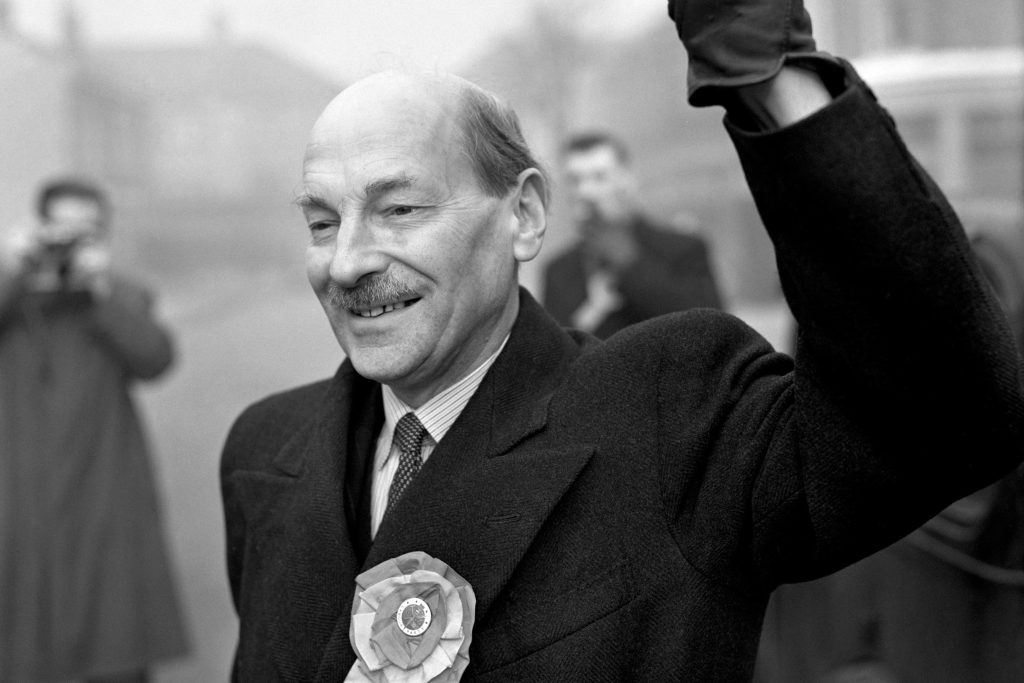
Clement Attlee PHOTO/The Independent
Clement Richard Attlee, 1st Earl Attlee, was a British Labour Party politician who served as Prime Minister of the United Kingdom from 1945 to 1951 and as Leader of the Labour Party from 1935 to 1955.
Born on 3 January 1883 in Putney, Surrey (now part of London), he was the seventh of eight children of Henry Attlee, a prosperous solicitor, and Ellen Bravery Watson.
He died on 8 October 1967 in London at the age of 84.
Attlee is widely remembered for leading the first majority Labour government, which established the modern British welfare state, including the National Health Service, and oversaw significant post-war reforms and the early stages of decolonisation.
Siblings
Clement grew up in a large, close-knit middle-class Anglican family of eight children, spaced roughly two years apart.
The order was two boys first, followed by three girls, and then three boys.
His siblings were Robert Bravery Attlee (1871–1953), Bernard Henry Bravery Attlee (1873–1943), Mary Ann Bravery Attlee (1875–1956), Dorothy Janet Attlee (1877–1920), Margaret Ellen Attlee (1878–1964), Thomas Simons Attlee (1880–1960), and Laurence Gillespie Attlee (1884–1969).
Bernard, the second son, became a clergyman.
Mary, the eldest daughter, went to South Africa as a missionary.
Dorothy and Margaret received some education abroad, including a finishing course in Karlsruhe, Germany.
Thomas Simons, known as Tom and three years older than Clement, was the sibling to whom Clement remained closest throughout his life; Tom trained as an architect, shared early socialist interests, and served as a conscientious objector during the First World War, for which he was imprisoned.
Laurence, the youngest, was a year younger than Clement and accompanied him on an early visit to a boys’ club in London’s East End that helped shape Clement’s social conscience.
Career
Attlee was educated at Northaw Place preparatory school, Haileybury College, and University College, Oxford, where he read modern history and graduated in 1904.
Also Read: Harold Wilson Siblings: Getting to Know Edith Marjorie Wilson
He trained as a barrister and was called to the Bar in 1906, but after experiencing poverty in London’s East End through voluntary work at a Haileybury boys’ club in Stepney beginning in 1905, he left the law.
He joined the Independent Labour Party in 1908, lectured at the London School of Economics, and managed a boys’ club.
During the First World War he served as an officer in the South Lancashire Regiment, reaching the rank of major; he fought at Gallipoli and was wounded in Mesopotamia.
After the war he entered local politics as mayor of Stepney in 1919 and was elected Member of Parliament for Limehouse in 1922.
He held junior posts in the minority Labour governments of 1924 and 1929–31, became deputy leader of the Labour Party, and was elected leader in 1935.
In Winston Churchill’s wartime coalition he served as Lord Privy Seal and later as Deputy Prime Minister from 1942 to 1945.
Following Labour’s landslide victory in the 1945 general election, Attlee became Prime Minister.
His government nationalised key industries, created the National Health Service, expanded social insurance and housing, and granted independence to India and other territories while helping to found NATO.
After Labour’s defeat in 1951 he remained party leader until 1955, when he resigned and was elevated to the peerage.
Accolades
Attlee received numerous high honours for his public service. He was appointed to the Privy Council and later awarded the Companion of Honour.
In 1951 he received the Order of Merit.
Upon resigning as Labour leader in 1955 he was created Earl Attlee and Viscount Prestwood, taking a seat in the House of Lords.
In 1956 he was appointed a Knight of the Garter. He was also elected a Fellow of the Royal Society.
His ashes were interred in Westminster Abbey.
Historians frequently rank him among Britain’s greatest prime ministers for the lasting domestic reforms of his government, particularly the establishment of the welfare state and the National Health Service, as well as for his role in the transition from empire to Commonwealth and the strengthening of the Western alliance.

