

Communities in informal settlements told to implement basic fire safety measures as 15 killed in a week in Nairobi

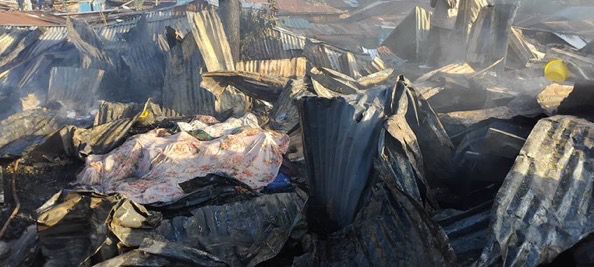
A government official asked communities in informal settlements to implement basic fire safety measures as part of efforts to contain tragedies linked to outbreaks.
This is after separate fire incidents killed at least 15 people in Nairobi informal settlements of Kibera, Mukuru Kwa Njenga and Mathare slums.
These are some of the biggest slums in Nairobi.
Nairobi Regional Commissioner Katee Mwanza said the government is prioritizing early warning systems, community training, and enhanced coordination with county governments to strengthen disaster risk reduction and mitigation.
“We urge all community members to remain vigilant, report hazards promptly, and work with local authorities in implementing basic fire safety measures.”
“The government remains committed to safeguarding lives and property, including instituting safety measures aimed at forestalling cases of fires in the future,” he said.
Mwanza said they are saddened by the recent tragic fire incidents that have occurred in various informal settlements in Nairobi between May 19 and May 24, 2025.
On May 19, 2025, a devastating fire in Mathare 4B, Mathare Sub-County, claimed the lives of six individuals, four Kenyans and two Ugandan nationals, while several others sustained injuries.
On the night of May 23, 2025, another fire swept through Kambi Aluru Village, Kibera, killing eight people.
The victims include two men, two women, and four children.
Seven others were injured and currently receiving treatment.
He said efforts are underway to establish their identities with a view to supporting the affected families.
On May 24, 2025, yet another incident in Mukuru kwa Reuben caused the death of one child.
Mwanza said response to these tragedies, the National Disaster Operations Centre (NDOC), in coordination with Nairobi County emergency services and security teams, has been on high alert.
Multi-agency teams have been deployed to all affected areas to support ongoing rescue, relief, and coordination efforts. “Emergency shelters and supplies have been mobilized for the displaced, while rapid assessments are being conducted to ascertain the needs of survivors.
He added the government is working with the relevant authorities, local administrators and humanitarian partners to provide psychosocial support, facilitate identification of the deceased, and ensure dignified handling of their remains.
Investigations into the causes of these fires are ongoing, with a view to establishing accountability and improving fire safety interventions in vulnerable communities.
He said the lack of roads in these areas has been a challenge to responders.
“We acknowledge the structural challenges facing informal settlements, particularly around disaster preparedness and response infrastructure,”