

Compensation team defends their establishment, say they are legal

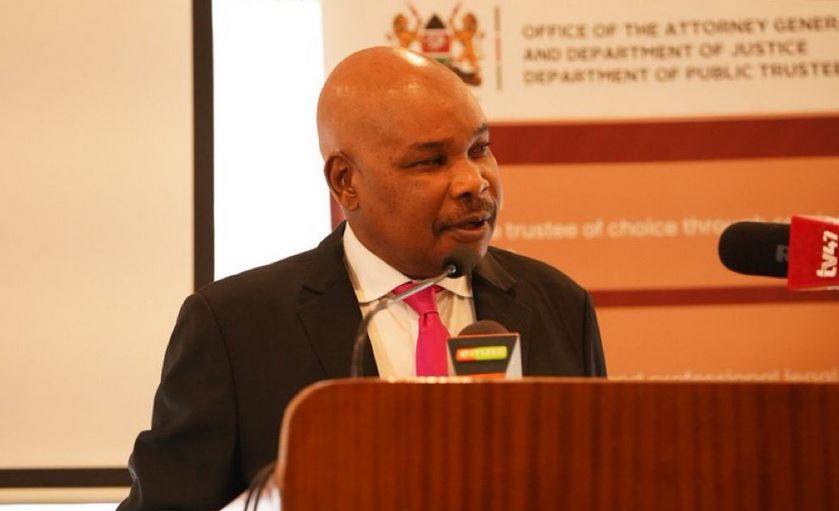
President William Ruto’s 18-member task force on compensation for victims of police brutality and protest-related injuries has defended its establishment, saying it was lawfully created and anchored on the principles of justice and humanity.
In submissions filed before the High Court, the team chaired by Professor Makau Mutua told the court that the President acted within his constitutional powers to form a panel that would help deliver long-delayed relief to families affected by past demonstrations.
The taskforce argued that for years, victims of state violence have had to rely on slow and costly court processes, locking out many deserving Kenyans from justice.
“The President responded to a moral and constitutional duty to ease the suffering of citizens who have borne the brunt of political unrest,” the panel said in its court filings.
According to the submissions, the team’s role is limited to collecting and authenticating data on genuine victims, working with relevant institutions like the Kenya National Commission on Human Rights (KNCHR), IPOA, the National Police Service, and the Ministry of Health.
The panel, they emphasized, does not issue compensation directly but only prepares recommendations for review by the Treasury, Parliament, and other oversight agencies.
The taskforce explained that the initiative arose from sustained appeals by faith leaders, civil society groups, and opposition figures, who have long urged the State to recognize and support victims of protest violence.
They likened the exercise to earlier state-backed reparations for post-election violence victims and internally displaced persons, arguing that this time, strict verification procedures are in place to prevent fake claims.
According to the experts, Articles 131 and 132 of the Constitution, gives the President the authority to establish advisory bodies to coordinate executive functions and policy interventions.
“Setting up panels to gather facts and propose reforms is standard practice in governance not an intrusion into judicial or parliamentary functions,” they argued.
The taskforce further pointed out that countries including South Africa, Nigeria, and the United States have used similar mechanisms to compensate victims of state or protest-related harm, showing the legitimacy of such programs.
The petitioners alleged that it duplicates the work of existing agencies and could open room for abuse.
However, the government has assured that the process is subject to the Public Finance Management Act and the Data Protection Act, guaranteeing accountability and data security.
“Stopping this process would amount to denying justice to victims who have waited far too long,” they argue
The government allege that the initiative is about healing, fairness, and closure, not politics.
This process is not about politics,” the state said. “It’s about compassion, fairness, and healing for families who have suffered during protests. The process is legal, time-bound, and accountable.” reads the submissions.