

Court declares law barring retired presidents from active politics unconstitutional

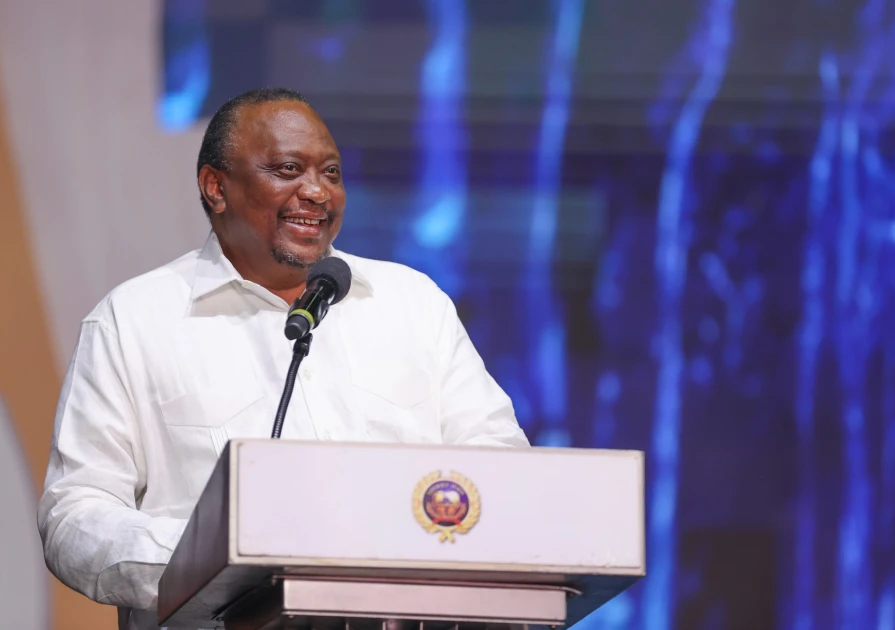
The High Court has declared unconstitutional key provisions of the Presidential Retirement Benefits Act that allowed Parliament to withdraw or reduce the retirement benefits of former Presidents.
Justice Bahati Mwamuye ruled that Sections 4(1), 4(2), 4(3) and Section 6 of the Act violate the Constitution, holding that Article 151(3) provides a guarantee that a former President’s retirement benefits cannot be varied to their disadvantage during their lifetime.
Section 4 empowers the National Assembly, by a two-thirds majority, to resolve that a retired President or their surviving spouse shall be denied some or all retirement benefits on grounds including willful violation of the Constitution, gross misconduct, criminal conviction, or prohibited political party activity.
Section 6 restricts a retired President from holding office in a political party for more than six months after leaving office.
The petition was filed by public interest litigants Sheria Mtaani and Shadrack Wambui against the Senate, the National Assembly and the Attorney General.
It challenged Sections 4 and 6 of the Presidential Retirement Benefits Act (Cap. 197A).
It arose after a public motion sought to review the retirement benefits of former President Uhuru Kenyatta over his post-presidential political activities.
The court found that Article 151(3) creates an absolute constitutional safeguard.
“The language employed by the framers of the Constitution is deliberate and admits no ambiguity,” Justice Mwamuye ruled.
“It is an express and absolute protection that is written in plain language.”
The court held that Section 4(1), (2), and (3) authorize precisely the type of adverse variation prohibited by the Constitution.
“It is difficult to conceive of a clearer example of a variation ‘to their disadvantage’ than the withdrawal, reduction, or extinguishment of the retirement benefits payable to a former President during his or her lifetime,” the judge said.
However, the court preserved Section 4(4), which concerns benefits payable to a surviving spouse, finding that it operates independently and was not properly challenged.
The court found Section 6 unconstitutional in its entirety, holding that it unjustifiably limits the political rights of a retired President under Article 38.
“A retired President remains a citizen. Retirement from office ends the office; it does not end the person,” Justice Mwamuye ruled.
The court ruled that the restriction on holding political party office was particularly problematic because Section 4(1)(b)(ii) attached the severe consequence of losing retirement benefits to breach of that restriction.
“The statutory scheme therefore creates more than a regulatory restriction upon party office. It creates an economic consequence for non-compliance,” the judge said.
The judge rejected arguments by the Senate, National Assembly and Attorney General that the petition was premature, ruling that the constitutionality of the law could be determined regardless of whether Parliament had initiated proceedings against any former President.
“The question of whether they violate or do not violate the Apex Law is thus not dependent on there being a motion before Parliament,” the judge said.
The court rejected the argument that a former President’s continuing influence justified the restriction.
“Influence is not office. Influence is not executive authority. Influence is not a constitutional disability,” the judge stated.
The court found that Sections 4 and 6 do not violate the doctrine of separation of powers merely by assigning a determination to the National Assembly. However, the court said that this finding did not save the provisions from constitutional invalidity on other grounds.
The court also found that the statutory mechanism violated Article 40 (property rights), Article 43(1)(e) (social security), and Article 47 (fair administrative action) due to the absence of procedural safeguards.
The court further declined to find an independent violation of Article 27 (equality) or Article 50(2)(o) (double jeopardy).
The petitioner argued that Section 4 directly contravened Article 151(3) of the Constitution, which provides that the retirement benefits of a former President “shall not be varied to their disadvantage during their lifetime.”
It further contended that the provisions violated the doctrine of separation of powers, the right to property (Article 40), the right to fair administrative action (Article 47), the right to a fair hearing (Article 50), the right to social security (Article 43(1)(e)), and political rights (Article 38).
All three respondents opposed the petition, arguing that it was premature and speculative since no motion had been tabled.
They relied on the presumption of constitutionality of legislation and the doctrine of separation of powers, contending that the court should not interfere with Parliament’s legislative mandate.
The respondents maintained that Article 151(3) did not create an absolute prohibition and that the two-thirds majority requirement provided sufficient procedural safeguards.
The court issued orders prohibiting the Senate, the National Assembly and other state agencies from enforcing the invalidated sections, declined to grant certiorari because no completed decision existed to quash, and directed each party to bear its own costs.

