

Court orders Treasury to disclose records of Sh5 billion NIF fund

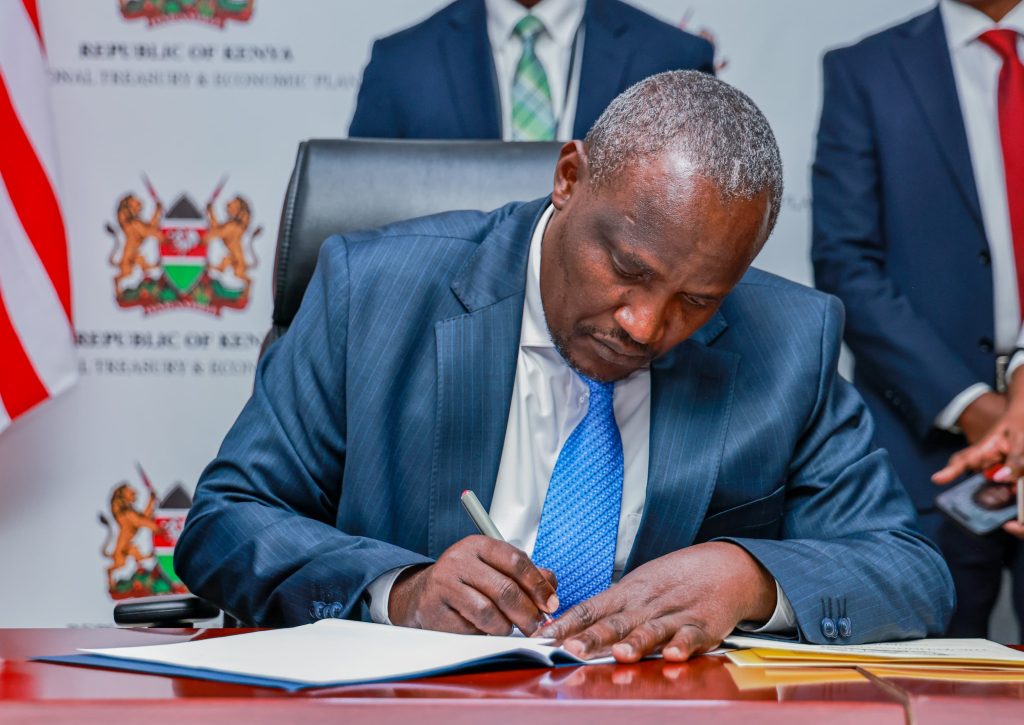
The High Court has ordered the National Treasury to disclose detailed financial records of the Sh5 trillion National Infrastructure Fund, even as it declined to suspend the fund’s operations pending the determination of a constitutional petition challenging its legality.
Justice Patricia Nyaundi directed the Treasury to file certified accounts showing all money received by the Fund since its establishment, as well as details of deposits, withdrawals, expenditures and allocations.
The accounts, certified by the Auditor-General, are to be filed within 30 days, by August 24.
The Treasury will also be required to provide details of the dates on which funds were deposited into Central Bank of Kenya or commercial bank accounts, as well as a record of every transaction undertaken by the Fund.
Thereafter, the government will be required to file quarterly reports on the Fund’s transactions, beginning November 30, and continuing until the petition is determined.
The orders were issued in a case challenging the constitutionality of the National Infrastructure Fund Act, 2026.
Justice Nyaundi found that the petition raises serious and arguable constitutional questions concerning the legal framework governing the Fund, the extent of Parliament’s legislative authority and alleged violations of constitutional safeguards.
“The issues raised touching on the constitutionality of the statutory framework, the scope of legislative authority and the alleged derogation from constitutional safeguards are neither frivolous nor insubstantial,” the judge ruled.
The petition was filed by four Kenyans led by Nakuru-based consultant surgeon Dr Magare Gikenyi Benjamin.
The petitioners include the Consumer Federation of Kenya (COFEK), Katiba Institute and Kemunto Ateka.
They argue that the Fund violates constitutional safeguards on public finance, parliamentary oversight and public participation.
They have also raised concerns that the Fund could receive proceeds from the privatisation of strategic public assets outside the ordinary budgetary and parliamentary oversight framework.
However, the court declined to issue a blanket order suspending the operation of the Fund.
“The balance of convenience does not favour a blanket prohibition. Rather, it favours ensuring that any ongoing activities of the fund are conducted transparently within public view and subject to constitutional safeguards,” Justice Nyaundi said.
The judge ruled that the statutory framework provides for ongoing and substantial financial transactions, some of which had already taken place while others were imminent.
She said that without appropriate safeguards, there was a risk that the petition could be overtaken by events before it is heard and determined.
The National Infrastructure Fund was established to mobilise up to Sh5 trillion for strategic infrastructure projects by combining government resources with private and institutional capital.
The government has presented the Fund as a mechanism for shifting infrastructure financing away from a debt-driven model towards a sustainable, investment-led approach.
The law provides for the Fund to be managed by an independent board and a competitively recruited chief executive.
About Sh20 billion from the Kenya Pipeline Company initial public offering and a further Sh244 billion from the sale of the government’s stake in Safaricom were earmarked as seed capital for the Fund.
The Treasury recently advertised the position of chief executive after Cabinet Secretary John Mbadi appointed six members to the Fund’s board for three-year terms effective July 8.
The government opposed the petitioners’ application to suspend the Fund, arguing that the National Infrastructure Fund Act is constitutional and that the Fund had already been operationalised.
The State told the court that proceeds from the privatisation of Kenya Pipeline Company had already been deposited into the Fund, while proceeds from the Safaricom share sale were scheduled to be deposited.
It argued that interim orders suspending the Fund could not reverse actions that had already been undertaken.
The petitioners, however, maintain that a national public fund cannot be established under any other statutory regime, including as a limited liability company under the Companies Act.
They further argue that Parliament must approve the establishment of a national public fund and retain oversight over its operations.
The petition also raises questions over the Fund’s compliance with constitutional provisions governing the distribution of functions between the national and county governments, the management of public finances, the oversight role of the Controller of Budget and Parliament’s constitutional responsibilities.

