

CS Chirchir Warns Sh37.7 Billion Transport Budget Shortfall Could Delay Key Projects

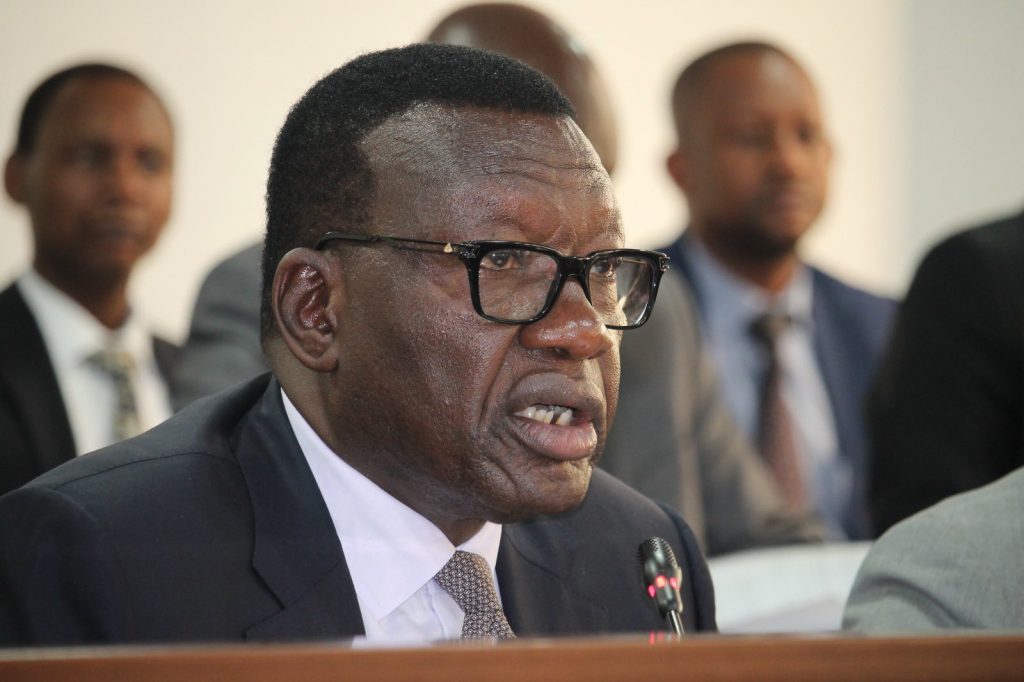
Cabinet Secretary for Transport, Davis Chirchir, has warned that the Sh37.7 billion funding shortfall facing the State Department of Transport for the 2026/27 financial year could significantly disrupt the implementation of critical projects.
CS Chirchir spoke on Monday before the National Assembly Committee on Transport, chaired by George Kariuki, alongside the Department’s Principal Secretary, Mohamed Daghar, during the presentation of the State Department for Transport’s Budget Policy Statement (BPS) for FY 2026/27.
The Department has been allocated a ceiling of Sh65.1 billion, against a proposed requirement of Sh102.7 billion, leaving a deficit of Sh37.7 billion. Committee members sought clarity on how capital project allocations aligned with the 2026 BPS resource allocation criteria.
PS Daghar assured lawmakers that the Department had fully complied with the prioritization framework, aligning allocations with national development priorities, including the Bottom-Up Economic Transformation Agenda (BETA) and Kenya Vision 2030.
Key projects highlighted include the operationalization of the National Road Safety Action Plan, coordination of the LAPSSET Corridor, development of Berth 1 at the Dongo Kundu Special Economic Zone, and the Nairobi Railway City project.
Daghar added that priority is also given to counterpart funding for donor-supported initiatives under signed agreements, including the Horn of Africa Gateway Development Project, development of an automated fare collection system, promotion of e-mobility, and modernization of commuter rail services.
“Hon. Members, additionally, the Department is focusing on near-complete projects to minimize cost overruns and enhance value for money,” Daghar said, citing the Nairobi–Nanyuki Meter Gauge Railway, currently 90% complete, and the Mariakani and Port Reitz Freight Drainage Channel, now at 85% completion.
On pending bills, Daghar disclosed that the State Department headquarters has Sh163.7 million for operations and maintenance, Sh1.4 billion for the NaMaTA Bus Rapid Transport (BRT) project, and Sh2.6 billion for the Kenya Railways Corporation Mukuru–Kibera Resettlement Action Plan (RAP). He stressed that verified bills would be prioritized, though the BPS does not cater for claims from state corporations.
CS Chirchir noted that following the Government Owned Enterprises Act, 2025, the Kenya Ports Authority and Kenya Railways Corporation are conducting internal reviews to ensure compliance, including board restructuring and strengthening financial oversight. Full implementation, however, is subject to ongoing court injunctions.
Chirchir also revealed that the State Department recently launched the National E-Mobility Policy to promote green transport and reduce emissions. He emphasized that implementing the policy is capital-intensive and urged lawmakers to prioritize funding for its rollout.
Other major projects in the pipeline include Berth 19B, Berth 1 at Dongo Kundu SEZ, Standard Gauge Railway (SGR) Phases 2B and 2C, and modernization of Motor Vehicle Inspection and Driver Testing Centres. The CS stressed that these initiatives require substantial and sustainable financing to ensure timely completion and maximize economic benefits.
Despite the operationalization of the Port of Lamu over the past four years, Chirchir said its full potential remains constrained by the lack of supporting corridor infrastructure and appealed for accelerated investment in the LAPSSET Corridor to unlock regional trade and logistics gains.
The Committee assured the State Department of its commitment to supporting prudent financial management, accountability, and efficient utilization of resources, pledging continued engagement as the 2026/27 budget process advances.