

CS Ogamba challenges universities to “think entrepreneurial”

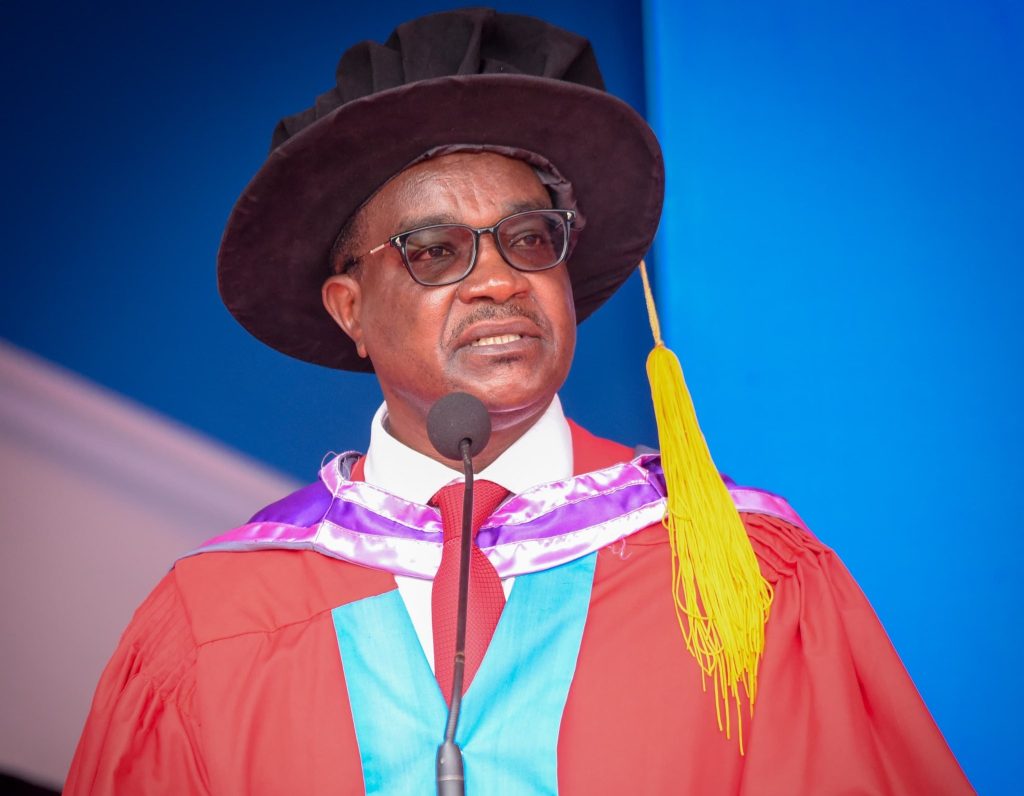
Education Cabinet Secretary Migos Ogamba wants universities to shift their focus from purely academic instruction and invest more in entrepreneurial activities that equip students with practical, job-creating skills.
The CS observed that higher learning institutions must begin to rethink how they prepare students for the job market.
Ogamba said there is a strong need for universities to become centres of innovation, enterprise, and problem-solving, rather than institutions that only produce job seekers.
“Universities must go beyond issuing degrees and begin to nurture innovators, entrepreneurs, and employers who can create opportunities for themselves and others,” he said.
The CS also challenged the new graduands to use their education to positively transform society further urging them to uphold integrity, innovation, and social responsibility as they step into the next chapter of their lives.
He was speaking at Kisii University during the institution’s 14th graduation event on Wednesday.
He reminded the 4,000 graduands to strive for more adding that academic success alone is not enough adding that whatever is gleaned in class should be used as a tool for service and national development.
“As you leave this institution, remember that society expects more from you than certificates. Be a force for good, uphold ethical values, and use your knowledge to solve real problems facing our communities,” Ogamba said.
He directed universities to begin preparing for the intake of the first cohorts of learners of the Competency-Based Curriculum (CBC) slated for 2029
The CS said the transition from the 8-4-4 system to CBC will require universities to rethink their teaching methods, infrastructure, and assessment models to align with competency-based learning.
“Universities must prepare early to receive CBC learners. This is not a minor adjustment but a fundamental shift in how we teach, assess, and mentor students,” Ogamba said.
Ogamba said the government is continuing to retool teachers to ensure they are fully equipped to deliver quality education in line with the country’s evolving education system.
He noted that the shift in the education framework, particularly under the Competency-Based Curriculum (CBC), demands continuous training and capacity building for teachers across all levels of learning.
He emphasized that teachers remain the backbone of education reforms and must be adequately prepared to implement new teaching approaches.
“The government is committed to continuous professional development for our teachers so that they can effectively support learners under the changing education system,” Ogamba said.
University Chancellor Dr Sara Ruto on her part challenged graduands to invest in lifelong scholarship, urging them to remain curious, innovative, and committed to continuous learning beyond formal education.
Dr Ruto said earning a degree should mark the beginning of intellectual growth rather than its conclusion.
She encouraged graduates to use the knowledge and skills acquired to address societal challenges and contribute meaningfully to national development.
“Graduation is not an end, but a foundation for lifelong learning and scholarship,” Dr Ruto said.
“The world is changing rapidly, and only those who continue to learn, research, and innovate will remain relevant.”
The Chancellor emphasized the importance of ethics, integrity, and critical thinking, noting that higher education institutions play a vital role in shaping responsible and informed citizens.
She also urged graduands to embrace interdisciplinary learning and leverage technology to expand their intellectual horizons.
She highlighted ongoing infrastructure development, including new lecture halls, laboratories, hostels, and digital learning platforms, to improve the learning environment and student experience.
More than 4000 graduands were conferred with various degrees and Masters in several fields of study .
University Vice Chancellor Prof. Nathan Ogechi said the institution was strategically positioning itself as a study centre of choice through academic excellence, innovation, and improved infrastructure.
The University, he said has intensified efforts to enhance the quality of teaching, research, and community engagement in line with its mandate as a public university.
“We are deliberately investing in quality academic programmes, modern learning facilities, and competent staff to ensure Kisii University remains competitive both nationally and internationally,” said Prof. Ogechi.