


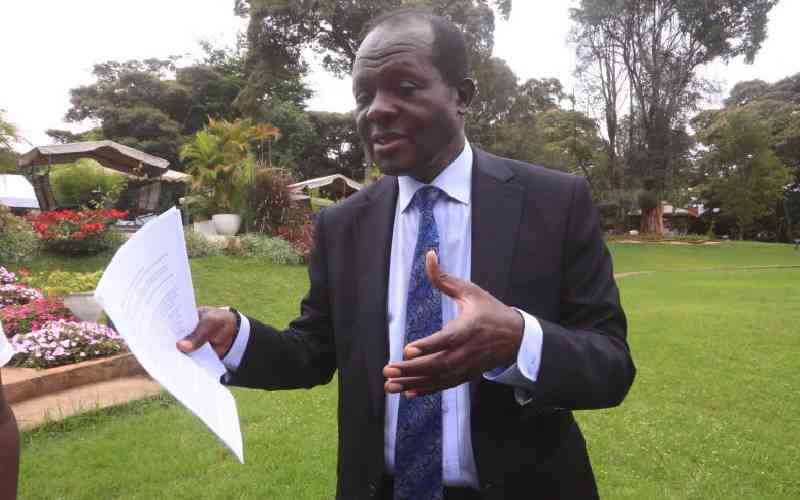
The dispute between former Cabinet Secretary Raphael Tuju and the East African Development Bank (EADB) has escalated into a high-profile legal and political standoff, following the auction of prime Nairobi property tied to a long-running debt.
At the centre of the conflict is a loan of approximately $9.2 million advanced to Tuju’s company, Dari Limited, in 2015. The loan, secured against several properties including land in Karen, fell into default in 2016, triggering a protracted recovery process.
Subsequent court rulings, including a 2019 judgment in the United Kingdom that was later upheld by Kenyan courts, affirmed EADB’s claim of roughly $15.1 million (about KSh 1.9 billion) after interest and penalties.
In October 2024, EADB moved to enforce its security by auctioning part of the collateral, including the well-known Dari Restaurant property within the Dari Business Park.
The property was sold at a public auction for approximately KSh 450 million to Ultra Eureka Limited, a company that later surfaced as the registered purchaser and sought to assume control, including collecting rent from tenants.
However, the sale has since been contested in court, with Tuju challenging both the process and the transfer of ownership.
The dispute has continued to play out in Kenyan courts, with multiple applications filed by Tuju seeking to block or reverse the sale. Courts have, at various points, dismissed his claims and allowed the lender to proceed with recovery efforts.
On Wednesday, the Commercial Court directed that no transfer or assignment of the property titles take place.
“The final order I give is restraining any transfer of the title, the subject of these proceedings, pending the hearing and determination of this application,” the court ruled as it declined to grant temporary orders sought by the former Rarieda MP.
In recent developments, enforcement actions have intensified, with reports of security officers facilitating the takeover of the property, effectively removing Tuju from the premises. These actions have drawn sharp reactions from his legal team and supporters.
Tuju maintains that the debt figure is disputed and has questioned the transparency of the auction process, alleging irregularities and external influence.
On its part, EADB has remained firm that the recovery process followed due legal procedure, citing multiple court rulings in its favour and maintaining that the borrower failed to honour repayment obligations.
Beyond the legal arguments, the dispute has taken on a political dimension.
Tuju has publicly suggested that powerful individuals may have had an interest in acquiring the property, claims that have not been substantiated but have fueled public debate.
The manner in which enforcement was carried out, including the involvement of security agencies, has also raised broader concerns about the intersection of commercial disputes and state power.
Analysts note that the case highlights growing tensions around property rights, debt enforcement, and the perception of political influence in high-value transactions.
As the matter remains before the courts, the Tuju-EADB dispute is increasingly being viewed as a test case for the balance between creditor rights and borrower protections in Kenya’s financial and legal systems.
For now, ownership of the contested property remains under scrutiny, even as the legal and political battle continues to unfold.

Email your news TIPS to Editor@Kahawatungu.com — this is our only official communication channel
