

Donkey theft syndicates selling meat in Burma using sophisticated supply chains, study finds

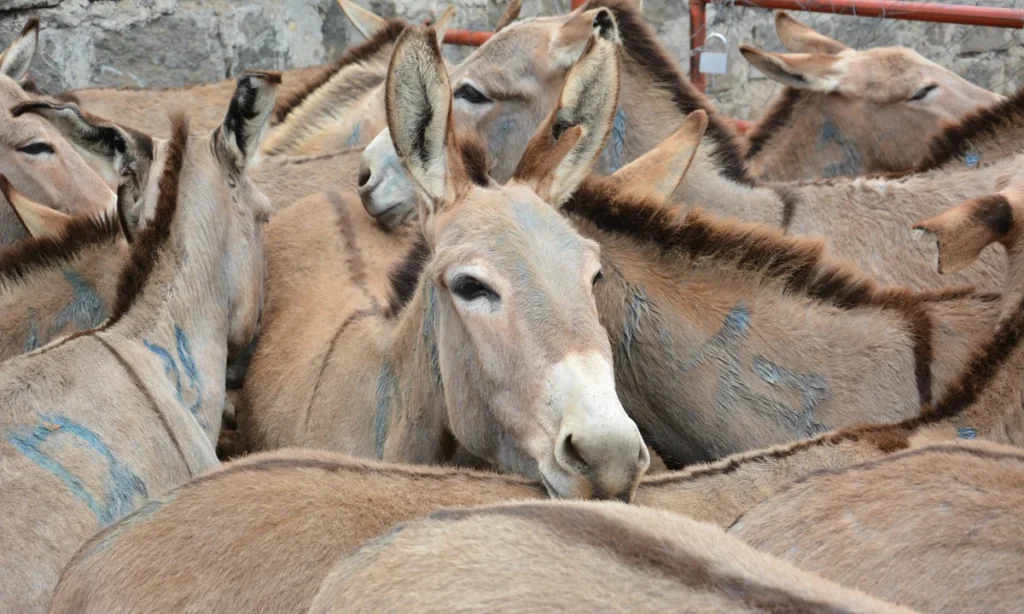
A study has revealed that organized donkey theft syndicates are operating highly coordinated, market-driven supply chains that mirror legitimate businesses, with criminals sourcing orders before stealing and slaughtering animals to meet demand.
According to the findings, some meat suppliers first secure orders from restaurants, institutions and urban markets before recruiting criminal gangs to steal donkeys.
The animals are then slaughtered and the meat transported in sacks on motorcycles to unsuspecting buyers in markets such as Burma and Ndunyu in Nairobi.
The report says the syndicates rely on rapid transport networks to evade detection. Small vehicles, particularly Toyota Probox cars, are strategically positioned along road junctions to quickly move carcasses and hides before dawn, often using informal “panya routes” to avoid police checkpoints.
Researchers also found that the criminal networks depend heavily on local informants who provide intelligence on vulnerable herds and deliberately mislead owners and search parties after thefts, increasing the likelihood of successful escapes.
The National Crime Research Centre (NCRC) Thursday launched a landmark report detailing the extent of theft and illegal trade in donkey skins and related products in Kenya, shedding light on what it describes as an emerging security and socio-economic challenge.
The report, titled Theft and Illegal Trade in Donkey Skins and Related Products in Kenya, is the first comprehensive national study examining the scale, drivers and impacts of donkey theft and the illicit trade in donkey skins.
According to the NCRC, the findings expose the complex nature of the illegal trade, including the involvement of organised criminal actors, sophisticated supply chain networks and the growing threat posed by transnational organised crime.
The study further points to the existence of well-organized cartels coordinating the entire illegal supply chain, from identifying animals to slaughter and distribution. In some cases, researchers received reports that rogue security officers provide protection to illegal slaughter operations, enabling the networks to operate with minimal interference.
Beyond the criminal operations, the study warns that donkey theft has devastating socio-economic consequences. The loss of donkeys deprives rural households of a vital source of transport and farm labour, reducing agricultural productivity, limiting access to markets and essential services, and increasing household vulnerability.
Women, children, older persons and other vulnerable groups are among those most affected because they rely heavily on donkeys for transporting water, farm produce and other goods.
The report also highlights serious animal welfare concerns, noting that illegal slaughter and trafficking expose donkeys to significant suffering and could lead to declining donkey populations, threatening the sustainability of rural livelihoods that depend on the animals.
Researchers further warn that unregulated slaughter sites pose significant public health risks. Illegal slaughterhouses operate without veterinary inspection or adherence to food safety standards, increasing the risk of contaminated meat entering the market.
The study identified several major risks associated with the illegal trade, including environmental pollution caused by the dumping of rotting carcasses into rivers and forests. Decomposing animal remains contaminate water sources used by both people and livestock while producing foul odours that can affect nearby communities.
Consumers also face heightened health risks because meat processed through clandestine “bush slaughter” bypasses veterinary inspection. The report warns that this exposes the public to diseases such as anthrax, parasitic worm infestations and bacterial contamination arising from unhygienic slaughter conditions.
The theft of donkeys also disrupts rural transport systems, with researchers finding that many small-scale farmers are unable to move harvested produce to markets after losing their animals. This often results in crops spoiling before they can be sold, leading to significant financial losses and undermining months of agricultural work.

