

DPP Ingonga Calls for Global Crackdown on Wildlife Trafficking Networks

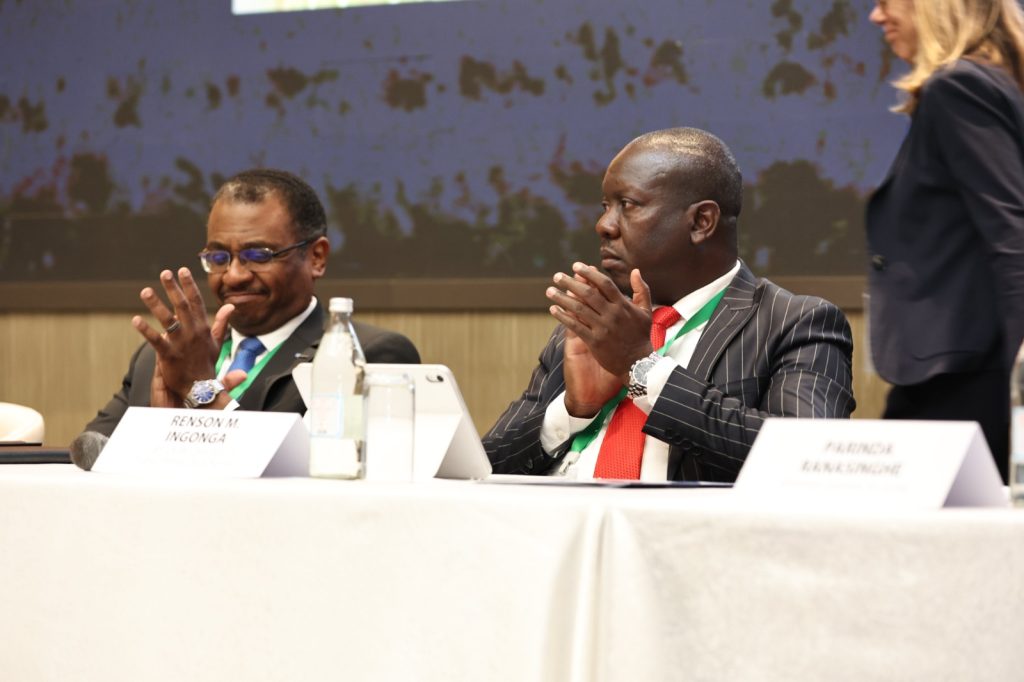
DPP Renson Ingonga (right) at the official opening of the 10th Wildlife Inter-regional Enforcement Conference in Nairobi.
Director of Public Prosecutions (DPP) Renson Ingonga has called for stronger international cooperation to dismantle criminal networks involved in wildlife trafficking, warning that the illegal trade is becoming increasingly sophisticated and is linked to corruption, money laundering and other organised crimes.
Ingonga said wildlife traffickers were expanding their operations beyond iconic species such as elephants and rhinoceroses to target reptiles, rare plants and marine species.
He warned that criminal networks were exploiting international transport routes, digital platforms and financial systems to facilitate the illegal trade and conceal their activities.
The DPP spoke in Nairobi on Tuesday, November 3, 2026, when he officially opened the 10th Wildlife Inter-regional Enforcement Conference at Argyle Hotel.
The three-day conference was convened by the United Nations Office on Drugs and Crime (UNODC) in partnership with the Office of the Director of Public Prosecutions (ODPP).
It has brought together Sri Lanka’s Attorney General, Parinda Ranasinghe, investigators, prosecutors, customs officials and wildlife enforcement authorities from different countries to strengthen international cooperation in combating wildlife crime.
Citing findings by UNODC, Ingonga said more than 140,000 wildlife seizures were recorded in 162 countries and territories between 2015 and 2021, involving approximately 4,000 species.
He said the figures demonstrated the scale and diversity of wildlife trafficking, warning that its consequences extended beyond the animals seized.
According to the DPP, wildlife trafficking contributes to the destruction of ecosystems, loss of community livelihoods and the financing of other criminal activities.
“Behind every seizure lies a larger story. There is an animal removed from its habitat, a community deprived of its natural heritage, and often a criminal enterprise profiting from both,” he said.
Ingonga cited a December 2025 operation involving authorities in Singapore and South Africa, which uncovered a shipment containing 55.4 kilogrammes of rhinoceros horns and other animal parts in Johannesburg, leading to arrests.
He said the operation demonstrated the importance of timely intelligence sharing and coordinated investigations, noting that criminal networks often operate across several countries and exploit gaps in law enforcement cooperation.
“Information must move across borders before criminals do,” he said.
Ingonga warned that wildlife traffickers were increasingly exploiting digital platforms, encrypted communications and electronic payment systems to conceal their operations.
He said criminal networks were also manipulating wildlife permits, disguising illegal products in legitimate cargo and using financial systems to transfer proceeds from trafficking activities.
The DPP called for investigators and prosecutors to strengthen the use of digital evidence, wildlife forensics and financial intelligence when handling wildlife crime cases.
He urged prosecutors to work closely with investigators from the early stages of investigations to improve evidence collection and increase the chances of successful prosecutions.
Ingonga further emphasised that enforcement agencies should go beyond intercepting illegal wildlife products and focus on identifying the financiers, organisers and corrupt officials facilitating the trade.
The DPP also highlighted the emerging challenge of biopiracy, which involves exploiting genetic resources and traditional knowledge without appropriate consent or fair benefit sharing.
He cited concerns surrounding biological resources from Lake Bogoria and disputes over patents relating to the traditional uses of India’s neem tree.
He called for careful application of the law to protect legitimate scientific research while ensuring respect for consent, the origin of biological resources and equitable benefit sharing.
Ingonga reaffirmed the ODPP’s commitment to strengthening prosecution-guided investigations, improving evidence handling and facilitating international legal assistance in wildlife trafficking cases.
He urged participating countries to establish stronger professional networks, improve intelligence sharing and strengthen mechanisms for asset restraint, confiscation and forfeiture.
He said such measures would help ensure that individuals and criminal organisations involved in wildlife trafficking do not retain the proceeds of their illegal activities.
The DPP maintained that protecting wildlife was both a constitutional obligation and a responsibility to future generations.
He noted that Kenya’s Constitution guarantees every person the right to a clean and healthy environment, making the protection of natural resources an important national responsibility.
Ingonga urged countries to strengthen their collective response to wildlife crime, warning that no single jurisdiction could effectively dismantle criminal networks operating across international borders.

