


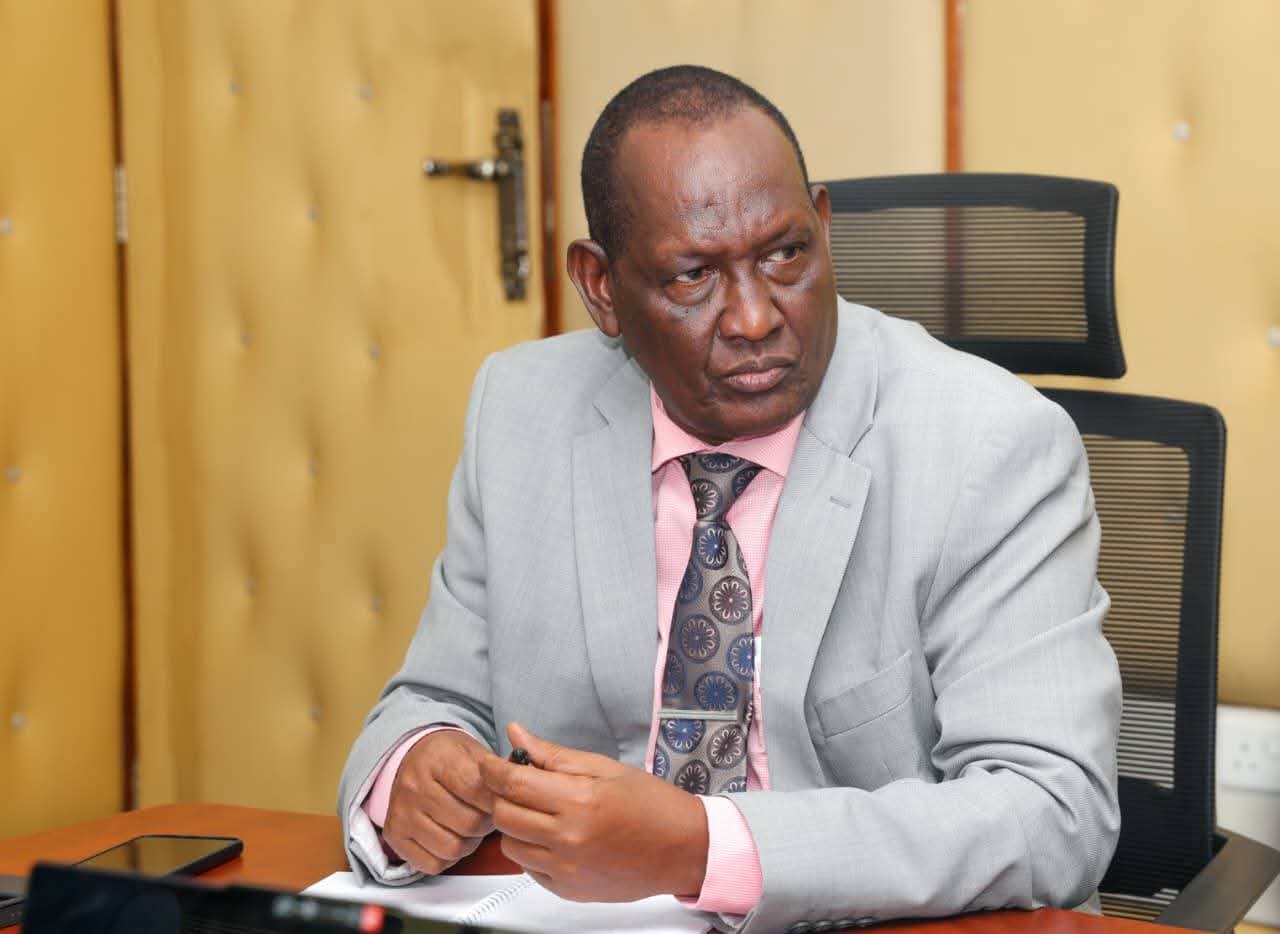
There was drama when four top officials in the petroleum sector were Thursday night arrested over what insiders said was scandal for dirty fuel.
The scam could have seen the country get dirty fuel amid fears of shortage.
Those arrested were officials in the Government-to-Government oil deal that had been launched in 2023 and included Principal Secretary for the State Department for Petroleum Mohamed Liban, the Director General of Energy and Petroleum Regulatory Daniel Kiptoo and the Managing Director of Kenya Pipeline Company Joe Sang and a top petroleum department official identified as Simon Wafula.
More officials were being sought by detectives from DCI for grilling pending further action, officials said on Friday.
Their houses were searched and some money and documents recovered from there, sources said.
There are fears of fuel shortage due to the war in Iran which has affected supplies.
This has forced countries to seek fuel from merchants on the high seas.
Officials said the fuel that Kenya got in the deal to cushion it from possible shortage emerged to be dirty and do not meet specifications of the one used in Kenya.
However, some of the officials in the G-to-G committee are said to have been pushing for it to be offloaded oblivious of the dangers head.
A manager of quality assurance at the Kenya Pipeline Company rejected the fuel after conducting tests.
He came under pressure to allow the offloading the same but rejected the same and escalated the matter.
This led to the operation on Thursday night that saw the arrest of the officials for questioning.
Their houses were also ransacked in the operation that left many shocked and wondering what next. Substantial amount of money was recovered.
Officials said the quantity of sulphur in the fuel was too high and it was rejected.
This comes as the country is staring at a spike in fuel prices, as the effects of the war in the Middle East begin to bite.
For now, authorities maintain that supply remains stable.
Kenya launched the deal with gulf companies-Saudi Aramco, ADNOC, ENOC to provide a 180-day credit plan for fuel imports to stabilize the shilling, reduce dollar demand and secure supply chain.
Extended to 2027/2028, the deal has cushioned Kenya from price shocks amid criticism.
Current stock levels stand at 16 days for petrol, 19 days for diesel, and 49 days for jet fuel and kerosene, providing short-term cover as additional shipments arrive in April.
“Our suppliers, especially the ones we have a G2G arrangement with, are actually loading from other areas that are not affected like Europe and India,” National Treasury and Economic Planning Cabinet Secretary John Mbadi stated.
As global oil prices climb amid the evolving conflict in the Middle East, the government now concedes that by mid-April, fuel prices are likely to come under pressure.
Mbadi, however, said resources will be deployed to soften the blow and cushion consumers, but only for a limited time.
“The current fuel pricing cycle, March 15, 2026, to 14th April 2026, is not likely to be affected since the product concerned was delivered prior to the Middle East conflict,” said Mbadi.
The government, however, says that about Sh17 billion currently held in the stabilization fund under the Petroleum Development Levy will be deployed to stabilise pump prices and partially shield consumers from sharp increases for the next three months.
The government is also considering altering the application of VAT on fuel, to a fixed amount per unit to keep the prices lower that would be.
“If, for example, the price was to increase by about Sh60, especially diesel, which is the most significant for our economy, if it was to increase by Sh60 per litre, if you take off VAT, then that comes down to about Sh51, then that Sh51 we bring in the stabilisation fund and try to moderate it. I may not go into the details of how much we are trying to cover with the stabilisation fund because again, it is the responsibility of EPRA to announce the prices,” said Mbadi.
President William Ruto warned on March 30 that the ongoing conflict in the Middle East is exerting pressure on the global economy, with ripple effects already being felt across supply chains and national economies, including Kenya.
He said the government has remained vigilant over the past month, closely monitoring developments and relying on continuous assessments from key ministries and agencies.
Ruto revealed that he received a comprehensive briefing from the Ministries of Energy, Agriculture, Trade, the National Treasury, the Central Bank, and private sector players on the evolving geopolitical situation and its potential economic implications.
He noted that while the full impact on fuel prices is still under assessment, measures are being put in place to cushion Kenyans from adverse effects and ensure stable supply.
He pointed to the Government-to-Government fuel procurement arrangement as a key buffer that has helped shield consumers from immediate global price shocks. “The strategic intervention has mitigated price increases, ensured security of supply, and proven to be both prudent and forward-looking,” Ruto said in a statement on March 30.

Email your news TIPS to Editor@Kahawatungu.com — this is our only official communication channel
