


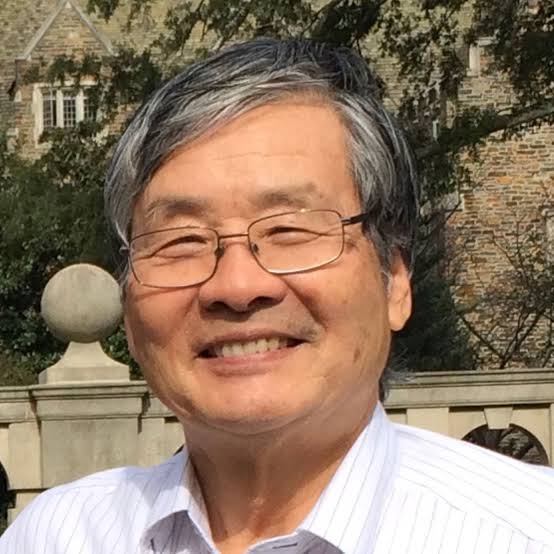
Kenya can achieve Singapore-level development by 2063 if it undertakes bold economic and social reforms, a Duke University senior fellow has said.
Hiroyuki Hino, Senior Fellow at Duke University’s Africa Initiative, said Kenya should use the national consultation on a Vision Beyond 2030 to develop a people-centred development agenda focused on improving the welfare and productivity of ordinary citizens.
Speaking on Wednesday at the launch of the nationwide consultation on Kenya’s future beyond Vision 2030, Hino said the target of transforming Kenya into a first-world economy was ambitious but achievable if the country embraced transformative changes.
“Singapore is reachable,” Hino told the gathering.
He acknowledged that Kenya faces a huge income gap with Singapore, noting that Singapore’s income per person exceeded $80,000 in 2025 compared with just over $2,000 in Kenya.
However, Hino said Kenya possessed an important advantage in the form of its people, particularly their hard work, optimism, motivation and entrepreneurial potential.
He cited studies conducted by researchers from Duke and Maseno universities showing that Kenyan children perform strongly in optimism, perseverance, engagement, connectedness and happiness compared with their peers in several developing and developed countries.
Hino said the country should build on these attributes by reforming education to develop not only academic skills but also self-management, discipline, emotional regulation and the ability to pursue long-term goals.
“These abilities can raise productivity, growth, and employment,” he said.
Hino proposed that scientific research on learning and socialisation should inform the development of Kenya’s post-2030 vision.
He said the government should also focus on four areas he described as critical to transforming the country: childhood learning, support for poor households, development of micro and informal businesses, and the fight against corruption.
According to Hino, Kenya has made significant progress over the past two decades, with median household income per person increasing from $2.40 to $3.50 per day.
Access to electricity, clean cooking fuels, safe drinking water and improved sanitation has also increased, while the proportion of children who are not stunted has improved from 72 per cent to 80 per cent.
However, he said Kenya’s progress remained disappointing compared with countries such as Vietnam.
Hino said Kenya could potentially achieve universal access to basic infrastructure and virtually eliminate childhood stunting within the next decade, while also substantially closing its education gap with Singapore by 2063.
The income target, however, would be considerably more difficult.
He said Kenya would need annual per-person income growth of more than 10 per cent for about 35 years to reach Singapore’s current income level.
Hino said Kenya should therefore tighten fiscal management, increase investment in infrastructure and essential services, control public debt and continue supporting private enterprise.
He warned that without transformative changes, Kenya risked falling into the middle-income trap that has prevented many countries from advancing to high-income status.
He said Kenya should target sustained per-person income growth of about five per cent annually, which, assuming population growth of 1.5 per cent, would translate into GDP growth of about 6.5 per cent a year.
But he said this would still fall short of the growth required to attain Singapore’s current income levels.
“Kenya needs a quantum leap to a substantially higher growth trajectory. This requires bold and transformative change,” he said.
Hino cited Kenya’s floriculture industry as an example of how technology, innovation and improved transport networks can transform an economic sector and make it globally competitive.
He challenged policymakers to identify similar opportunities for transformative change across the wider economy.
Hino also warned that rising inequality could undermine Kenya’s development ambitions.
He noted that the poorest 20 per cent of Kenyans receive only five per cent of national income, while the richest 20 per cent receive about half.
He proposed stronger government support for vulnerable households while encouraging the growth of informal enterprises.
Hino said informal businesses should not automatically be viewed as a problem, arguing that many could expand rapidly if entrepreneurs were able to combine their informal business practices with effective management.
He also urged the government to intensify the fight against corruption, saying graft damages both economic performance and Kenya’s social fabric.
While calling for prosecution where sufficient evidence exists, he urged citizens to expose corruption through social media and demand greater accountability from public officials.
He welcomed recent conflict-of-interest legislation and the introduction of electronic procurement, saying the priority should now be their full and consistent implementation.
Hino also linked the new development vision to a conversation between President William Ruto and the late former Prime Minister Raila Odinga shortly before Odinga’s death.
He said Odinga had informed him that the two leaders had agreed on the need for a fresh assessment of Kenya’s economic and social position and the development of a bold vision capable of uniting Kenyans beyond political and ethnic affiliations.
Hino said the proposed vision should be prepared by independent experts trusted by the public and developed through broad participation by stakeholders.
“Raila dreamed of a new Kenya where ordinary citizens enjoy a decent life and look to the future with full of hope. His dream was to empower young Kenyans to live their dreams,” he said.
He challenged President Ruto to sustain the process of developing the new vision and urged Kenyans to participate actively in the national consultation.
“Singapore is reachable,” Hino said.

Email your news TIPS to Editor@Kahawatungu.com — this is our only official communication channel
