

Edward Heath Siblings: All About John Heath

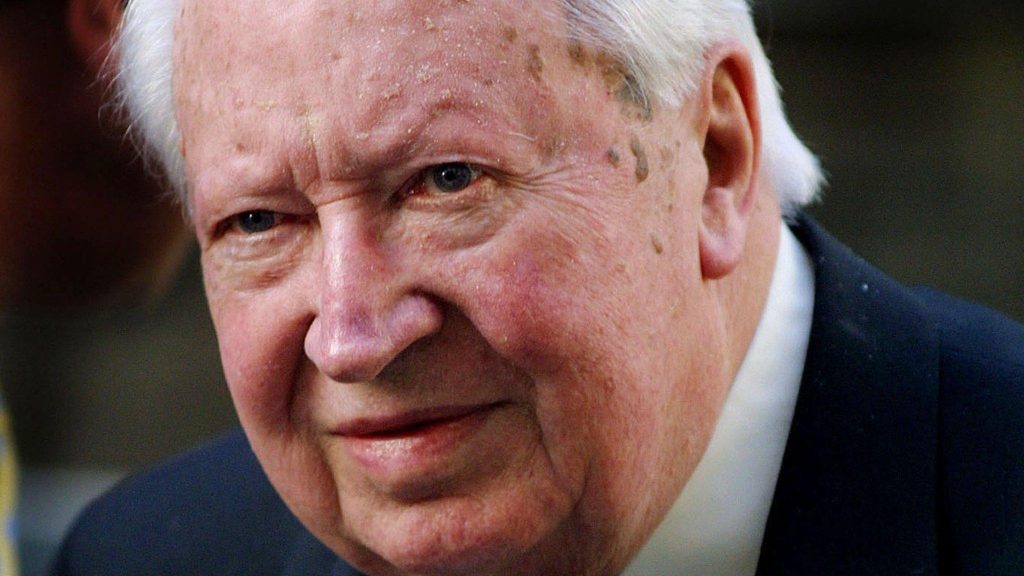
Edward Heath PHOTO/BBC
Sir Edward Richard George Heath, commonly known as Ted Heath, was born on 9 July 1916 in Broadstairs, Kent, and died on 17 July 2005 in Salisbury, Wiltshire, at the age of 89.
He was a British Conservative politician who served as Prime Minister of the United Kingdom from 1970 to 1974 and as Leader of the Conservative Party from 1965 to 1975.
Heath was also a Member of Parliament from 1950 until 2001, representing seats including Bexley and later Old Bexley and Sidcup.
Born into a working-class family, he was the son of William George Heath, a carpenter who later ran a building firm, and Edith Anne Heath, a former lady’s maid.
Heath never married and remained a private figure in his personal life, with well-known passions for classical music, in which he was an accomplished organist and occasional conductor, and for ocean yachting.
Siblings
Edward had one younger brother, John Heath, who was born around 1920 when Edward was four years old.
The brothers grew up in Kent, and sources consistently describe Edward as the favoured and more ambitious of the two.
John was characterised as amiable, easygoing, and less driven by ambition than his elder sibling. He later worked as a borough surveyor in Harrow.
John married a woman named Muriel; the couple appeared with Edward and their father in a family photograph taken shortly after Edward became prime minister in 1970.
John Heath died in the early 1980s, with accounts placing the year as 1982 or 1983.
In his will, Edward Heath left a bequest of £20,000 to his brother’s widow.
Also Read: Boris Johnson Siblings: Meet the Siblings Squad Behind the British Politician
Career
Heath was educated at Chatham House Grammar School in Ramsgate and went up to Balliol College, Oxford, in 1935 with the aid of a county scholarship and family support.
He studied Philosophy, Politics and Economics, won an organ scholarship, and became involved in student politics, serving as president of the Oxford Union.
During the Second World War he served in the Royal Artillery, rising to the rank of lieutenant-colonel, and was mentioned in dispatches.
After the war he briefly worked in the civil service at the Ministry of Civil Aviation and as news editor of the Church Times before entering politics.
Elected as Conservative MP for Bexley in 1950, he rose steadily through the ranks, becoming Government Chief Whip under Anthony Eden, Minister of Labour under Harold Macmillan, and Lord Privy Seal with responsibility for negotiating Britain’s first application to join the European Economic Community.
He was elected Leader of the Conservative Party in 1965.
After winning the 1970 general election he became prime minister.
His government secured Britain’s entry into the EEC on 1 January 1973, but it was also marked by industrial unrest, inflation, and the three-day week.
Defeated in the February 1974 election and again in October, Heath lost the party leadership to Margaret Thatcher in 1975.
He remained in the House of Commons until 2001, serving as Father of the House in his final years.
Accolades
Heath received the Member of the Order of the British Empire (MBE) in 1946 for his military service.
In 1963 he was awarded the Charlemagne Prize by the city of Aachen in recognition of his efforts to promote European integration during the unsuccessful EEC accession negotiations.
He was appointed a Knight of the Garter (KG) in 1992, one of the highest orders of chivalry in Britain.
Beyond formal honours, Heath was widely recognised for his contributions to British and European politics, his longevity in Parliament (51 years), and his achievements outside politics, including winning the Sydney to Hobart Yacht Race in 1969 and captaining Britain’s successful Admiral’s Cup teams.

