

Eli Manning Siblings: All About Cooper and Peyton Williams Manning

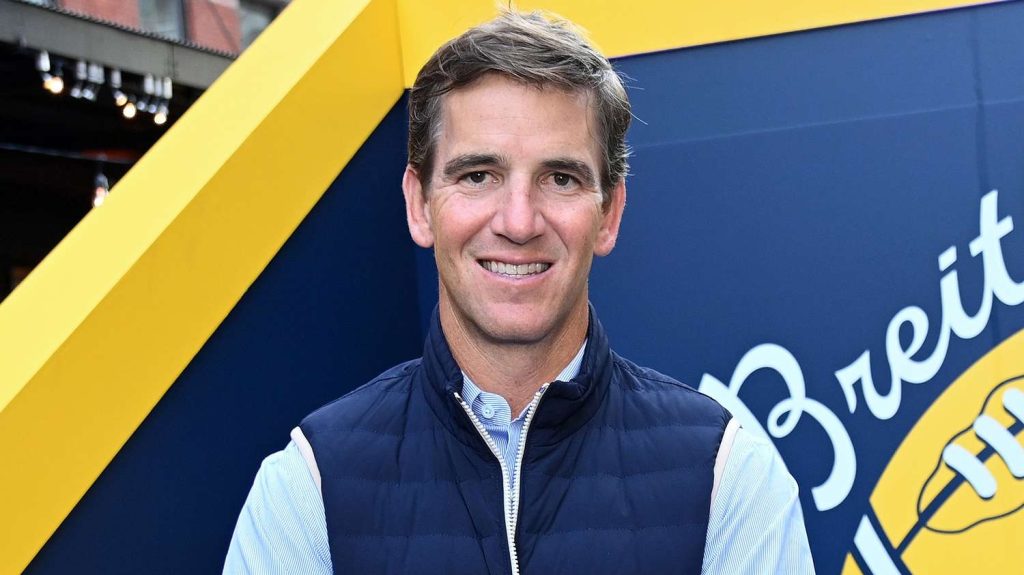
Former NFL player Eli Manning PHOTO/People
Elisha Nelson “Eli” Manning, born on January 3, 1981, in New Orleans, Louisiana, stands as one of the most iconic quarterbacks in National Football League history.
The youngest son of former NFL quarterback Archie Manning and Olivia Manning, Eli grew up immersed in football culture, developing his skills alongside his brothers in a family where the sport was both a passion and a legacy.
Standing at 6 feet 4 inches tall, Manning’s calm demeanor earned him the nickname “Easy Eli,” a trait that would define his 16-year professional career exclusively with the New York Giants.
Beyond the gridiron, Manning has been a devoted family man, married to Abby McGrew since 2007, with whom he shares four children: daughters Ava, Lucy, and Caroline, and son Charlie.
His post-retirement life includes philanthropy, media appearances on ESPN’s “ManningCast” alongside brother Peyton, and a continued commitment to community causes.
Siblings
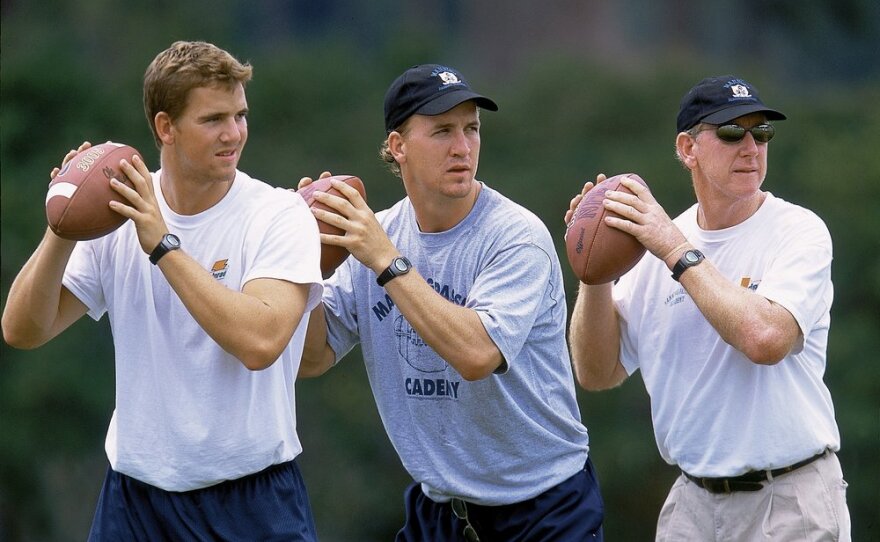
Eli’s siblings form a tight-knit trio of brothers who collectively embody the Manning family’s profound connection to football.
The eldest, Cooper Manning, born in 1974, initially followed in their father’s footsteps as a standout wide receiver at Isidore Newman School in New Orleans, where he earned all-state honors before committing to the University of Mississippi, known as Ole Miss.
A promising college career was cut short by a spinal stenosis diagnosis, forcing Cooper to retire from football without ever reaching the NFL; instead, he carved out a successful life in energy trading and investment in New Orleans, while remaining a vocal supporter of his brothers’ endeavors.
Cooper married Ellen Heidingsfelder in 1999, and they have three children: May, Arch, and Heid, with Arch emerging as a highly touted quarterback for the Texas Longhorns.
The middle brother, Peyton Williams Manning, born in 1976, became a global football icon, amassing two Super Bowl victories, one with the Indianapolis Colts in 2007 and another with the Denver Broncos in 2016, along with five NFL Most Valuable Player awards, 14 Pro Bowl selections, and a record-tying 55 touchdown passes in a single season.
Peyton’s college stardom at the University of Tennessee preceded an 18-year NFL tenure marked by precision passing and strategic brilliance, retiring in 2016 as the league’s all-time leader in career passing yards at the time.
Now a media mogul and philanthropist through the PeyBack Foundation, Peyton shares twins Marshall and Mosley with wife Ashley Thompson, whom he married in 2001, and frequently collaborates with Eli on ventures like the ManningCast.
Also Read: Jason McCourty Siblings: Meet Devin McCourty and Larry White

Career
Manning’s NFL odyssey began with high drama at the 2004 draft, where the San Diego Chargers selected him first overall, only for Manning to exercise his leverage, bolstered by his family’s influence, to force a trade to the New York Giants, who surrendered Philip Rivers and additional assets in return.
Debuting as the Giants’ starter in Week 1 of 2004, Manning navigated a rocky rookie year with 1,197 passing yards and seven touchdowns amid 12 interceptions, but his resilience shone through in subsequent seasons.
By 2005, he threw for 3,747 yards and 24 touchdowns, earning his first Pro Bowl nod and laying the groundwork for New York’s resurgence.
The pinnacle arrived in 2007, when Manning orchestrated one of sports’ greatest Cinderella stories: as a wild-card team, the Giants upset the heavily favored New England Patriots, winners of all 16 regular-season games, en route to Super Bowl XLII victory, capped by Manning’s iconic helmet catch pass to David Tyree.
This 17–14 triumph propelled Manning to stardom, and he replicated the feat in 2011, leading another underdog Giants squad past Tom Brady’s Patriots 21–17 in Super Bowl XLVI.
Sandwiched between these highs were leaner years, including a 27-interception nightmare in 2013, but Manning’s ironclad durability defined him: he started 210 consecutive games from 2004 to 2017, the third-longest streak for a quarterback in NFL annals.
Over 236 games, all with the Giants, Manning amassed 57,023 passing yards, 366 touchdowns, and a 60.3% completion rate, etching his name in franchise lore with records for most passing yards, completions, and touchdown passes.
His career waned in the late 2010s amid offensive line woes and coaching turnover, culminating in a benching during the 2019 season before his January 2020 retirement.
Accolades
Manning’s trophy case gleams with hardware that underscores his elite status, beginning at Ole Miss where his 2003 senior season yielded the Maxwell Award as the nation’s top all-around player, the Johnny Unitas Golden Arm Award for outstanding quarterback play, the Southeastern Conference Player of the Year honor, and a third-place finish in Heisman Trophy voting, all while captaining the Rebels to a Cotton Bowl win.
Academically, he earned Second-Team Academic All-America honors and graduated with a 3.44 GPA in marketing.
In the NFL, Manning’s two Super Bowl MVP awards, for XLII and XLVI, place him among an exclusive quintet of quarterbacks with multiple such distinctions, alongside legends like Tom Brady and Joe Montana.
He garnered four Pro Bowl invitations (2008, 2010–2012), cementing his place on the NFL’s Top 100 Players list three times (2012: No. 31; 2013: No. 43; 2016: No. 47).
Off the field, his benevolence shone brightest with the 2016 Walter Payton NFL Man of the Year Award, shared with Larry Fitzgerald, recognizing his $3 million fundraising for the Eli and Abby Manning Children’s Clinics at the University of Mississippi Medical Center and leadership in causes like Tackle Kids Cancer and March of Dimes.
Manning’s indelible mark includes an NFL-record 15 fourth-quarter touchdown passes in 2011 and 44 game-tying or go-ahead scores in the fourth quarter or overtime across his career, feats that highlight his unflappable clutch gene.
Inducted into the New Jersey Hall of Fame in 2020, he awaits potential enshrinement in the Pro Football Hall of Fame, his No. 10 jersey retired by the Giants in a 2022 ceremony.

