

Escape Rooms, Laser Tag, and Fun Venues: Marketing Experiences in 15 Seconds

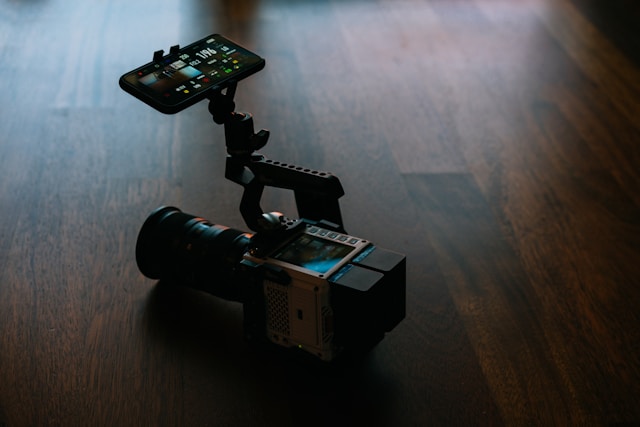
AI video generation model
Experience-based businesses have always had a marketing problem that product businesses don’t. If you sell a physical product, you can photograph it, describe its features, show it in use, and let people make an informed decision. If you sell an experience — an escape room, a laser tag arena, a climbing gym, a rage room, a virtual reality arcade — you’re asking people to pay for something they can’t fully understand until they’re already inside it. The product is the feeling, and feelings are hard to convey in a static image and a paragraph of text.
This is why video has always been the most natural medium for experience venues. A well-made clip that captures the energy of a room, the intensity of a challenge, the moment of discovery when a puzzle clicks — that does more for a booking page than any written description. The problem has always been production. Shooting video inside a venue requires equipment, timing, the right lighting conditions, and ideally some willing participants who don’t mind being filmed mid-experience. For smaller venues operating on tight margins, that’s a significant ask.
Seedance 2.0 is an AI video generation model that produces short clips from text descriptions and image references. For experience venue operators who want compelling video content without the overhead of a production shoot, it offers a practical alternative that fits the realities of how these businesses actually operate.
The 15-Second Window
When someone is deciding whether to book an experience venue, they’re usually doing it on a phone, often while doing something else. They’ve landed on your page from a search result or a recommendation, and they have maybe thirty seconds of attention to give you before they move on. What happens in that window largely determines whether they book, save it for later, or forget about it.
Fifteen seconds of well-chosen video can do a lot inside that window. It can establish the atmosphere of the space — is it dark and tense, or bright and energetic? It can signal the level of intensity — is this a casual outing or a genuine challenge? It can show the kind of people who enjoy it, which helps potential customers see themselves in the experience. And it can create a visceral sense of excitement that a written description simply cannot replicate.
The venues that are doing this well aren’t necessarily running elaborate production shoots. They’re using short, purposefully created clips — sometimes a sequence of them stitched together — that collectively paint a picture of what it feels like to be there. Each individual clip might be simple: a door opening into a dimly lit room, a timer counting down on a wall, a group of people reacting to something surprising. Simple moments, but chosen for maximum emotional effect.
What AI Video Generation Enables for This Category
The specific challenge for experience venues is that the best footage is often the hardest to get. The moment someone solves an escape room puzzle is great content — but it requires having a camera in exactly the right position at exactly the right moment, and most paying customers aren’t thrilled about being filmed mid-experience. The most emotionally resonant moments tend to be the least filmable.
AI video generation sidesteps this problem. Instead of trying to capture a real moment that may or may not happen under filmable conditions, you can describe the moment you want to show and generate a clip that represents it. A narrow corridor with shifting light and a ticking clock. A group reaction shot of people leaning in, focused on something just out of frame. The glow of laser beams crossing in a dark room. These are visual ideas, not documentary footage — and they can be more effective than real footage precisely because they’re constructed to communicate a specific feeling rather than record what happened to be in front of a camera.
For venues that operate multiple rooms or experience types, this approach also scales more easily than traditional production. Each room has its own aesthetic, its own atmosphere, its own target audience. Generating a set of short clips that represents each room — for use on the venue’s website, on Google Business listings, on Instagram, in booking confirmation emails — is a project that would be prohibitively expensive with a production crew and is manageable with AI video tools.
How Different Venue Types Can Use This
Escape rooms are perhaps the most obvious fit. The genre’s visual vocabulary is well-established — atmospheric lighting, mysterious objects, tense expressions, dramatic reveals — and these are exactly the kinds of scenes that translate well to short generated clips. A few seconds of the right imagery can communicate “this is the kind of escape room worth driving across town for” more effectively than a star rating and a list of room themes.
Laser tag and similar arena experiences have a different visual register — kinetic, high-energy, a bit chaotic — but the same principle applies. Clips that capture the feeling of moving through a darkened arena, the flash of sensors triggering, the team dynamic of a fast-moving group — these communicate the experience in ways that static photography can’t.
Newer experience formats like virtual reality arcades and immersive theater venues face an additional challenge: the experience is often hard to describe to someone who hasn’t tried it, and conventional photography gives almost no useful information. A short video clip showing a person’s physical reactions to a virtual environment — leaning, ducking, reaching — tells a much more honest story about what the experience is like than any interior shot of someone wearing a headset.
Creative activity venues — pottery studios, painting classes, ceramics workshops — sit at a different end of the spectrum. Their video needs communicate not intensity but warmth, focus, and the satisfaction of making something with your hands. Short clips showing materials, process, and finished work create an entirely different emotional effect, but the same logic applies: the experience is the point, and video shows it better than text.
Getting the Content in Front of the Right People
The venues that benefit most from short video content are typically the ones whose primary discovery channels are social media and Google Maps. Both of these contexts reward video strongly. A Google Business listing with video stands out in local search results. An Instagram profile with short, well-produced clips performs better in the algorithm and creates a more compelling impression when someone investigates the page before booking.
The challenge for most venue operators isn’t knowing that they should have better video. It’s the gap between knowing and producing. A marketing manager at a mid-sized escape room company is typically handling booking systems, customer service, staff scheduling, and promotional content simultaneously. Adding “arrange a video shoot” to that list, with all the coordination it implies, is a real friction point.
Seedance 2.0 is useful here precisely because it removes most of that coordination. You’re working from descriptions and reference images — things you can put together at a desk, not things that require scheduling and setup. The output is short clips that can be used across multiple platforms with minimal adaptation. For operators who have been putting off video content because the production logistics felt like too much, that shift in the effort required makes the whole project more realistic.
The experience economy continues to grow, and the venues within it are competing for attention from an audience that has more options than ever. The ones that can clearly communicate what makes their experience worth having — and communicate it quickly, visually, in the formats where people are actually making booking decisions — will have an ongoing advantage over the ones still relying on text descriptions and static photos taken on opening day.

