

Finance Committee Recommends Major Changes to Finance Bill 2026 Ahead of Parliamentary Debate

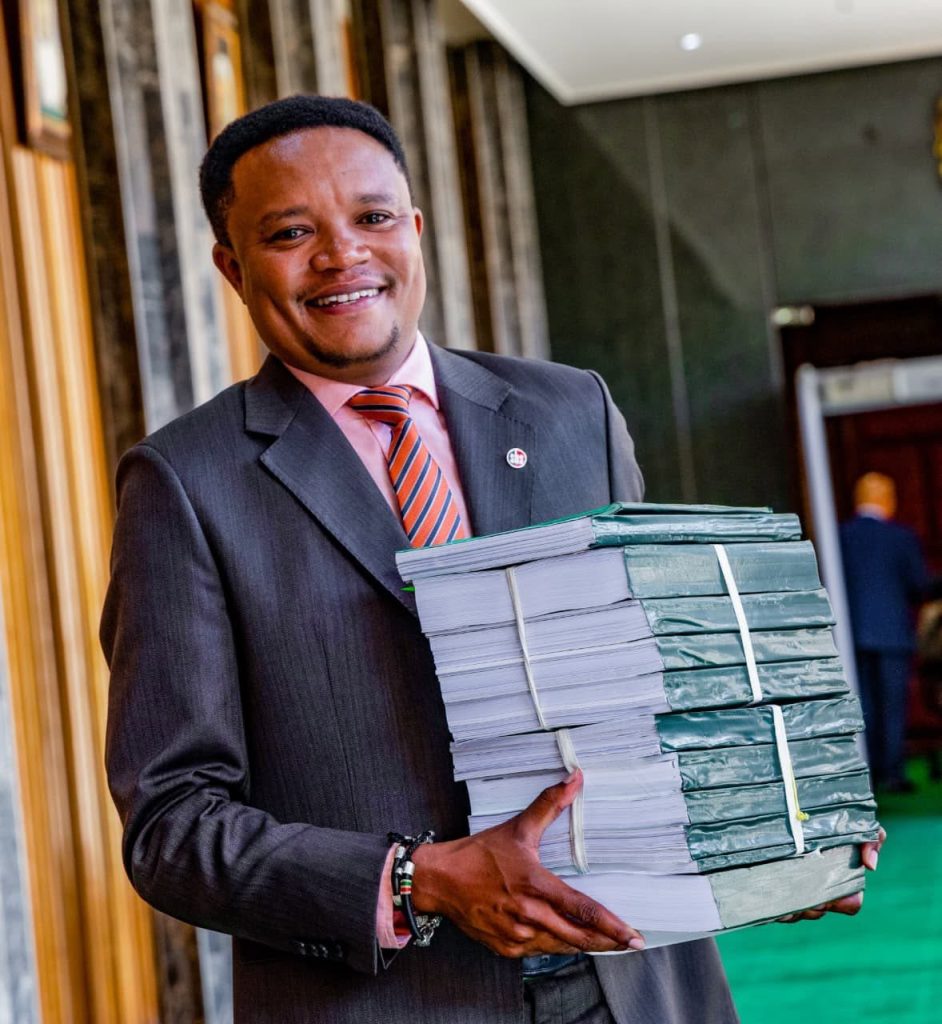
The National Assembly Departmental Committee on Finance and National Planning has tabled its report on the Finance Bill, 2026, recommending approval of the proposed law with several key amendments aimed at balancing revenue collection, taxpayer protection and economic growth.
The report was presented to the House after an extensive public participation process that involved more than 100,000 submissions from members of the public, stakeholder consultations and public hearings held across 13 counties.
The Bill seeks to reform Kenya’s tax framework by simplifying tax laws, addressing legal ambiguities, strengthening enforcement mechanisms and aligning tax administration with international standards. It introduces proposals touching on taxation of trusts, virtual assets, non-residents, digital transactions and reforms to tax incentives.
Presenting the report during the Bill’s Second Reading, Committee Chairperson and Molo MP Kuria Kimani said the committee was guided by the need to strike a balance between increasing government revenue and protecting taxpayers from measures that could hurt businesses and economic recovery.
“Throughout this process, the Committee was guided by the need to balance revenue mobilisation through administrative reforms with the imperative to support economic recovery, safeguard taxpayers’ rights and promote sustainable growth,” Kimani said.
The Committee said it conducted stakeholder engagement sessions between May 21 and 29, 2026, followed by public hearings in Wajir, Kiambu, Vihiga, Nyamira, Bomet, Makueni, Siaya, Taita Taveta, Nairobi, Turkana, Kilifi, Tana River and Mombasa counties.
Lawmakers also held consultations with government agencies between June 9 and 12, 2026, before finalising the report.
Among the major amendments proposed by the Committee is the removal of a clause that would have allowed the Kenya Revenue Authority (KRA) to issue agency notices against taxpayers involved in active tax disputes, objections or court proceedings.
The Committee argued that the proposal would have affected business cash flows, disrupted operations and undermined taxpayers’ constitutional right to fair administrative action.
The lawmakers also rejected a proposal to include weekends and public holidays when calculating timelines for filing tax objections and appeals, saying the move would unfairly reduce the period available to taxpayers to respond to tax decisions.
Businesses also received relief after the Committee rejected a proposal requiring companies to distribute at least 60 percent of undistributed income as deemed dividends.
The Committee said the measure would place unnecessary pressure on companies by limiting their ability to retain earnings for investment and expansion. It recommended a lower threshold to balance revenue needs with business sustainability.
The Committee further recommended that individuals be allowed four months and companies six months to file annual tax returns, instead of the shorter timelines proposed in the Bill.
On Value Added Tax (VAT), lawmakers recommended retaining the zero-rated status for several essential products and sectors, including locally assembled mobile phones, electric motorcycles, bicycles, buses, solar equipment, lithium-ion batteries, sugarcane transportation and raw materials used in animal feeds.
The Committee warned that moving the items to an exempt VAT category would increase production costs, discourage green investments and create uncertainty in the tax system.
The lawmakers also rejected a proposal to impose excise duty on mobile phones at the point of network activation, citing compliance challenges and possible confusion among consumers.
A proposal to extend mortgage interest relief to employees of the Central Bank of Kenya was also rejected, with the Committee noting that CBK staff already benefit from preferential lending rates.
However, the Committee backed measures aimed at expanding the tax base and improving compliance in sectors that have traditionally been difficult to monitor.
The report supports a proposed 1.5 percent withholding tax on scrap metal sales to improve tracking of transactions in the informal sector. It also supports requiring non-resident landlords to register and account for rental income taxes.
The Committee further endorsed a one-year tax amnesty programme set to begin on July 1, 2026, which will waive penalties and interest accumulated up to December 31, 2025, provided taxpayers settle the principal tax amount by June 2027.
Kimani said the previous tax amnesty programme generated Sh43.9 billion from more than one million applicants but warned that repeated amnesty programmes could weaken compliance.
“Repeated use of tax amnesty programmes may create moral hazard by weakening the culture of voluntary compliance, as some taxpayers may delay payment of taxes in anticipation of future waivers on penalties and interest,” he said.
The Committee recommended strengthening KRA’s enforcement powers after the amnesty period by allowing the tax authority to use uniform civil debt recovery mechanisms for fees and levies collected on behalf of other government agencies.

