

FORD Kenya rejects dissolution calls, defends multiparty democracy ahead of 2027 polls

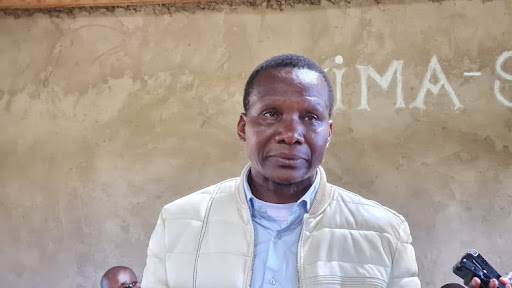
The FORD Kenya party strongly pushed back against growing calls from leaders within the United Democratic Alliance (UDA) to dissolve affiliate parties within the ruling Kenya Kwanza coalition, terming the move unconstitutional, coercive, and a threat to Kenya’s multiparty democracy.
In a strongly worded press statement issued Monday, Secretary General John Chikati accused sections of UDA leadership of attempting to intimidate coalition partners into folding and joining a single dominant party ahead of the 2027 General Election.
The remarks come in response to recent statements by Samson Cherargei, who suggested that parties allied to the government risk political exclusion if they fail to merge with UDA before the next polls.
FORD Kenya, a key partner in the Kenya Kwanza administration led by President William Ruto, warned that such demands undermine the spirit of coalition politics that delivered victory in the 2022 elections.
Chikati said it was “disheartening and politically dishonest” for UDA leaders to suggest they could secure future electoral wins without the support of affiliate parties, arguing that coalition members played a decisive role in forming the current government.
“To demand the dissolution of partner parties at this stage is tantamount to political betrayal,” the statement read, adding that such actions reduce coalition partners to “tools for convenience rather than equal stakeholders.”
At the heart of the dispute is the future of Kenya’s multiparty system, which FORD Kenya insists must be protected at all costs.
The party cited the country’s political evolution since the reintroduction of multiparty democracy in the early 1990s, warning that attempts to consolidate power under a single party risk reversing decades of democratic gains.
“Any move toward a single-party structure is a dangerous regression to an era of political suppression,” Chikati said.
He emphasized that any fundamental changes to Kenya’s political system must follow constitutional procedures, including a referendum, rather than being driven by “coercion or political intimidation.”
The party belongs to National Assembly Speaker Moses Wetangula.
FORD Kenya also pointed to what it described as the “failure of forced political mergers,” referencing the disbandment of parties such as ANC, which joined UDA.
According to the party, such mergers have led to dissatisfaction among members and created what it termed a “leadership vacuum,” with some politicians feeling politically sidelined.
The statement claimed that the aftermath of such dissolutions has triggered shifts in political allegiance, with some leaders gravitating toward other parties—including FORD Kenya—while others have moved into the opposition.
“Unity cannot be forced,” the party noted. “It must be built on trust, mutual respect, and shared purpose.”
FORD Kenya underscored its historical significance, describing itself as a key pillar in Kenya’s democratic struggle.
The party maintained that its leadership has no mandate—morally or legally—to dissolve an institution it considers part of the country’s political heritage.
“FORD Kenya is not just a party; it is a symbol of Kenya’s journey toward pluralism,” the statement said. “It cannot and will not be dissolved.”
The party also took issue with remarks attributed to Cherargei suggesting that leaders who refuse to fold their parties may be excluded from future government appointments.
FORD Kenya termed the statements as “reckless and threatening,” warning that linking public appointments to party dissolution amounts to political blackmail.
“Governance should be based on merit and respect for coalition agreements—not intimidation,” Chikati said.
In a further swipe, FORD Kenya accused some UDA leaders of inconsistency, noting that calls for dissolving affiliate parties were being made even as the ruling party explores potential alliances with other political formations, including the Orange Democratic Movement (ODM).
“This double speak raises serious concerns about sincerity and the true agenda behind these calls,” the statement noted.
Amid the escalating political rhetoric, FORD Kenya urged leaders within the Kenya Kwanza administration to shift focus from early campaign strategies to delivering on promises made to Kenyans.
The party said citizens are more concerned with economic challenges and service delivery than political realignments ahead of 2027.
“Kenyans expect leadership that prioritizes their needs—not endless political maneuvering,” the statement said.
Despite reaffirming its commitment to the Kenya Kwanza coalition and support for President Ruto’s administration, FORD Kenya made it clear that it will not sacrifice its identity or autonomy.
“We remain a loyal partner in government,” Chikati said, “but we will not surrender our constitutional rights or our political heritage.”
As political alignments begin to take shape ahead of the 2027 General Election, the standoff signals potential cracks within the ruling coalition—raising questions about its unity and long-term stability.
For now, FORD Kenya’s position remains unequivocal: it will not fold.

