

Ford says it took an extra $900m tariff hit last year

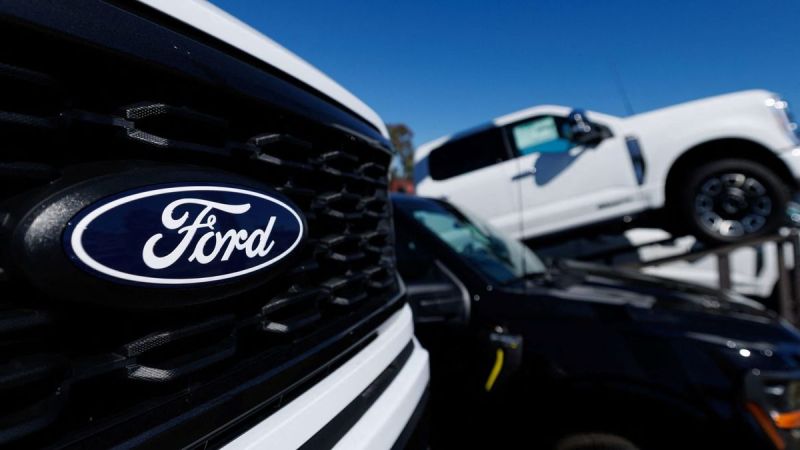
Ford said the US car maker’s tariff costs were $900m (£660m) higher than expected last year because of a last minute change to the Trump administration’s tariff relief program.
The scheme is meant to help car firms offset US President Donald Trump’s levies, and lets car makers that import parts for vehicles assembled in the US apply for credits.
But administration officials told the company in December of a new, later effective date for the policy, leading to fewer gains from the credits than anticipated.
Chief executive Jim Farley said Ford spent double what it had expected on tariffs in 2025 – roughly $2bn – due to “the unexpected and late year change in tariff credits for auto parts”.
Ford’s higher-than-expected tariff bill underscores the volatility automakers continue to face as they grapple with tariff costs and lobby for exemptions from the levies.
Separately, Ford had previously disclosed a $19.5bn hit as a result of its shift away from electric vehicle plans. Those charges also contributed to its fourth-quarter net loss of $11.1bn.
The vehicle manufacturer had said it was backing away from plans to make large EVs, citing lacklustre demand and recent regulatory changes under Trump. The business case for leaning heavily into EV production, specifically large-sized EV models, has “eroded”, the company had said.
Ford is instead investing in producing profitable hybrid and gas-powered vehicles and smaller, more affordable EV models.
The carmaker’s decision to alter its EV plans followed a similar announcement from General Motors in October. General Motors said it would take a $1.6bn hit as it rolls back its EV ambitions amid weakening demand.
A fire at an aluminium supplier also weighed on Ford’s profits last year.
Still, despite the tariff bill and net loss, the company reported quarterly revenue that beat analysts’ expectations.
Executives also said they are forecasting an uptick in profit this year, and predicted a reduction in losses in its EV business.
The carmaker’s shares rose slightly in after-hours trading in the US.
By BBC News