

Former USIU-Africa student sentenced to death in murder of colleague

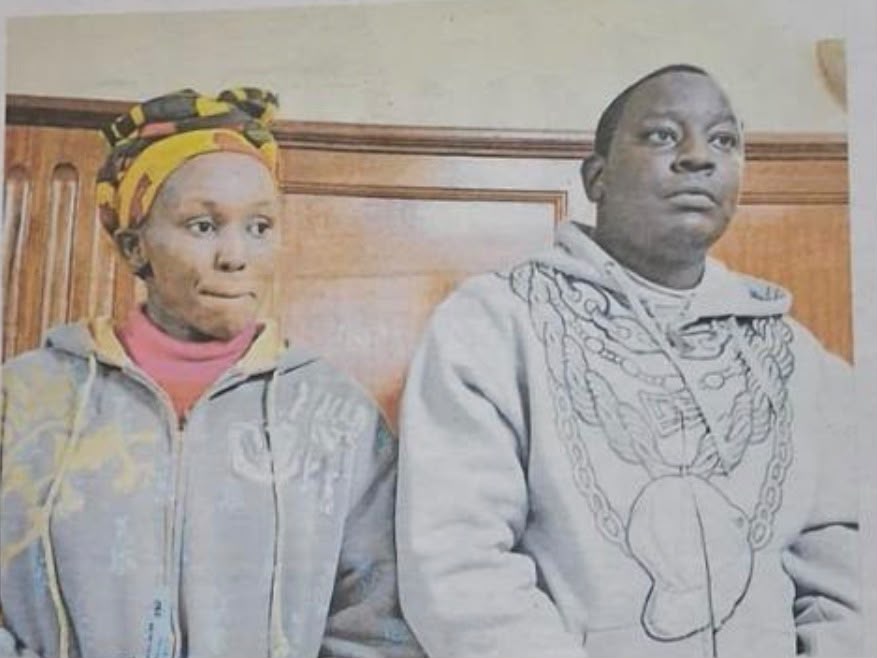
The prosecution secured a death sentence against Duncan Livingstone Kimathi, a former student of the United States International University-Africa (USIU-Africa), for the murder of his fellow student, Sarah Akello Aruwa, in a case involving abduction and a ransom demand of Sh100,000.
Justice Kanyi Kimondo sentenced the 37-year-old after finding him guilty of murdering Akello between June 30 and July 1, 2012, in the Kiamako area of Githunguri, Kiambu County.
Prosecution, led by Millicent Kigira, called 17 witnesses to establish the circumstances of the abduction, ransom demands and murder, securing the conviction and sentence.
The court found that Kimathi and his accomplices had lured the deceased before abducting her and demanding a ransom from her family.
The court concluded that the circumstances surrounding the abduction and subsequent killing demonstrated malice aforethought.
The court heard that the deceased was a final-year International Relations student at USIU-Africa.
On the day she disappeared, she informed a friend that she was going to meet a man she had previously encountered at the university library.
Evidence presented during the trial showed that the abductors subsequently contacted her family and demanded Sh100,000 for her release.
Her mother, Hellen Atieno Aruwa, testified that a man called her using her daughter’s mobile phone and demanded the ransom. She negotiated the amount down to Ksh. 70,000 before reporting the matter at Kasarani Police Station.
Akello’s boyfriend also told the court that when he attempted to reach her on her mobile phone, a man answered and demanded that Sh100,000 be sent to the deceased’s mobile money account as ransom.
The court further heard that the deceased had written in her notebook that she intended to meet a person identified as Daniel Muriithi, whose telephone contact she had also recorded.
However, the court established that Kimathi did not know Muriithi and concluded that the identity had been used as part of a plan to lure the deceased.
Investigations subsequently led to the recovery of Akello’s bra, panties and a blood-stained top from a house in Savannah where Kimathi’s girlfriend, Wairimu, lived.
The second accused later absconded after being released on bail, prompting the court to direct that the trial proceed in her absence.
A postmortem examination established that the deceased had sustained a laceration at the back of her head and bruises on her neck, with her tongue protruding from her mouth.
The cause of death was determined to be neck compression through manual strangulation.
In his judgment, Justice Kimondo found that Kimathi had acted with malice aforethought, noting that the deceased had been deliberately lured into a trap for abduction and ransom before being murdered.
The court consequently convicted Kimathi of murder, contrary to Section 203 as read with Section 204 of the Penal Code, and sentenced him to death.
On June 30, 2012, Aruwa’s mother, Hellen Atieno Aruwa, received a call from her daughter’s phone demanding a ransom of Sh100,000.
A more menacing demand followed the next day, with her son-in-law, Jim Onyango negotiating the amount down to Sh70,000.
By then, the matter had been reported to Kasarani Police Station.
Aruwa’s boyfriend, Duncan Okore testified that when he called her number on the morning of July 1 2012, a male voice answered, telling him to send Sh100,000 as ransom.
Later that afternoon, he and others broke into Aruwa’s locked house and found the notebook containing her last known plans.
An SMS received by Okore threatened: “sent within 30 minutes or she dies.”
On July 1, 2012, police constable John Amalemba received information that herdsmen had spotted a body in a thicket at Ndithiati Village, between Ngewa and Ruiru, off the Githunguri road.
He arrived to find about 100 villagers waiting.
The body of the deceased was inside a thicket, two three meters off the road.
A postmortem conducted by government pathologist Dr. Johansen Oduor revealed a laceration at the back of the head, bruises on the neck, and a protruding tongue.
The cause of death was determined to be “neck compression by manual strangulation.”
The court heard evidence from Jonathan Limo, a Safaricom Law Enforcement Liaison Officer, who produced subscriber and call data records for six mobile lines.
A key number, 0717370647, was registered to Duncan Kimathi the accused.
This same number appeared in the deceased’s notebook and was also given to Paul Muiru, a car hire operator, when the accused hired a motor vehicle on June 30, 2012.
Muiru testified that he leased a Toyota NZE Saloon, registration KBH 642R, to the accused at about 10:30 a.m. that day.
A tracking device showed the vehicle in Ngewa, Ruiru, heading towards Githunguri.
When the accused returned the car at 8:00 p.m., he claimed he had been teaching his girlfriend to drive.
Another number in the notebook, 0727872133, was unregistered but was in communication with the deceased’s line on June 29 and 30, 2012, including up to 1:33 p.m. on the day she disappeared.
When Onyango sent Sh200 to the two numbers on July 2, 2012, the mobile money transfer to 0717370647 revealed the recipient as Duncan Livingstone Mureithi the accused.
Boniface Kbiego Koech, head of security at USIU, testified that he knew the accused as a student at the campus. He confirmed that both he and the accused attended a common course on Criminal Justice.
Records showed that Kimathi was still a registered student in June 2012, though he was not in class on the day in question. When questioned, he had told his mother there were no classes.
The court found that the accused had access to the campus and the opportunity to lure the deceased into a trap. The deceased lived off-campus, only five minutes from USIU.
The prosecution presented a forensic document examination report by Senior Superintendent of police John Muinde who concluded that the handwriting in the notebook matched known samples of the deceased

