


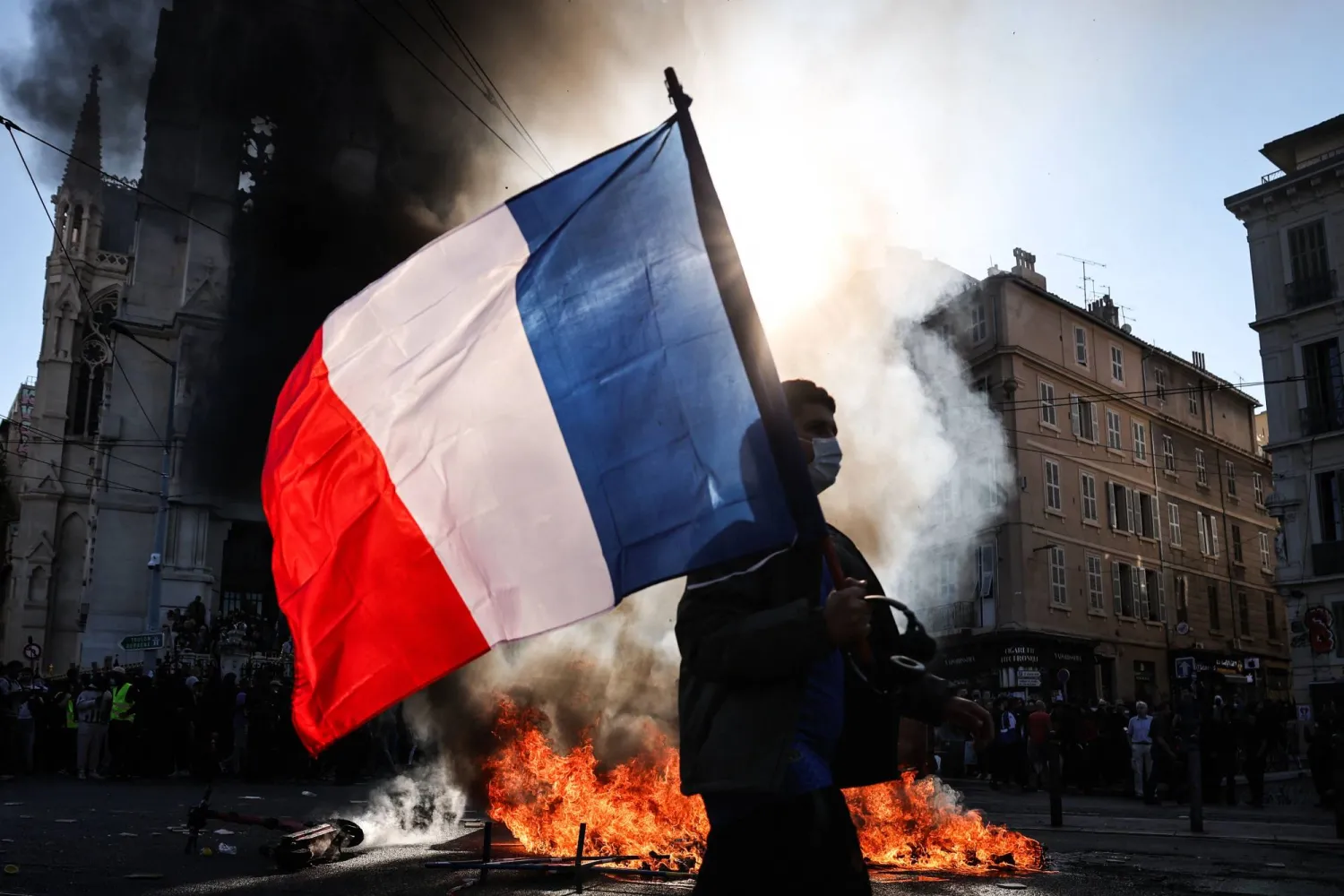
On Monday, October 19, 2026, French authorities announced localized protest bans and curfews in several cities following a weekend of severe nationwide unrest. The measures are geographically specific and do not constitute a nationwide ban on protesting.
In Paris, an overnight curfew applies to the entire population in the areas around Place de la République and the streets surrounding Les Halles. It runs from 10:00 PM to 6:00 AM. Demonstrations are banned in certain Paris neighborhoods from 8:00 PM to 6:00 AM.
In Marseille, public gatherings and demonstrations are prohibited from 12:00 PM noon to 8:00 PM.
In the northern communes of Lille, Douai, Wattignies, and Denain, an overnight curfew will be in effect for two nights, Monday and Tuesday, from 8:00 PM to 6:00 AM. The measure was enacted with the agreement of the respective local mayors. The city of Denain has also introduced a separate nighttime curfew from 9:00 PM to 6:00 AM set to last until Sunday, October 25.
The restrictions follow what officials described as some of the worst street violence in years. The protests were initially against the rising cost of living and fuel prices and grew out of weeks of student demonstrations demanding better conditions in schools.
On Saturday, October 17, authorities estimated that 550,000 people participated in 110 demonstrations across France. Labor unions estimated the turnout at 800,000. The Interior Ministry reported over 1,800 arrests nationwide on Saturday, including a record 855 arrests in Paris alone. By Monday, the total number of arrests had risen to at least 2,400.
Approximately 500 police officers, firefighters, and paramedics were injured during the weekend protests. Around 1,500 to 3,000 businesses were damaged, with losses estimated in the hundreds of millions of euros. Numerous shops were looted in Paris, Marseille, Bordeaux, Nice, and Strasbourg. The 19th-century City Hall in Limoges was set on fire, causing its roof to collapse and nearly destroying the historic building. A tourist office in Lyon was also set ablaze.
Prime Minister Sébastien Lecornu stated he is absolutely determined to restore order. He described the curfews as localized and partial, intended to protect businesses and prevent further violence. Lecornu said a state of emergency could be imposed if needed but that curfews were currently a better suited measure.
Interior Minister Laurent Nuñez offered his resignation, acknowledging that police had lost control in some major cities. President Emmanuel Macron refused the resignation, asking him to stay to ensure continued command of law enforcement. The government had deployed some 60,000 law enforcement personnel on Saturday and announced plans to further increase the number of officers on the ground.
Several governments have issued updated travel advice for France urging citizens to exercise caution. Germany’s Federal Foreign Office advises travelers to avoid demonstrations and to follow instructions from French security forces promptly. Multiple European governments have advised their citizens in France to avoid large gatherings and remain vigilant, noting that the security situation has deteriorated.

Email your news TIPS to Editor@Kahawatungu.com — this is our only official communication channel
