

France in Contrast: Parisian Elegance and Bordeaux’s Wine Heritage

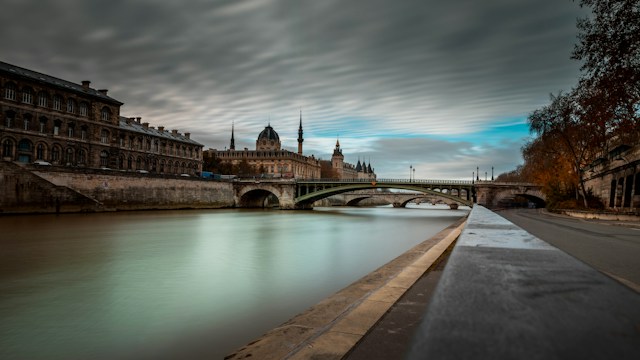
River flowing past buildings and bridge under cloudy sky, Paris, La Seine
France often presents itself through polish — symmetry, refinement, a confidence that rarely asks to be explained. Yet beneath that surface, the country is shaped by contrasts that don’t compete so much as converse. Paris and Bordeaux embody this relationship particularly well. One gathers ideas, people, and ambition into a dense cultural core. The other opens outward, allowing land, labour, and time to shape identity more slowly.
Travelling between them reveals not a hierarchy, but a shift in emphasis. Elegance gives way to patience. Display softens into cultivation. And the idea of culture expands from what is seen to what is sustained.
For many travellers this contrast becomes the most memorable element — not the difference itself, but how naturally each place completes the other.
Composure and Collection in Paris
Paris is a city that gathers. Ideas arrive here and stay long enough to be refined. Streets are arranged to be read. Buildings hold their posture. Public space behaves with intention.
Elegance in Paris is not decorative — it is structural. Proportion governs movement. Avenues widen where the city wants you to slow, narrow where it wants you to pass through. Even disorder feels curated, folded carefully into the whole.
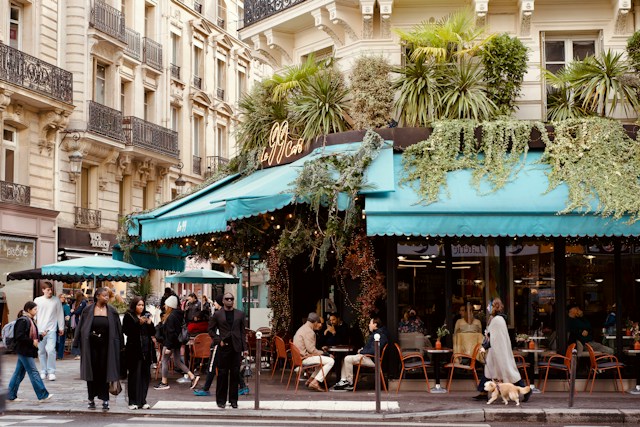
A starting point for many France tours, Paris is not defined by novelty, but accumulation. Museums collect centuries without apology. Cafés host conversations that repeat daily with minor variation. Fashion evolves, but always within recognisable parameters. The city values continuity, and it makes that value visible.
Elegance as Everyday Practice
In Paris, refinement is not reserved for ceremony. It appears in routine gestures — the way people sit, order, walk, and pause. Beauty is expected to function.
This expectation shapes daily life. Public spaces remain social without becoming chaotic. Art remains accessible without becoming casual. The city’s confidence lies in repetition: doing familiar things well, again and again.
Visitors often notice this only after time has passed. Paris doesn’t perform its elegance. It assumes it.

Movement That Adjusts the Mind
Leaving Paris creates a subtle but important recalibration. The density loosens. The horizon stretches. Attention shifts outward.
Taking the Paris to Bordeaux by train allows this transition to happen gradually rather than abruptly. The countryside appears in layers — fields replacing suburbs, vineyards replacing fields. Time onboard feels neutral, giving space for impressions to settle.
By the time Bordeaux approaches, the rhythm has already changed. You arrive prepared, not surprised.
Land, Labour, and Continuity in Bordeaux
Bordeaux does not collect culture — it grows it. The city’s identity is inseparable from its surrounding land, shaped by soil, climate, and generational knowledge. Wine here is not an industry detached from place; it is an extension of it.
What distinguishes Bordeaux is restraint. Grandeur exists, but it is measured. Architecture aligns rather than asserts. The city feels composed around its purpose rather than displayed for attention.
Daily life unfolds at a different pace. Conversations stretch. Meals linger. The presence of time feels tangible, particularly in spaces where wine is stored, tended, and waited on.
Wine as Cultural Memory
Bordeaux’s wine heritage is often discussed in terms of prestige, but its deeper significance lies in continuity. Vines are planted with an understanding of future harvests that may never be seen by those who plant them.
This long view shapes local culture. Decisions prioritise sustainability over immediacy. Knowledge is passed down through repetition rather than instruction. Variation is expected, even welcomed, because nature is never fully controlled.
Wine here functions as cultural memory — a record of weather, labour, and patience held in liquid form.
Urban Grace Without Urgency
Despite its global reputation, Bordeaux remains unhurried. The city does not rush to define itself beyond what it already is. Streets invite walking rather than display. Public spaces remain usable, not monumental.
This ease extends into social life. Tastings are conversational. Expertise is shared without performance. Pride exists, but it is quiet, grounded in confidence rather than comparison.
Bordeaux’s elegance is different from Paris’s. It does not announce. It waits.
Two Expressions of the Same Culture
What links Paris and Bordeaux is not similarity, but shared values expressed differently. Both cities care deeply about craft, whether artistic or agricultural. Both understand culture as something built over time, not invented overnight.
Paris refines through concentration. Bordeaux matures through expansion. One curates; the other cultivates. Together, they reveal a national character that values process as much as outcome.
This relationship becomes clearer the longer you spend in each place. The contrast sharpens understanding rather than creating division.
When Geography Shapes Identity
France’s cultural contrasts are rooted in geography. Paris developed as a centre of power, administration, and exchange. Bordeaux grew alongside land and trade, responding directly to environmental conditions.
These origins continue to shape behaviour. In Paris, ideas circulate quickly. In Bordeaux, they settle. Both approaches are necessary. Both sustain different forms of excellence.
Understanding this context prevents oversimplification. Culture here is not static — it adapts according to place.
Tasting Versus Observing
One of the most noticeable differences between the two cities is how culture is encountered. Paris invites observation. You look, listen, compare. Bordeaux invites participation. You taste, discuss, return.
Neither is superior. They offer complementary ways of engaging. Seeing culture sharpens perception. Tasting it deepens memory.
Together, they create a fuller understanding of what heritage can be.
Why the Contrast Matters
Parisian elegance and Bordeaux’s wine heritage are often framed separately, as though they belong to different narratives. In reality, they rely on each other. Refinement needs grounding. Cultivation needs context.
France’s cultural strength lies in this balance. The country allows its centres to differ without competing. It understands that contrast, when managed with confidence, strengthens coherence rather than weakening it.
Travelling between these places makes that balance visible.
A Country Defined by Continuity, Not Uniformity
France does not ask to be understood through a single lens. It offers layers instead — cities that gather, regions that grow, traditions that adapt without losing shape.
Between Paris and Bordeaux, culture reveals itself as something lived rather than displayed. Elegance remains functional. Heritage remains active. Meaning accumulates through return rather than revelation.
And in that space between refinement and cultivation, France continues to define itself — patiently, confidently, and without needing to resolve its contrasts into a single story.

