

Friend of Slain Rex Masai testifies on his last moments before shooting

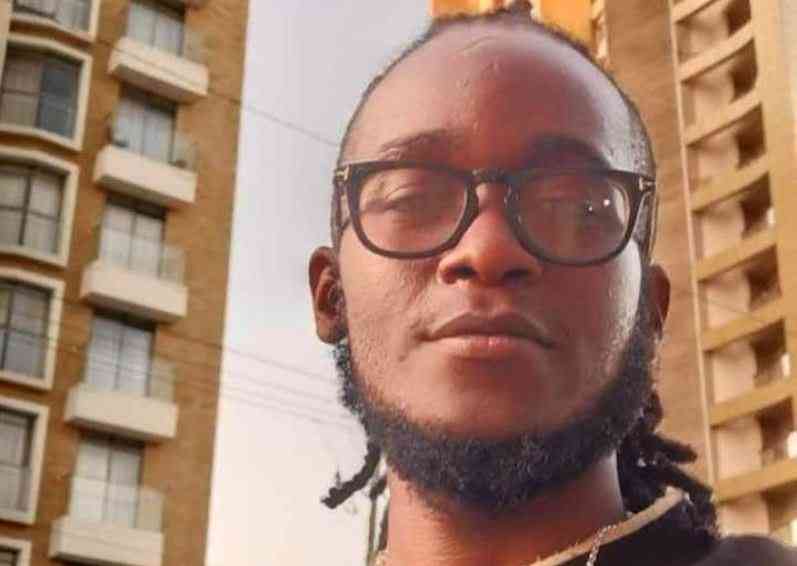
George Ndikas, a close friend of the late Rex Masai, on Monday gave a moving account before a Nairobi court of the final moments they shared during the June 20, 2024 anti-Finance Bill protests.
He told the court that Masai told him he had been shot as they fled police action in the central business district (CBD).
Ndikas, who described himself as Masai’s longtime friend and housemate, told principal magistrate Geoffrey Onsarigo that the two had gone to the CBD to join the demonstrations, but later found themselves running for safety as police lobbed teargas and gunshots rang out.
“When I got to him, I asked him what was wrong. Rex told me he had been shot,” Ndikas testified.
He said he and Masai had been friends since 2013 and had been living together before the fatal incident.
Ndikas told the court that on the afternoon of June 20, 2024, he returned home after work at a casino in Yaya Centre and found Masai doing household chores.
He said he had intended to rest, but Masai persuaded him to accompany him to the city centre to join other young people protesting against the Finance Bill.
At about 4:30 p.m., the two walked from Highrise to the Nairobi CBD and joined the demonstrators.
According to Ndikas, neither of them were armed, and they were not carrying placards.
He said Masai had a phone and was using it to take photographs.
He told the court that they were not at the front line of the protests when police began dispersing demonstrators.
Ndikas testified that at around 7 p.m., police began firing teargas as protesters attempted to retreat.
He said the situation escalated near Absa Bank, where they suddenly began hearing gunshots.
“We were not destructive,” he told the court, maintaining that they had only joined the protest and were trying to leave the area safely.
He said he heard what sounded like three gunshots while they were running.
At some point during the confusion, Ndikas said he was holding Masai’s phone and the two had agreed to keep sight of each other in case they got separated.
Moments later, he noticed that Masai was limping.
That was when, he said, Masai informed him he had been shot.
“I heard the gun shots and that’s when we turned and started running and within that time that’s when I saw him limping and when I got to him, he told me he had been shot,” said Ndikas.
“People were in unity rejecting financing bill, there were live bullets being fired.”
Ndikas told the court that he initially struggled to believe his friend had actually been shot because he still appeared to have the strength to run.
He said he suggested that they try to get an Uber and go to hospital, but people in vehicles nearby were unwilling to help because of the chaos and police presence.
By then, he said, Masai was no longer able to stand.
Ndikas said he helped him sit down and tried to keep him conscious while looking for help.
He testified that although he could not clearly see the wound itself, there was a lot of blood on Masai’s leg.
He said a young protester came to their aid and called others to help carry Masai to Bliss Hospital near Archives.
Ndikas told the court that when they reached the facility, the hospital gate was closed, forcing them to struggle to get inside.
Once they eventually entered and took Masai to a room, a doctor examined him and declared him dead.
“I tried calling my sister and Rex’s mother. I told her Rex is no more,” Ndikas said.
He added that police officers later arrived at the hospital, but it took about two hours before a vehicle was brought.
Ndikas also explained why he had not appeared earlier despite being considered a key witness in the inquest.
He told the court that he had been afraid for his life and was still dealing with the trauma of what happened.
“I was scared for my life,” he said.
“It took me a while to talk about the incident. I have been traumatized.”
He also said he did not see who actually fired the shot that hit Masai because he was behind him while they were running.
A video clip shown in court, captured him and Masai during the protests shortly before the shooting.
The NPS through their lawyer had objected to his testimony proceeding, arguing that they had not been informed he would be called and needed more time to prepare.
However, the prosecution insisted that Ndikas’ statement had long been supplied to all parties and argued that there was no prejudice that would be suffered if he testified, with cross-examination to be done later.
The court agreed and directed that the witness testify, while allowing for his cross-examination on another date.
Earlier, Inspector Joseph Kigara Gatecha, a scenes of crime officer attached to Regional Police Station, testified on the postmortem examination conducted on Masai’s body.
He told the court that he attended the autopsy at Nairobi City Mortuary on June 21, 2024, where the examination was carried out by government pathologist Dr. Johansen Oduor.
Gatecha said family members, IPOA officers, and police investigators were present.
He testified that Masai’s body was dressed in a blue patterned T-shirt, black trousers, black boxer shorts and black socks, all stained with blood.
He further told the court that there were visible perforation holes on the trousers and shorts, and that the deceased had a bullet wound whose entry point was at the back of the left thigh and whose exit wound was at the front of the same leg.
During cross-examination, Gatecha said the wound pattern suggested the bullet had entered from the back and exited through the front, and ruled out the possibility of the injuries being caused by a blank round.
He, however, said he could not determine the exact cause of death.
The prosecution had initially informed the court that Dr. Johansen Oduor had been expected to testify, but said he was unwell and unable to appear virtually.
Kigara told the court that he photographed the entire postmortem process and later prepared a report and certificate dated June 26, 2024.
Owing to the sensitive nature of the images, the prosecution asked that only the number of photographs be referenced in court, with the witness stating that he had taken about 36 photographs.
The inquest will continue on April 8, 2026 when Ndikas is expected to be cross-examined.

